EU Green Deal at Five: Simplification, Carbon Markets, and the Push to Go Local
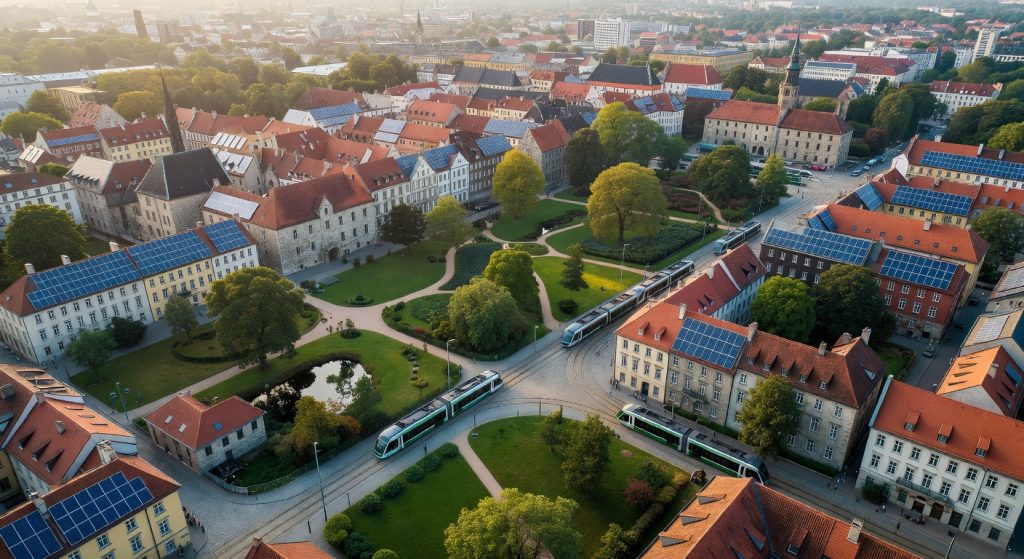
Five years after its launch, the EU Green Deal is entering a new phase — one defined less by bold announcements and more by the hard work of implementation, recalibration, and local delivery. As the European Commission advances its Omnibus simplification package and the Green Deal Going Local Working Group convenes its first 2026 session on March 25, the question is no longer whether Europe is committed to climate neutrality, but how it gets there without losing businesses, communities, or political momentum along the way.
Five Years On: What the Green Deal Has Actually Delivered
The EU Green Deal, launched in December 2019, set out an ambitious roadmap to make Europe the world’s first climate-neutral continent by 2050. Half a decade later, the balance sheet is mixed but meaningful. Greenhouse gas emissions across the EU have continued to fall, and clean technology investment has scaled significantly, with renewable energy capacity additions hitting record highs across member states in recent years.
Yet the Green Deal has also run into headwinds. Economic slowdowns, energy price shocks amplified by the war in Ukraine, and shifting political winds — particularly after the 2024 European Parliament elections — have fuelled calls for regulatory relief. Critics from industry argue that the cumulative burden of sustainability reporting requirements, supply chain due diligence rules, and emissions compliance is straining competitiveness, especially for small and medium-sized enterprises.
The European Commission’s response has been the Omnibus simplification initiative, a sweeping effort to streamline overlapping regulations — including the Corporate Sustainability Reporting Directive (CSRD) and the Corporate Sustainability Due Diligence Directive (CSDDD) — without abandoning the core climate neutrality goals. The message from Brussels is clear: ambition stays, complexity goes.
Carbon Markets Expand: ETS and CBAM Enter a New Era
While regulatory simplification dominates the policy debate, the EU’s carbon market architecture is quietly becoming more powerful. The Emissions Trading System (ETS) has been expanded to cover buildings and road transport — two of the most stubborn sources of emissions — and has already generated over €200 billion for green transition funds since its inception. These revenues are channelled into the Innovation Fund and the Modernisation Fund, supporting clean technology deployment and energy transitions in lower-income member states.
Meanwhile, the Carbon Border Adjustment Mechanism (CBAM) — essentially a carbon tariff on imports from countries with weaker climate policies — is moving toward full operationalisation by 2026. Currently in its transitional reporting phase, CBAM covers sectors including steel, cement, aluminium, fertilisers, and electricity. Its full rollout will mark a significant moment for global trade and industrial competitiveness, forcing exporters to the EU market to account for their carbon costs or face a levy at the border.
Together, ETS expansion and CBAM represent a maturing of EU climate policy: moving from aspirational targets to hard economic signals that reshape investment decisions both inside and outside Europe.
Going Local: Why Implementation at Community Level Is the Real Test
Grand policy frameworks mean little if they don’t translate into change on the ground. That’s the premise behind the Green Deal Going Local Working Group, which held its inaugural 2026 meeting on March 25. The group focuses on ensuring that EU environmental regulation reaches cities, regions, and rural communities — and that the transition is a just one, leaving no territory behind.
Local implementation is where the Green Deal faces its most human challenges: retraining coal workers, retrofitting housing stock, adapting agricultural practices, and building public transport alternatives. The working group’s emphasis on just transitions reflects a growing recognition that without community buy-in, even the most well-designed climate policy can generate backlash.
Implications for Citizens, Businesses, and Policymakers
- Businesses can expect a lighter reporting burden under Omnibus reforms, but core obligations around emissions and due diligence remain.
- Importers and global trade partners must prepare for CBAM’s full implementation, which will make carbon costs a permanent feature of EU market access.
- Local governments have a growing role — and growing support — in translating EU climate targets into community-level action plans.
- Citizens will feel the Green Deal most directly through energy bills, housing retrofits, and transport options — areas where just transition funding must deliver visible results.
Key takeaway: The EU Green Deal is not retreating — it is maturing. Simplification is not a rollback but a recalibration aimed at making climate policy more durable and deliverable. With carbon markets expanding, CBAM going live, and local implementation finally getting structured attention, 2026 may be the year the Green Deal stops being a vision and starts being a reality.