EU Green Deal at a Crossroads: How the Industrial Accelerator Act Is Reshaping Climate Policy in Europe
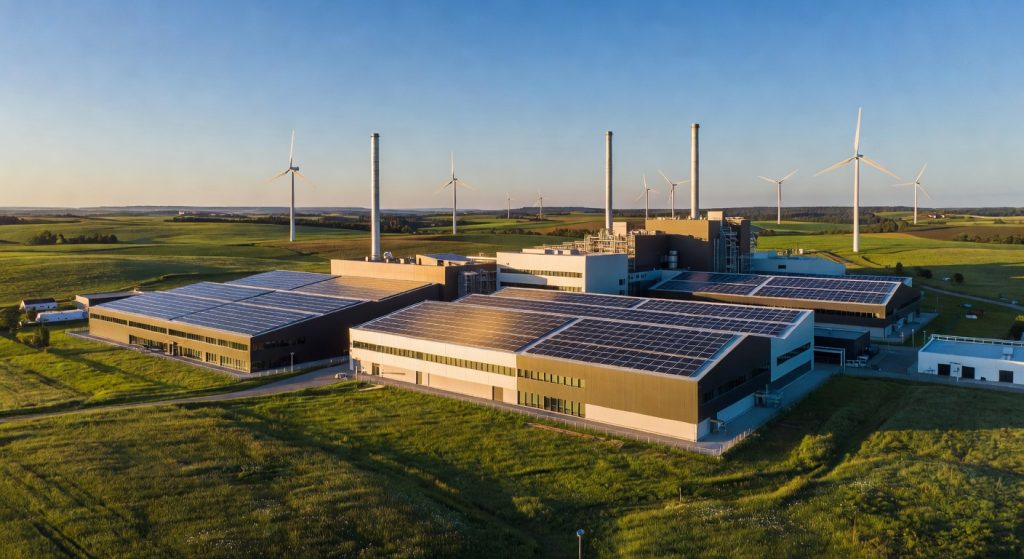
Europe’s climate ambition is undergoing a quiet but profound transformation. What began as the EU Green Deal — a sweeping environmental regulation framework launched in 2019 with the goal of making Europe the world’s first climate-neutral continent — is now being recast through the lens of industrial competitiveness, energy security, and geopolitical resilience. The latest evidence of this shift: the European Commission’s proposal of the Industrial Accelerator Act in early March 2026.
For citizens, businesses, and policymakers alike, understanding this pivot is essential. The rules governing everything from public procurement to carbon markets are changing — and the stakes for Europe’s long-term sustainability trajectory could not be higher.
From Green to Clean: The Industrial Accelerator Act Explained
The Industrial Accelerator Act introduces a significant new dimension to EU climate policy: “Made in EU” and low-carbon requirements embedded directly into public procurement rules and support schemes. Strategic sectors — including steel, cement, aluminium, automotive, and net-zero technologies — are now explicitly targeted.
In practical terms, this means that when public authorities across the EU spend taxpayer money, they will increasingly be required to favour suppliers who meet European manufacturing and carbon standards. It is a deliberate attempt to link environmental regulation with industrial policy, ensuring that Europe’s green transition also strengthens its economic base rather than offshoring emissions and jobs to less regulated markets.
This approach mirrors — and in some ways responds to — the United States’ Inflation Reduction Act, which used similar buy-local incentives to attract clean energy investment. The message from Brussels is clear: climate leadership and industrial competitiveness are no longer separate conversations.
The 2040 Climate Target and the Future of Carbon Markets
The Industrial Accelerator Act does not exist in isolation. It sits within a broader policy architecture that includes the EU’s proposed 90% emissions reduction target by 2040, expected to be codified through an amendment to the EU Climate Law. This target, if confirmed, would represent one of the most ambitious legally binding climate commitments of any major economy in the world.
Equally significant is the expected full operationalisation of the Carbon Border Adjustment Mechanism (CBAM) in 2026. CBAM effectively places a carbon price on imports from countries with weaker climate policy frameworks, levelling the playing field for European industry and discouraging carbon leakage. Together with the EU Emissions Trading System (ETS), these instruments form the backbone of Europe’s carbon markets architecture.
However, investor confidence in these markets has been complicated by recent policy rollbacks. Weakened deforestation rules and diluted corporate supply chain obligations — part of a broader push for regulatory simplification — have introduced uncertainty. Sustainability reporting requirements, once seen as a cornerstone of the EU’s transparency agenda, have also faced pressure from industry lobbying seeking reduced compliance burdens.
Balancing Ambition With Political Reality
The February 2026 five-year review of the Green Deal laid bare the central tension Europe now faces. The review acknowledged meaningful progress — renewable energy deployment has accelerated, and emissions have continued to fall — but it also signalled a deliberate reframing: the Green Deal is increasingly described not as a purely environmental project, but as a clean industrial strategy tied to energy security and global competitiveness.
Critics warn that this reframing risks diluting the urgency of the climate agenda. Environmental groups point out that rolling back deforestation and supply chain rules sends contradictory signals to markets and trading partners. Supporters, meanwhile, argue that embedding climate goals within an industrial competitiveness framework is the only politically sustainable path forward in an era of rising energy costs and geopolitical pressure.
- 90% emissions reduction target proposed for 2040 under the EU Climate Law
- CBAM set to become fully operational in 2026, covering steel, cement, aluminium, fertilisers, and electricity
- The Industrial Accelerator Act targets strategic sectors with new low-carbon procurement rules
- Recent rollbacks on deforestation and supply chain rules have raised concerns about regulatory consistency
What This Means for Businesses and Citizens
For European companies, the message is increasingly clear: aligning with EU Green Deal standards is not optional — it is becoming a condition of market access, public funding, and long-term competitiveness. Businesses in heavy industry should begin mapping their exposure to CBAM and low-carbon procurement requirements now.
For citizens and civil society, the key question is whether this new industrial-climate synthesis delivers real emissions reductions or simply repackages existing ambitions in more palatable language. The 2040 target will be a crucial litmus test.
Key takeaway: Europe’s climate policy is not retreating — it is evolving. The Industrial Accelerator Act represents a bet that binding climate ambition and industrial strategy together will prove more durable than environmental regulation alone. Whether that bet pays off will define the credibility of the EU Green Deal for the decade ahead.