Green Tech in 2026: Record Investments, Plastic Recycling Breakthroughs, and the Race to Scale the Energy Transition
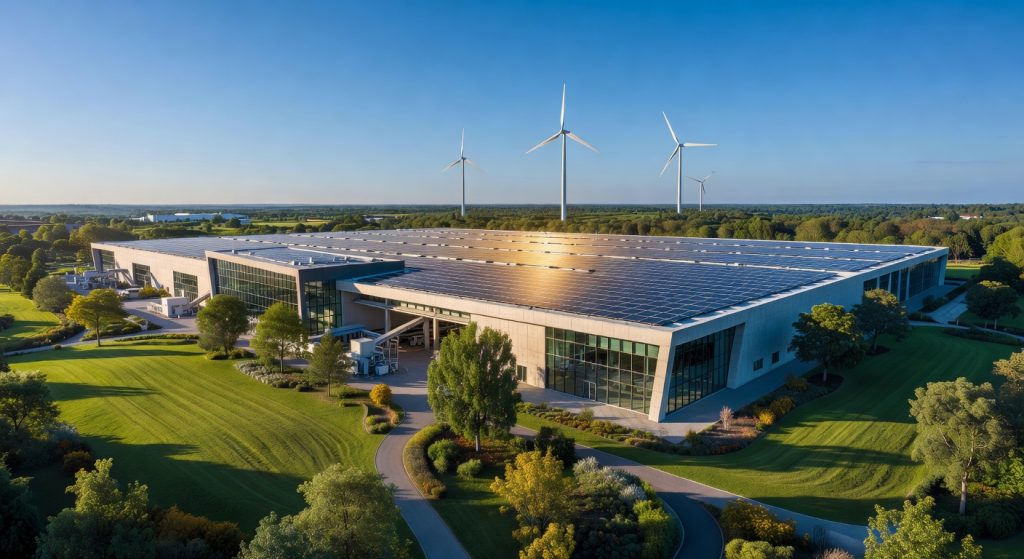
The pace of green innovation is accelerating — and the numbers are hard to ignore. Global green technology investment hit a record $2.3 trillion in 2025, the EU alone attracted $455 billion (up 18% year-on-year), and a wave of industrial milestones is turning long-promised solutions into operational reality. The latest: the UK’s largest plastics recycling plant is set to open in Corby, a landmark moment for the circular economy that signals growing momentum in sustainable materials management across Europe and beyond.
A Circular Economy Milestone: The Corby Plastics Plant
The opening of the UK’s largest plastics recycling facility in Corby, Northamptonshire, represents more than a national record — it is a signal that circular economy infrastructure is finally scaling to meet industrial demand. For years, businesses and construction firms have faced a stark choice: rely on expensive virgin plastics or navigate a fragmented, under-resourced recycling market. A facility of this scale directly addresses that bottleneck.
For European decision-makers, this matters. The EU’s Packaging and Packaging Waste Regulation is pushing manufacturers toward mandatory recycled content targets, and supply chains that can reliably source high-quality recycled plastics will hold a significant competitive advantage. The Corby plant is a template — and other European nations will be watching closely to replicate the model.
Beyond policy compliance, this kind of green innovation in waste management reduces carbon intensity across entire supply chains, supporting corporate net-zero commitments and helping businesses meet the growing expectations of ESG-conscious investors and consumers alike.
Energy Transition: Renewables Surge, But Scaling Remains the Challenge
The energy landscape is shifting with remarkable speed. Spain has doubled its solar and wind capacity in just six years, providing a buffer against fossil fuel price volatility — a lesson painfully learned during the 2022 energy crisis. Australia’s grid has crossed the 50% renewables milestone, powered in large part by rooftop solar and battery storage. And the UK has commissioned its first deep geothermal plant, now delivering clean, 24/7 baseload power to 10,000 homes.
These are not isolated achievements. They reflect a systemic shift in how nations and utilities are approaching energy security. Geothermal, in particular, is gaining serious momentum: backed by major players like Google through its investment in Fervo Energy, advanced geothermal is emerging as a critical complement to intermittent solar and wind — offering the kind of dispatchable clean power that smart cities and industrial users urgently need.
Yet analysts caution that investment volumes, while record-breaking, may not be sufficient to hit 2030 climate targets. Grid infrastructure, long-duration storage, and electric mobility networks all require faster scaling. The $893 billion invested globally in electrified transport in 2025 is substantial — but deployment of EV charging infrastructure, particularly in Southern and Eastern Europe, still lags behind vehicle adoption rates.
Corporate Commitments and the Electrification Wave
The private sector is increasingly driving the energy transition from within. ABB has cut emissions by 97% at its Australian manufacturing site through electrification — a proof-of-concept for heavy industry decarbonisation. Nike and Mitsui have signed a solar power purchase agreement covering 70% of Nike’s electricity needs in Japan. Across the globe, 445 companies are now committed to 100% renewable electricity through the RE100 initiative, and 116 firms have pledged full fleet electrification under EV100.
These corporate moves are not just good optics. They are reshaping procurement markets, accelerating demand for cleantech solutions, and creating the stable revenue streams that make large-scale green infrastructure financially viable. For European businesses still weighing the transition, the competitive calculus is shifting: early movers are locking in cost advantages through long-term renewable contracts and efficiency gains from AI-powered grid tools and smart infrastructure.
What This Means for Europe — and What Comes Next
Europe enters 2026 in a position of relative strength in the global cleantech race, but the window to consolidate that lead is narrowing. Key implications for citizens, businesses, and policymakers include:
- Citizens can expect more stable electricity prices as renewables displace fossil fuels — but only if grid investment keeps pace with generation capacity.
- Businesses in manufacturing, logistics, and construction should accelerate engagement with circular economy suppliers and renewable energy contracts before demand outstrips availability.
- Policymakers must prioritise grid modernisation, recycling infrastructure, and EV charging networks — the unglamorous backbone that makes the green transition work in practice.
The key takeaway: The technology exists, the investment is flowing, and the corporate will is building. The defining challenge of the next five years is not invention — it is deployment at speed and scale. From the plastics recycling plant in Corby to geothermal wells and solar-powered factories, the pieces of a sustainable industrial system are falling into place. Europe’s task is to connect them.