EU Climate Policy at a Crossroads: What the Industrial Accelerator Act Means for the Green Deal
Five years after the European Green Deal was launched with sweeping ambition, the European Union finds itself navigating a more turbulent political and economic landscape. On March 4, 2026, the European Commission proposed the Industrial Accelerator Act — a significant policy move that signals a recalibration of how Brussels balances climate ambition with industrial competitiveness. For citizens, businesses, and policymakers alike, understanding what this shift means is more urgent than ever.
The Industrial Accelerator Act: Competitiveness Meets Climate Policy
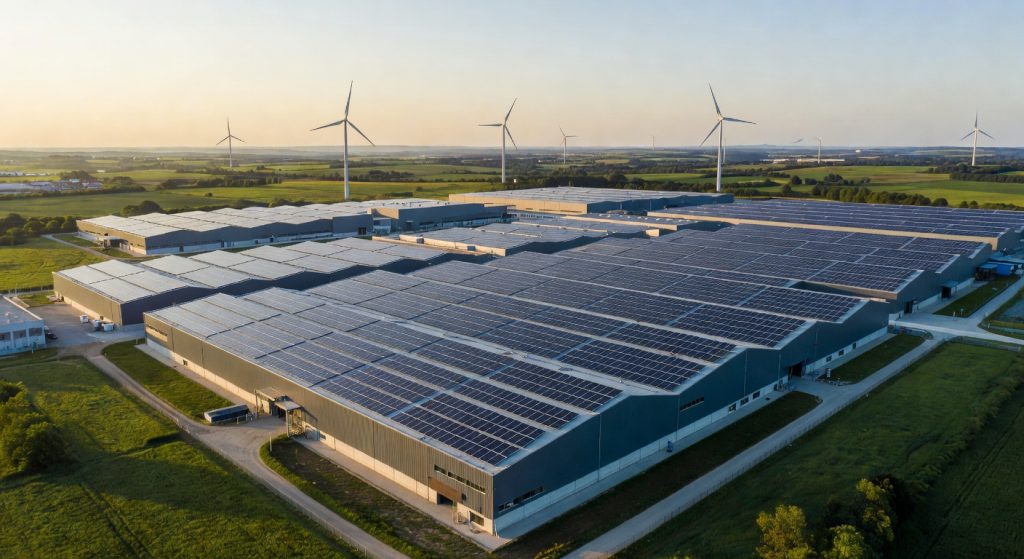
The Industrial Accelerator Act is designed to fast-track permits, reduce regulatory burdens, and mobilise investment for strategic industries across the EU — from clean technology manufacturing to critical raw materials processing. At first glance, it echoes the logic of the US Inflation Reduction Act and mirrors concerns raised in Mario Draghi’s landmark 2024 report on European competitiveness, which warned that the EU risked falling behind both the United States and China in the race for green industrial leadership.
Proponents argue the Act is a necessary complement to EU climate policy, not a retreat from it. By accelerating the deployment of clean industries on European soil, the argument goes, the bloc can decarbonise faster while securing jobs and supply chains. Critics, however, warn that loosening environmental regulation in the name of speed risks undermining the very foundations of the Green Deal — including biodiversity protections, environmental impact assessments, and community consultation rights.
- The Act targets strategic sectors including solar panel manufacturing, battery production, and green hydrogen infrastructure.
- Permit timelines for qualifying projects could be cut by up to 50% under the proposed framework.
- The proposal must still pass through the European Parliament and Council, where significant debate is expected.
The Green Deal at Five: Progress, Tensions, and Unfinished Business
A February 2026 review of the EU Green Deal‘s five-year trajectory paints a picture of genuine but uneven progress. The EU has successfully expanded its renewable energy capacity, with wind and solar now accounting for over 27% of electricity generation. The carbon markets underpinning the EU Emissions Trading System (ETS) have matured considerably, with carbon prices providing a meaningful economic signal for industrial decarbonisation.
Yet the political winds have shifted. The 2024 European Parliament elections brought a more conservative majority, and several member states have pushed back against the pace of the green transition — particularly in agriculture, transport, and building renovation. The Commission’s own strategic assessments for 2026 acknowledge that the year is pivotal: key legislation including the Corporate Sustainability Reporting Directive (CSRD) and the Carbon Border Adjustment Mechanism (CBAM) are entering their implementation phases, testing whether EU ambition translates into real-world change.
The tension is not merely political. Small and medium-sized enterprises across Europe are grappling with new sustainability reporting obligations, while larger corporations face increasing pressure from investors, regulators, and consumers to demonstrate credible decarbonisation pathways.
Global Context: Europe’s Role in a Fragmented Climate Landscape
Europe’s internal debates do not occur in a vacuum. With the United States having withdrawn from the Paris Agreement for a second time under the Trump administration, and with global emissions still not on track to limit warming to 1.5°C, the EU’s choices carry outsized geopolitical weight. Whether Brussels can maintain its role as the world’s most ambitious climate regulator — while also keeping its industries competitive — will shape not just European futures, but global climate diplomacy heading into COP31.
The CBAM, which places a carbon price on imports of carbon-intensive goods, is already generating friction with trading partners. Meanwhile, the EU’s insistence on robust environmental regulation standards in trade agreements is being tested by new geopolitical alliances and economic pressures.
What This Means for Businesses and Citizens
For European businesses, 2026 is a year of adaptation. Compliance with CSRD sustainability reporting requirements, engagement with carbon markets, and strategic planning around the Industrial Accelerator Act will all demand attention. For citizens, the stakes are equally high: the quality of environmental protections, the affordability of the energy transition, and the credibility of Europe’s climate commitments are all in play.
The key takeaway is this: the EU Green Deal is not dead, but it is being renegotiated in real time. The Industrial Accelerator Act is a test of whether Europe can accelerate its green transition without sacrificing the regulatory rigour that has made its climate policy a global benchmark. The outcome of that test will define European sustainability policy for the decade ahead.