EU Green Deal at a Crossroads: €103 Million in LIFE Funding and the Battle Over 2026 Climate Rules
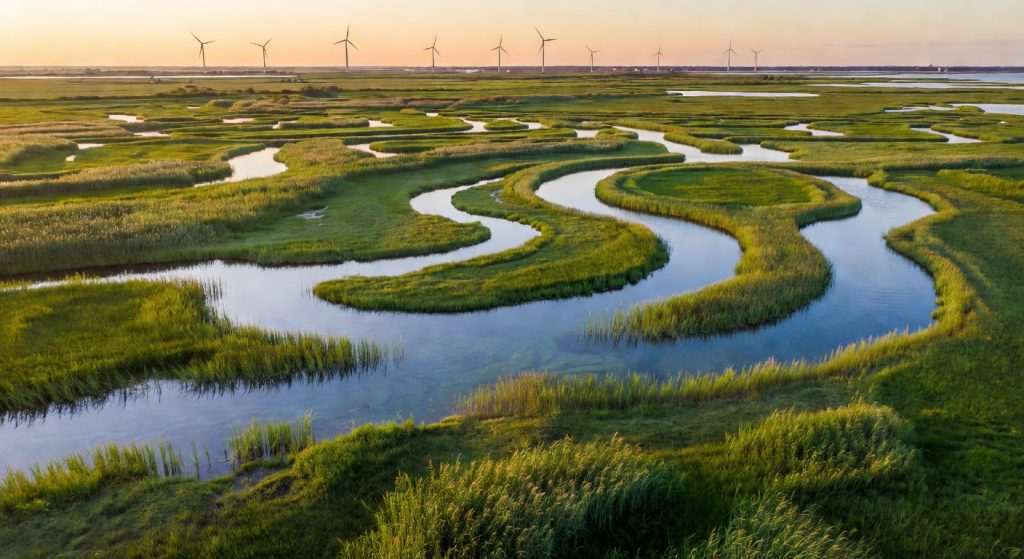
The European Union is sending two signals at once. On one hand, the European Commission has just approved €103 million for seven strategic green projects across Finland, France, Greece, the Netherlands, Portugal, Slovakia, and Spain — a clear commitment to climate adaptation, water resilience, marine restoration, and the circular economy. On the other, key pillars of the EU Green Deal are being quietly weakened: the deforestation regulation has been diluted, the carbon market extension to transport and buildings delayed, and the 2035 combustion engine ban is back under political fire. Welcome to the paradox at the heart of European climate policy in 2025.
LIFE Programme Funding: Pragmatic Green Investment or Political Cover?
The €103 million approved under the LIFE Programme is part of a broader €284 million funding envelope and targets some of the most pressing environmental challenges facing EU member states. Projects span climate adaptation in drought-prone southern Europe, marine ecosystem restoration in the Mediterranean and Atlantic, and sustainable land use initiatives across northern and central Europe.
Framing matters here. The Commission is deliberately positioning these investments not just as environmental spending, but as drivers of economic resilience, public health, and competitiveness — language borrowed directly from the Draghi report on EU competitiveness. This is a calculated move: by anchoring green spending to economic performance metrics, Brussels is building a more politically durable case for environmental regulation at a time when member states are pushing back hard on perceived regulatory overreach.
For citizens and local communities, these projects represent tangible outcomes — cleaner coastlines, more resilient water systems, and healthier ecosystems. For policymakers, they are proof points that Green Deal spending delivers measurable value beyond ideology.
Regulatory Rollbacks and the Competitiveness Trap
The same week green funding flows, the EU’s broader regulatory architecture is under significant stress. The Omnibus package — inspired by the Draghi report — is streamlining rules around sustainability reporting (CSRD), sustainable finance disclosure (SFDR), and the EU Taxonomy. The stated goal is to reduce administrative burdens on businesses and scale green investment. The risk, critics warn, is that simplified rules become weakened rules.
The delays to the Emissions Trading System (ETS) extension for transport and buildings are particularly concerning for carbon market integrity. Investors who made early decarbonization bets based on clear regulatory timelines now face uncertainty. Early movers — companies that invested in clean technology ahead of mandates — risk being penalized competitively if those mandates are pushed back or softened. This dynamic threatens to undermine the very investor confidence the EU needs to mobilize the trillions required for the green transition.
- Deforestation Regulation: Scope reduced, enforcement timelines extended under industry pressure.
- ETS for Buildings and Transport: Delayed, with implementation uncertainty now clouding carbon markets.
- 2035 Combustion Engine Ban: Under renewed political challenge from several member states and automotive lobbies.
2026: The Year That Will Define Post-2030 Climate Rules
Despite the current turbulence, 2026 is shaping up to be a genuinely decisive year for European climate policy. The Commission’s agenda includes the Industrial Accelerator Act, a new Circular Economy Act, an Innovation Act, revised public procurement rules, and a comprehensive electrification plan paired with a heating and cooling strategy aimed at cutting fossil fuel imports.
Perhaps most consequentially, negotiations will begin on the next EU long-term budget (2028–2034), with a target of directing 35% of funds toward climate and environment. How that target is defined, measured, and enforced will determine whether the EU’s green ambitions survive the political pressures of the coming decade. Simultaneously, post-2030 climate rules must be drafted — a process that will require consensus across member states with increasingly divergent economic interests and political climates.
Implications for Businesses, Citizens, and Investors
For businesses navigating sustainability reporting obligations, the Omnibus simplifications offer short-term relief but long-term uncertainty. Streamlined CSRD and SFDR rules may reduce compliance costs now, but frequent regulatory revisions make strategic planning harder. Companies that have already built robust ESG frameworks may find themselves ahead of the curve — or simply ahead of a curve that keeps moving.
For citizens, the stakes are ecological and economic. LIFE-funded projects directly improve quality of life — from cleaner water to more resilient coastlines — but only if political commitment to environmental regulation holds. For investors in carbon markets and green infrastructure, 2026 budget negotiations and ETS reviews are must-watch events.
Key takeaway: The EU Green Deal is not dead, but it is being renegotiated in real time. The €103 million LIFE investment signals continued commitment; the regulatory rollbacks signal political strain. The decisions made in 2026 — on budgets, carbon markets, and post-2030 rules — will determine whether Europe’s green transition accelerates or stalls. The window for course correction is open, but it will not stay open indefinitely.