Carbon Farming and Smarter Chemistry: Europe’s Agriculture Stands at a Turning Point
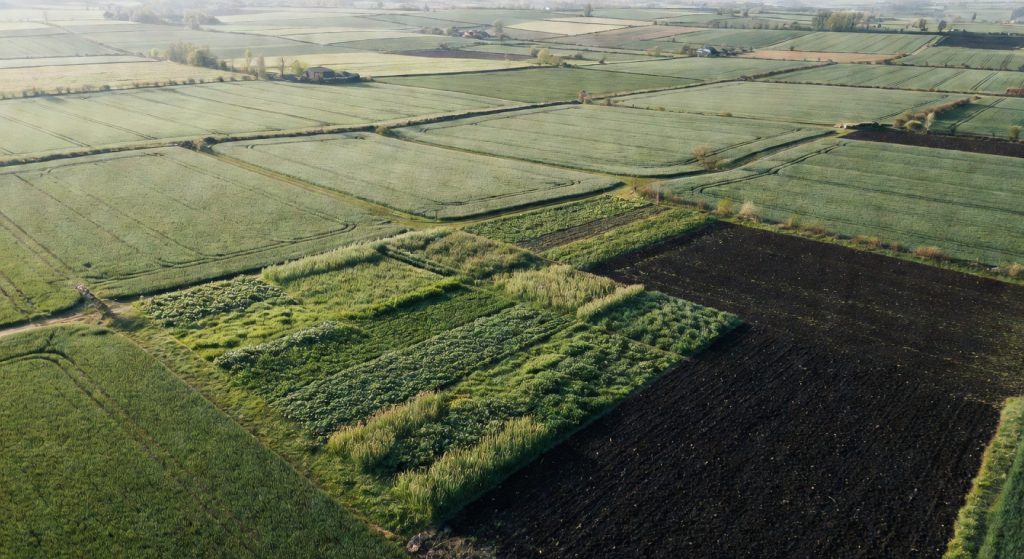
Something significant is happening in European fields — not just in the soil, but in the conversations shaping how that soil will be managed for decades to come. In mid-March 2026, two developments landed almost simultaneously: the European Carbon Farming Summit convened in Padua, Italy, drawing together researchers, policymakers, and farmers to tackle the mechanics of scaling regenerative agriculture; and specialty chemical company Clariant unveiled advances in agricultural formulations designed to work with biological systems rather than against them. Taken together, these signals point toward a food system in transition — one where sustainable agriculture is no longer a fringe ambition but an operational priority.
The Carbon Farming Summit: Turning Science Into Policy
Running from March 17 to 19 in Padua, the European Carbon Farming Summit 2026 brought together one of the continent’s most concentrated gatherings of agricultural stakeholders. The central question on the table: how do we move carbon farming from pilot projects to mainstream practice across the EU’s enormously diverse farming landscape?
Carbon farming — the practice of managing land to sequester atmospheric CO₂ in soil and biomass — sits at the intersection of climate policy, food systems, and rural economics. The EU has been cautiously building frameworks to reward farmers for verified carbon sequestration, but scaling these mechanisms is technically and politically complex. Soil carbon measurement remains expensive and contested. Additionality — proving that sequestration would not have happened anyway — is difficult to demonstrate. And smallholder farmers, who make up a large share of European agriculture, often lack the resources to navigate certification processes.
What the Padua summit underscored is that multi-stakeholder collaboration is not optional — it is the only viable path. Agroecology principles, which emphasise working with natural ecosystem processes, are increasingly being cited as the scientific backbone for carbon farming schemes that genuinely deliver environmental integrity. The risk, as several European researchers have warned, is that poorly designed carbon markets reward accounting tricks rather than real ecological outcomes. Safeguarding environmental integrity, as the summit’s agenda explicitly framed it, means building robust monitoring, reporting, and verification (MRV) systems before scaling incentives.
Clariant’s Formulation Advances: When Chemistry Meets Biology
On the same day the Padua summit opened, Clariant — a Swiss-headquartered specialty chemical company with a stated sustainability mandate — presented new developments in agricultural formulation stability and biological compatibility. The announcement may sound technical, but its implications for supply chain sustainability are substantial.
Modern sustainable agriculture increasingly relies on biological inputs: microbial inoculants, biopesticides, and plant-based crop protection agents. These are far more environmentally benign than conventional synthetic chemicals, but they are also far more sensitive. A biological agent can be rendered ineffective by an incompatible carrier, an unstable emulsion, or a formulation that degrades its active components before application. Clariant’s work targets precisely this bottleneck — developing chemical carriers and adjuvants that preserve the efficacy of biological actives throughout the supply chain.
This matters because the shift toward biological crop protection is accelerating across Europe, driven by the EU’s Farm to Fork Strategy, which targets a 50% reduction in pesticide use by 2030. If biological alternatives cannot be reliably formulated, stored, and applied at scale, that target remains aspirational. Advances in formulation science are, in this sense, infrastructure for the transition.
Implications: A System Beginning to Align
What makes this particular moment interesting is the convergence of signals across different parts of the food system:
- Policy frameworks (EU carbon farming mechanisms, Farm to Fork) are creating market incentives for regenerative and low-input agriculture.
- Scientific communities are sharpening the tools — from MRV systems to agroecology research — needed to make those incentives credible.
- Industry actors, including chemical companies, are repositioning their product lines to serve biological and sustainable agriculture markets.
- Plant-based and regenerative food supply chains are increasingly demanding verified sustainability credentials from farm to shelf.
None of this means the transition is smooth or guaranteed. Greenwashing remains a serious risk — in carbon markets, in product labelling, and in corporate sustainability claims. The gap between announced ambitions and measurable outcomes in European agriculture is still wide. But the architecture of a more coherent system is becoming visible.
The key takeaway is this: sustainable agriculture in Europe is no longer waiting for a single breakthrough technology or a single decisive policy. It is being built, imperfectly and incrementally, through the alignment of science, regulation, and industry — and events like the Padua summit are where that alignment gets negotiated in real time. For citizens, professionals, and decision-makers alike, paying attention to these convergence points is how you track where the food system is actually heading.