Europe’s Fertiliser Dilemma: Can Nutrient Recycling Cut Import Dependence?
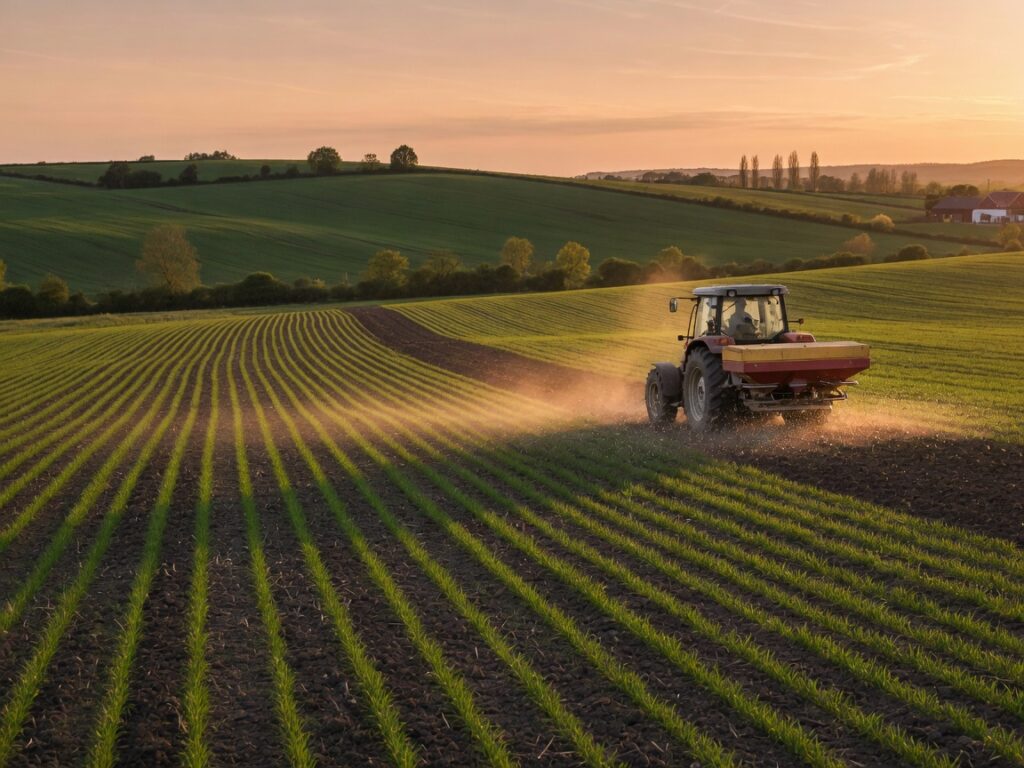
Europe’s farmers have spent the past three years grappling with volatile fertiliser prices, a direct consequence of the continent’s heavy reliance on imported nitrogen, phosphorus, and potassium. Now, the European Commission’s Joint Research Centre (JRC) is pushing a solution that has long sat at the margins of policy debate: turning livestock manure and organic waste into safe, high-quality nutrient products that can replace a meaningful share of synthetic fertiliser imports.
The proposal centers on expanding the RENURE framework (Recovered Nitrogen from Manure), which would allow processed digestates to be used more flexibly, including additional nitrogen application in nitrate vulnerable zones currently subject to strict limits under the EU’s Nitrates Directive. For a continent that imports an estimated 25-30% of its nitrogen fertiliser needs, often from Russia, Egypt, and other geopolitically sensitive suppliers, this is more than a technical adjustment—it’s a resilience strategy.
Why Nutrient Circularity Matters Now
The war in Ukraine exposed just how exposed European food systems are to global fertiliser markets. Natural gas price spikes, which directly affect ammonia-based nitrogen production, sent fertiliser costs soaring and rattled farm budgets across the continent. The JRC’s research reframes this vulnerability as an opportunity: the EU already produces vast quantities of livestock manure and organic residues that, if properly processed, could substitute for a significant share of mineral fertiliser.
This is sustainable agriculture and circular economy thinking applied directly to input supply chains. Rather than treating manure as waste to be regulated away, the RENURE approach treats it as a resource to be recovered, refined, and redeployed—closing nutrient loops that have been broken since the mid-20th century shift toward synthetic fertilisers. The approach also aligns with agroecology principles that prioritize recycling biological resources over external chemical inputs, though scaling it safely requires rigorous standards to prevent the nitrate leaching and eutrophication problems the original directive was designed to prevent.
A Global Pattern of Science-Led Food System Reform
Europe’s nutrient strategy doesn’t exist in isolation. At the FAO’s recent World Food Forum and Science & Innovation Forum, delegates reinforced a similar message: agrifood systems need science, technology, and innovation to become simultaneously more efficient, inclusive, and resilient. This is a global policy consensus now, not a niche concern.
Vietnam offers a striking parallel example. Its Mekong Delta low-emission rice initiative aims to bring one million hectares under climate-smart cultivation, combining reduced methane emissions with improved yields and stronger export competitiveness. It’s a model of how national governments are trying to decarbonize staple crop production without sacrificing farmer livelihoods—a balance Europe is also seeking with its nutrient reforms.
Meanwhile, South Africa’s Western Cape used World Food Day to spotlight household and community food-production projects, a reminder that food systems resilience isn’t only about industrial-scale innovation. Nutrition security, skills-building, and small-producer support remain essential complements to high-tech solutions. In the United States, sustainability conversations are increasingly tied to precision agriculture, digital tools, and clean-energy-linked farm investment, suggesting that supply chain sustainability increasingly depends on data and connectivity as much as on soil chemistry.
What This Means for Farmers, Markets, and Consumers
If RENURE expansion moves forward, European farmers in nitrate vulnerable zones could gain more flexibility in nutrient management while reducing exposure to imported fertiliser price shocks. Potential implications include:
- Lower input costs for farmers who adopt processed digestates instead of mineral fertilisers
- Reduced geopolitical exposure to fertiliser-exporting regions affected by conflict or trade disruption
- Stronger links between livestock and crop sectors, reinforcing circular nutrient flows
- New compliance and monitoring demands to ensure water quality protections aren’t undermined
Consumers may not see immediate changes in grocery prices, but a more resilient fertiliser base could stabilize food prices during future energy or geopolitical shocks—an increasingly relevant consideration as climate volatility intersects with supply chains. This also complements the growing shift toward plant-based diets, since efficient nutrient recycling supports crop production without expanding livestock-driven land pressure.
Key Takeaway
Europe’s push to recycle nutrients through frameworks like RENURE reflects a broader global realization: sustainable agriculture isn’t just about what’s grown, but about rebuilding the resource loops that make food systems resilient. Whether through Vietnam’s climate-smart rice, South Africa’s community gardens, or Europe’s manure-to-fertiliser pipeline, the common thread is clear—nutrient and resource circularity is becoming central to global food security strategy, not a peripheral environmental nicety.