Europe’s Protein Shift: How Plant-Based Transition Could Reshape Food Systems by 2035
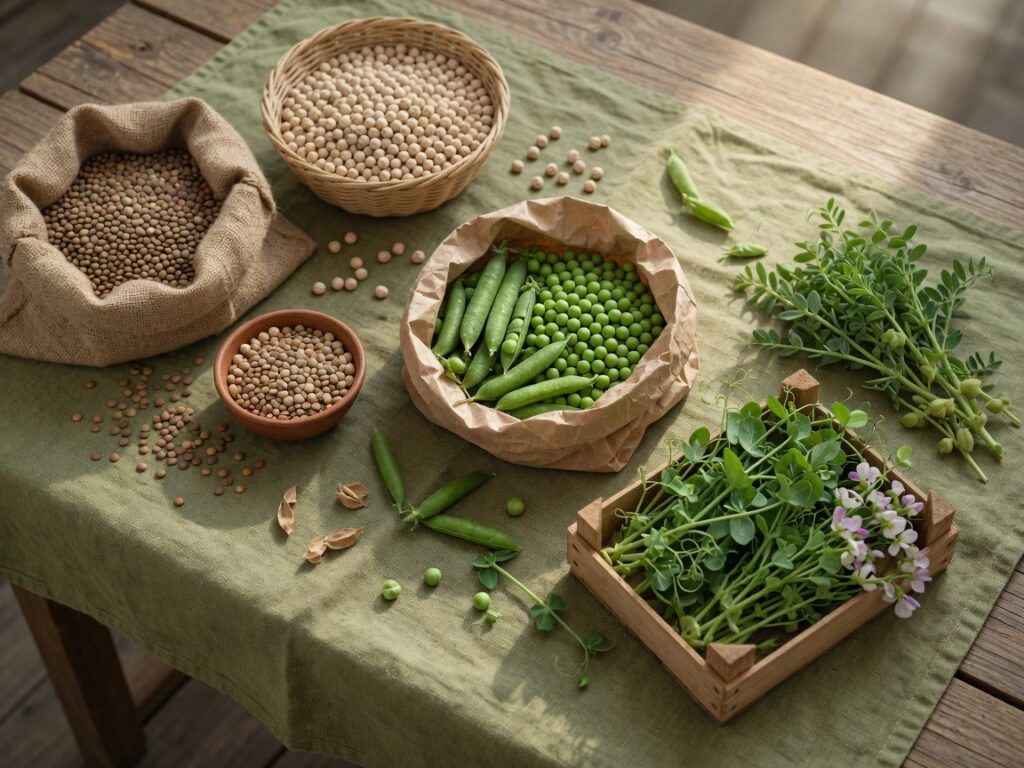
Europe’s food system stands at an inflection point. New analysis from the European Environment Agency suggests that diversifying the continent’s protein supply—moving beyond heavy reliance on imported animal feed and conventional livestock production—could cut EU agricultural greenhouse gas emissions by roughly 5% by 2035. That figure, modest at first glance, represents a meaningful lever in a sector that has proven stubbornly resistant to decarbonization. It also signals a broader shift: sustainable agriculture in Europe is increasingly being defined not just by farming practices, but by what ends up on consumer plates.
Why Protein Diversification Matters for Food Security
The EEA’s argument rests on a straightforward logic: Europe currently imports large volumes of soy and other feed crops to sustain livestock production, creating exposure to volatile global markets, land-use pressures abroad, and supply disruptions. Diversifying toward pulses, legumes, algae, insect protein, and plant-based alternatives grown domestically would reduce this dependency while strengthening food systems resilience.
This isn’t purely an environmental argument—it’s a strategic one. The war in Ukraine and subsequent commodity price shocks exposed how fragile European food security can be when supply chains stretch across continents. Protein diversification, framed this way, becomes a hedge against geopolitical risk as much as a climate measure. It also aligns with agroecology principles that emphasize local production, crop rotation with nitrogen-fixing legumes, and reduced input dependency—approaches that build soil health while cutting emissions.
Retailers Are Moving Faster Than Regulation
While EU-level policy debates continue, supermarket chains are already setting concrete targets. A new European supermarket sustainability ranking places several Dutch retailers among the leaders in climate and protein-transition planning. Multiple chains have committed to ambitious 2030 goals: ensuring that 60% of proteins sold come from plant-based sources.
This retail-driven momentum matters because supermarkets sit at a uniquely powerful point in the supply chain—they shape consumer choice through pricing, shelf placement, and product availability. When major chains commit to plant-based targets, they send demand signals upstream to producers and downstream to shoppers simultaneously. It’s a market mechanism accelerating what policy alone has struggled to achieve.
However, ambition at the retail level only works if the broader supply chain can keep pace. This is where friction is emerging.
The Bureaucracy Problem: Too Many Certificates, Too Little Standardization
At Fruit Attraction, one of Europe’s major trade fairs for the fresh produce sector, suppliers voiced a consistent frustration: the proliferation of overlapping sustainability certificates is becoming counterproductive. Rather than driving genuine environmental improvement, the current patchwork of certification schemes often just adds administrative burden without proportionate benefit.
Suppliers are calling for:
- Fewer, more harmonized sustainability certificates across EU markets
- Simplified compliance rules that reduce duplication
- Standardized digital reporting systems to replace fragmented paperwork
This matters enormously for supply chain sustainability. Small and medium-sized producers, who form the backbone of European agriculture, often lack the resources to navigate dozens of certification schemes simultaneously. Simplification isn’t about lowering standards—it’s about making compliance achievable and verifiable without drowning operators in bureaucracy. Digital traceability tools, if standardized, could actually improve transparency while reducing cost.
What This Means Going Forward
These threads—protein diversification, retail-driven plant-based targets, and calls for regulatory simplification—are converging into a single narrative: Europe’s food systems are being restructured around resilience, health, and climate alignment simultaneously. The EU’s Food 2040 research agenda is gathering stakeholder input precisely because no single policy lever will suffice. Dietary shifts, supply chain reform, and farming practice changes need to move together.
For citizens, this likely means more plant-based options at familiar price points. For producers, it means navigating a transition period where certification reform could ease operational pressure. For policymakers, the EEA’s emissions estimate provides a concrete target to build regulation around.
Key Takeaway
Europe’s path toward sustainable food systems won’t be defined by a single breakthrough, but by the alignment of retailer ambition, farmer practicality, and policy coherence. The 5% emissions reduction potential from protein diversification is achievable only if supply chains are simplified enough for producers to adapt—making bureaucratic reform just as critical as consumer-facing plant-based targets.