Biodiversity Meets the Food Chain: Inside Brussels’ Push for Nature-Positive Agriculture
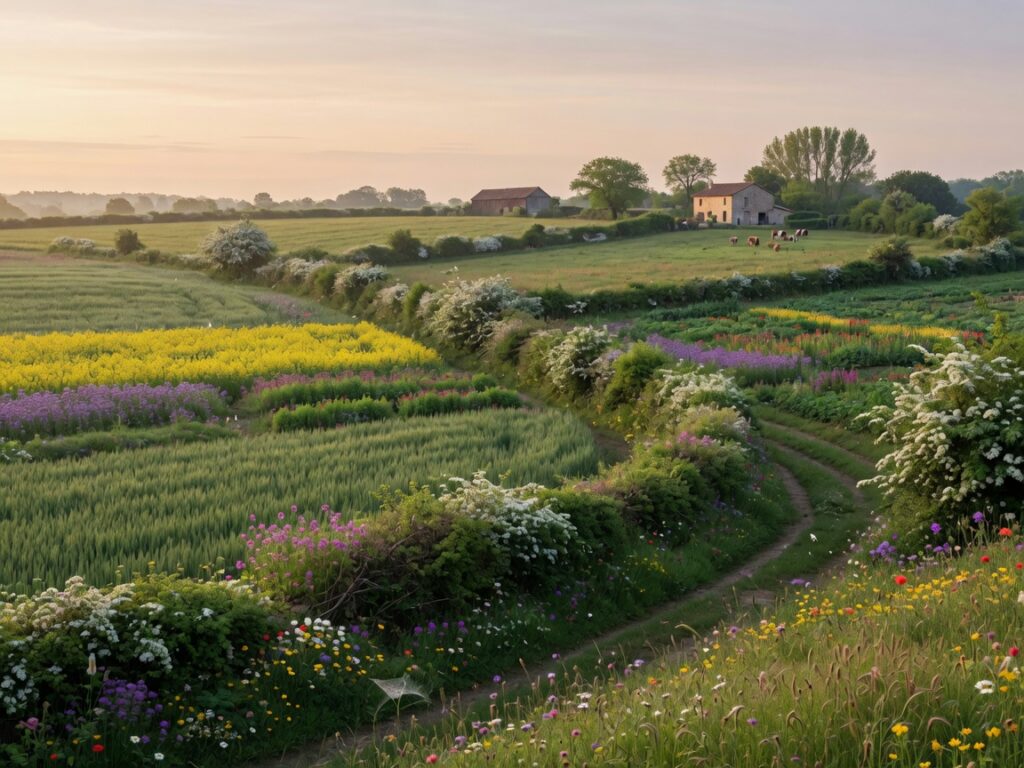
On 6–7 October, Brussels became the epicentre of a conversation that is increasingly unavoidable for Europe’s agri-food sector: how do we grow more food while protecting the ecosystems that make food production possible in the first place? The two-day conference, organised around the LIFE BGP Food initiative and supported by CINEA, brought together EU officials, farmers, retailers, and value-chain stakeholders to tackle a question that sits at the heart of modern sustainable agriculture: can biodiversity be measured, incentivised, and credibly communicated without becoming another greenwashing exercise?
The stakes are high. Europe’s food systems depend on pollinators, healthy soils, and resilient ecosystems that are under mounting pressure from intensive farming, climate volatility, and land-use change. The Brussels discussions signal that biodiversity is no longer a peripheral environmental concern — it is becoming a structural issue for agricultural policy, investment, and corporate strategy alike.
Biodiversity Credits: Promising Tool or Premature Experiment?
Among the most debated topics was the emergence of biodiversity credits — tradable units meant to quantify and reward verified ecological improvements on farmland, similar in spirit to carbon credits but far more complex to standardise. Unlike carbon, which can be measured in tonnes of CO2-equivalent, biodiversity encompasses soil microbiomes, species abundance, habitat connectivity, and genetic diversity, making a single metric elusive.
Conference participants stressed that credible incentive schemes require robust, science-based indicators rather than simplified proxies. Several speakers pointed to pilot projects already underway across EU member states that attempt to link payments to measurable outcomes such as hedgerow restoration, cover-cropping, or reduced pesticide use — practices closely aligned with agroecology principles. The consensus: biodiversity credits could unlock much-needed private finance for nature restoration, but only if transparency and third-party verification are built in from the start, avoiding the pitfalls that have plagued parts of the voluntary carbon market.
Supply Chains Under Scrutiny: Traceability Meets Scope 3
Biodiversity cannot be decoupled from the broader question of supply chain sustainability. As EU regulations such as the Corporate Sustainability Reporting Directive and deforestation rules tighten disclosure requirements, agri-food companies are under growing pressure to trace environmental impacts back to the farm gate — including Scope 3 emissions, which often account for the vast majority of a food company’s carbon footprint.
Industry surveys referenced during the conference show that many large European enterprises are no longer treating sustainability as a compliance afterthought but are building dedicated internal functions to manage it. This shift reflects a broader trend: resilience and traceability are becoming competitive differentiators, not just regulatory checkboxes. Key priorities raised included:
- Digital traceability tools to track ingredients from farm to fork
- Supplier engagement programmes tied to biodiversity and emissions targets
- Diversification of sourcing to reduce climate-related supply risk
- Integration of regenerative practices into procurement standards
Notably, the rise of plant-based product lines was cited as both an opportunity and a complexity for supply chains — offering lower land and water footprints in many cases, while requiring equally rigorous traceability for novel ingredients like legumes, algae, and fermentation-derived proteins.
From Brussels to the Field: What Comes Next
The conference arrives amid a packed autumn calendar of EU and global food-system events focused on regenerative agriculture, bio-based value chains, and farmer-centred innovation. This momentum suggests that biodiversity considerations are increasingly being woven into mainstream agricultural policy rather than treated as a niche environmental add-on.
For policymakers, the implication is clear: incentive mechanisms must be designed with farmers’ practical realities in mind, ensuring schemes are accessible to smallholders as well as large agribusinesses. For companies, the message is equally direct — credible, verifiable biodiversity claims will increasingly separate genuine leaders from those merely engaging in communication exercises.
Key Takeaway
Europe’s agri-food sector stands at an inflection point where biodiversity, climate resilience, and economic viability must be pursued together, not traded off against one another. The Brussels conference underscored that credible metrics, transparent incentive schemes, and robust supply chain sustainability practices are no longer optional extras — they are becoming prerequisites for a food system capable of feeding Europe while restoring the ecosystems it depends on.