Europe’s Farm Policy Crossroads: Cutting Red Tape Without Cutting Corners on Sustainability
Europe’s agricultural sector is facing a familiar tension: how to remain environmentally ambitious while staying economically viable and administratively manageable. This week, agriculture lawmakers in the European Parliament called for stronger, simpler support measures for the EU agri-food sector, demanding less bureaucracy and more responsive policy tools. The message lands at a pivotal moment, as farmers across the continent grapple with overlapping CAP and national requirements, climate pressures, and the slow but steady shift toward sustainable agriculture.
Far from being a purely bureaucratic debate, this conversation touches everyone who eats. Simpler, better-targeted farm policy affects food prices, supply reliability, and the pace at which Europe can decarbonize its food systems. Meanwhile, on-the-ground innovation — from Spanish lettuce fields to Nordic regenerative pilots — suggests that simplification and sustainability are not mutually exclusive.
Why Compliance Fatigue Is Becoming a Policy Priority
Recent research circulated through the EU CAP Network has drawn attention to a growing problem: regulatory incoherence. Farmers often must satisfy CAP eco-schemes, national environmental law, and local permitting requirements that don’t always align, creating duplicated paperwork and compliance costs that disproportionately burden small and medium-sized farms.
The European Parliament’s AGRI committee is now pushing for measures that are more responsive and accessible, arguing that simplification is essential not just for farmer wellbeing but for the EU’s broader competitiveness in global food markets. This matters because overly complex rules can slow the adoption of genuinely sustainable practices — ironically undermining the very environmental goals the regulations intend to support.
- Overlapping CAP and national rules increase administrative costs for farmers
- Complexity can discourage smaller producers from adopting eco-schemes
- Simplified, outcome-based policy could improve both compliance and environmental results
Biodiversity as a Practical Tool, Not Just an Ideal
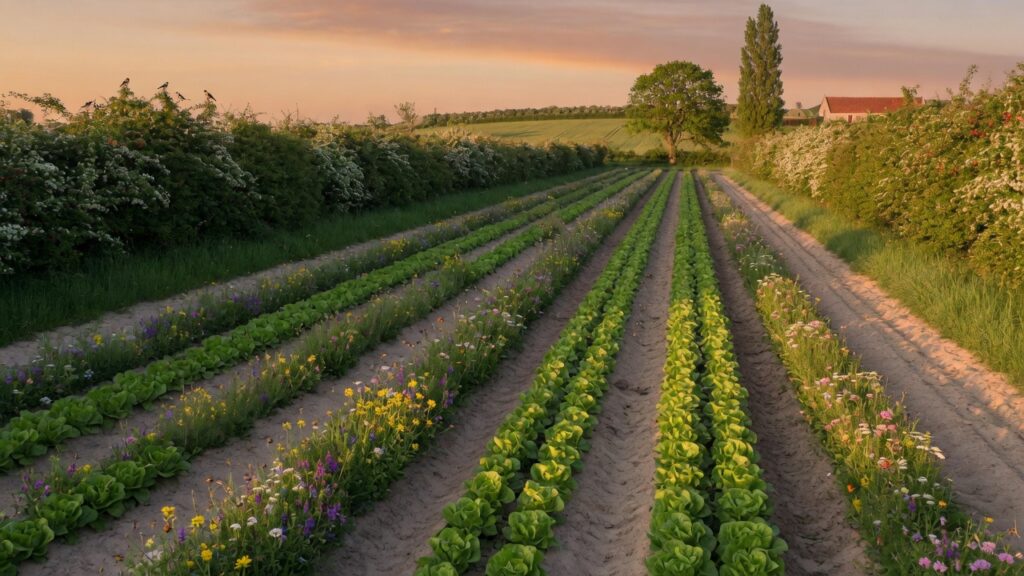
One of the most compelling signals that sustainability and simplification can align comes from Murcia, Spain, where a new bio-network pilot is monitoring and predicting pest pressure across more than 4,000 acres of lettuce, brassicas, and celery. By using biological indicators instead of relying solely on chemical inputs and reactive treatments, the project aims to improve phytosanitary efficiency while boosting on-farm biodiversity — a hands-on example of agroecology in commercial-scale practice.
This kind of biodiversity-led pest management reduces input costs, lowers environmental impact, and can simplify compliance with pesticide-reduction targets embedded in EU strategies like Farm to Fork. It also reflects a wider European trend: treating ecological health as an operational asset rather than a regulatory checkbox.
Similar thinking is driving innovation in animal health and welfare. Research projects across Belgium, Norway, and Italy are exploring how improved livestock, poultry, and aquaculture management can reduce disease risk, antibiotic use, and emissions simultaneously — reinforcing the idea that sustainable livestock systems benefit both animal welfare and climate performance.
Regenerative Agriculture Gains Institutional Backing
EIT Food, the EU-backed innovation body, has opened new calls for landscape-scale regenerative agriculture projects in Finland and Lower Silesia, alongside research into biobased soybean seed treatments tailored for European growing conditions. These initiatives point to a maturing regenerative movement — one increasingly supported by institutional funding rather than niche, farmer-led experimentation alone.
For the broader supply chain sustainability conversation, this matters because regenerative practices — cover cropping, reduced tillage, diversified rotations — directly affect soil carbon, water retention, and long-term yield stability. As more land shifts toward regenerative models, downstream actors — processors, retailers, and even plant-based food manufacturers sourcing European legumes and grains — stand to benefit from more resilient, lower-impact input chains.
What This Means for Europe’s Food Future
The throughline across these developments is clear: Europe’s agricultural transition won’t succeed through environmental ambition alone, nor through deregulation alone. It requires policy that reduces unnecessary friction while preserving genuine environmental safeguards — and practical, field-tested innovations that make sustainability the economically rational choice for farmers.
Globally, the EU’s experience offers a template. As countries from the US to parts of Asia grapple with similar tensions between productivity, regulation, and climate resilience, Europe’s blend of policy reform and grassroots agroecological innovation provides a useful, if imperfect, case study.
Key takeaway: Simplifying agricultural policy and deepening sustainability are not competing goals — when designed well, they reinforce each other, and Europe’s current wave of pilots and policy debates may determine how quickly that alignment becomes the norm rather than the exception.