AgRI 2040 and Food 2040: Europe’s New Blueprint for Resilient, Sustainable Food Systems
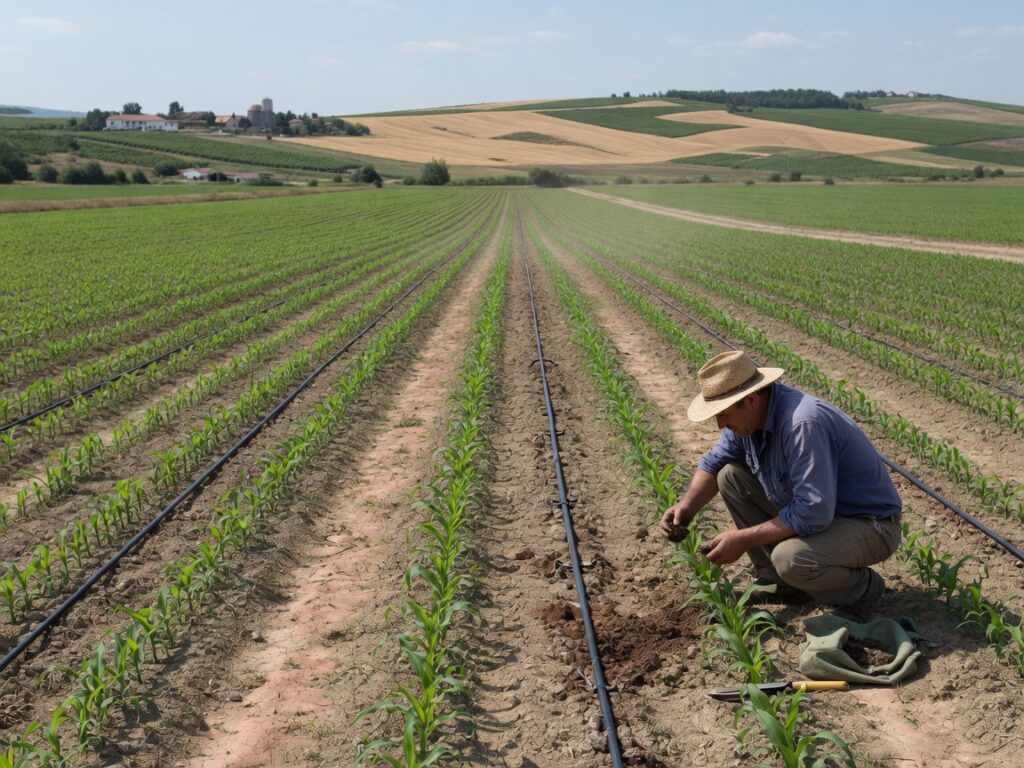
The European Commission has launched a new strategic research and innovation framework, AgRI 2040 and Food 2040, designed to connect farmers, researchers, startups and SMEs in a faster pipeline from scientific discovery to field-level impact. The initiative targets some of the most pressing challenges in European agriculture today: drought resilience, smarter resource use, early disease detection, and quicker market uptake of innovation. It arrives at a pivotal moment, as EU policymakers simultaneously negotiate simpler post-2027 Common Agricultural Policy (CAP) rules and grapple with high input costs, thin farm margins, and mounting climate pressure.
For a continent where agriculture employs millions and shapes landscapes from the Iberian plains to the Danube basin, this dual push—policy simplification alongside innovation acceleration—signals that Brussels sees sustainable agriculture not as a niche concern but as a core pillar of economic and environmental security.
Why Innovation Speed Matters for Europe’s Food Systems
AgRI 2040 and Food 2040 are built on a simple premise: Europe’s food systems cannot wait a decade for research to reach farms. Climate volatility is already compressing growing seasons and straining water supplies, particularly in southern and central Europe, where recurring droughts have cut yields and raised irrigation costs. By explicitly linking researchers with startups, SMEs and farmers from the outset, the Commission hopes to shorten the gap between laboratory breakthroughs—whether in drought-tolerant crop varieties, precision irrigation, or AI-driven disease detection—and real-world deployment.
This approach also reflects a broader shift toward agroecology principles: working with natural systems rather than against them, optimizing resource use, and building resilience into farm-level decision-making rather than relying solely on external inputs. Ministers meeting on CAP reform have echoed this, discussing flexibility, reduced bureaucracy, and targeted support for Ukraine’s farmers, whose production remains vital to both regional stability and global grain markets.
Tightening Standards and Supply Chain Accountability
Innovation alone won’t deliver sustainability without accountability across supply chains. The Commission’s recent finding that Brazil failed to provide sufficient guarantees on antimicrobial use in livestock exports underscores a hardening EU stance on import standards—a signal that trade access increasingly depends on verifiable sustainability and food safety credentials, not just price competitiveness.
Domestically, supply chain sustainability is also under the microscope. A recent European banana supply-chain assessment revealed significant gaps in responsible purchasing practices among retailers, prompting the development of retailer-specific action plans and sector-wide guidance. This mirrors patterns seen across cocoa, coffee and palm oil supply chains, where European buyers face growing pressure—from regulators, NGOs and consumers—to ensure fair pricing, labor standards and environmental safeguards extend to producers far beyond EU borders.
- Traceability: New due-diligence expectations are pushing retailers toward fuller visibility into sourcing practices.
- Fair purchasing: Assessments increasingly scrutinize whether retailers’ buying practices undermine supplier sustainability investments.
- Global consistency: Import standards like the Brazil antimicrobial case show the EU extending its regulatory reach to trading partners.
Business-Led Momentum: Regenerative Farming and Alternative Proteins
Alongside regulation, major food and agriculture companies are accelerating voluntary investment in regenerative agriculture, carbon capture projects, and sustainable supply chain financing. These moves are increasingly framed not as philanthropy but as business resilience strategy—protecting raw material supply against climate shocks while meeting investor and consumer demand for lower-carbon products.
This business momentum intersects with the rise of plant-based food innovation, which continues to expand as companies diversify protein portfolios to reduce emissions intensity and land-use pressure. Combined with regenerative practices—cover cropping, reduced tillage, integrated livestock systems—these shifts represent a broader rebalancing of how Europe produces and consumes food.
What This Means for Farmers, Businesses and Consumers
For farmers, AgRI 2040 and Food 2040 could mean faster access to tools that reduce input costs and buffer against drought—provided funding reaches smaller operations, not just well-resourced agri-tech firms. For businesses, tightening import standards and purchasing-practice scrutiny mean sustainability compliance is becoming a market access issue, not a marketing choice. For consumers, these shifts should gradually translate into more traceable, resilient food systems, even if price and supply chain complexity remain real challenges in the near term.
Key Takeaway
Europe is attempting to align innovation speed, regulatory rigor, and private investment around a shared goal: a food system that can withstand climate shocks while remaining fair and transparent across global supply chains. Whether AgRI 2040 and Food 2040 succeed will depend on execution—particularly on ensuring that smallholders and SMEs, not just large agribusinesses, benefit from faster innovation pathways.