Europe’s October Crossroads: Pesticide Rules, Biodiversity Credits, and the Future of Sustainable Agriculture
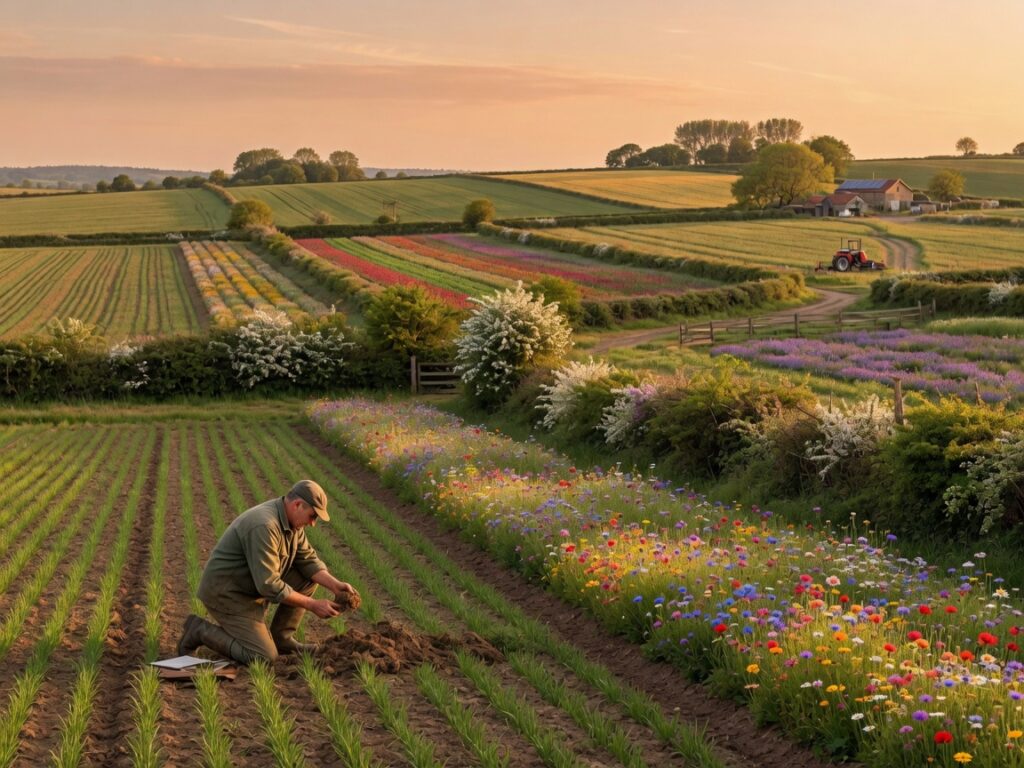
October is shaping up to be a pivotal month for European food and farming policy. Within a span of three weeks, Dublin, Brussels, and Cork will host conferences that touch nearly every corner of the agri-food system: pesticide approvals, biodiversity safeguards, organic supply chains, and digital innovation for farmers. Together, these events signal that sustainable agriculture is no longer a niche concern but a central axis of EU policy-making, with direct consequences for farmers, food companies, and consumers across the continent.
The Pesticide Debate: Time-Limited or Indefinite Approvals?
The most immediate flashpoint is a public conference in Dublin on October 6, which will scrutinize the EU’s Food and Feed Omnibus package. At stake is a technical but consequential question: should approvals for certain low-risk pesticides remain time-limited, subject to periodic re-evaluation, or should they become indefinite once a substance is deemed safe?
This is not merely bureaucratic housekeeping. Time-limited approvals allow regulators to respond quickly to new scientific evidence on water quality, soil health, and biodiversity loss — a precautionary approach long championed by environmental groups. Indefinite approvals, by contrast, offer farmers and agrochemical companies greater regulatory certainty and lower compliance costs, but critics warn they could weaken Europe’s ability to react to emerging risks.
The outcome matters well beyond Ireland. Pesticide policy sits at the intersection of food security, public health, and the EU’s broader Farm to Fork ambitions. With biodiversity decline and pollinator losses well documented across European farmland, the Dublin discussions will serve as an early indicator of how far the Commission is willing to go in balancing competitiveness with environmental safeguards.
Biodiversity Credits and the Push for Nature-Positive Food Systems
Just days later, Brussels will host a conference (October 6–7) dedicated to making biodiversity a practical, measurable part of agri-food production. The focus is on tools that have so far remained largely theoretical for most producers: biodiversity credits, incentive schemes, and value-chain impact assessments.
The idea is straightforward in principle — reward farmers and food companies for measurable improvements in habitat quality, soil biodiversity, and ecosystem services — but complex in execution. Robust metrics, verification systems, and fair pricing mechanisms are still being developed, and there is legitimate concern that poorly designed credit schemes could become a greenwashing shortcut rather than a genuine driver of change.
Still, the momentum is notable. Biodiversity is increasingly framed not as a cost but as a resilience strategy, closely tied to agroecology principles: diversified cropping systems, reduced input dependency, and landscape-level planning that protects pollinators and soil microbiomes alike.
Organic Growth and the Innovation Agenda
The European Organic Congress in Cork (October 6–8) will reinforce this trajectory from a market perspective, positioning organic and agroecological supply chains as a strategic investment rather than a lifestyle choice. With EU organic farmland having expanded steadily over the past decade — now covering roughly 10% of total agricultural area, according to Eurostat — the sector is testing whether policy support and consumer demand can sustain further growth amid inflationary pressure on food prices.
Meanwhile, the EU Agri-Hackathon (October 16–18) and new EIT Food calls — including landscape-scale regenerative agriculture projects in Finland and Lower Silesia, plus biobased seed-treatment innovation for soybean cultivation — show that innovation and policy are increasingly expected to move in parallel. These initiatives also reflect a broader trend: as diets shift and plant-based protein sources gain market share, regenerative sourcing of crops like soy becomes a critical link in supply chain sustainability.
What This Means for Farmers, Companies, and Consumers
- Farmers face a dual pressure: adapting to stricter environmental expectations while needing regulatory and financial stability to invest in transition.
- Food companies will need to prepare for biodiversity accounting and credit mechanisms that could soon factor into sourcing decisions and ESG reporting.
- Consumers are likely to see this debate reflected in product labelling, pricing, and the availability of organic and regeneratively grown goods.
Globally, Europe’s approach is being watched closely. As the UN’s post-2020 biodiversity framework pushes countries to mainstream nature into economic sectors, the EU’s experiments with biodiversity credits and pesticide governance could become a reference model — or a cautionary tale — for other regions grappling with similar trade-offs.
Key Takeaway
October’s cluster of EU conferences underscores a simple truth: sustainable food systems cannot be built on isolated policies. Pesticide rules, biodiversity incentives, organic market growth, and digital innovation are converging into a single, interdependent agenda. How the EU calibrates these pieces in the coming weeks will shape not just European farming, but the broader global conversation on what a resilient, nature-positive food system actually requires.