Europe’s New Agri-Food Innovation Strategy: A Roadmap Toward Resilient Food Systems
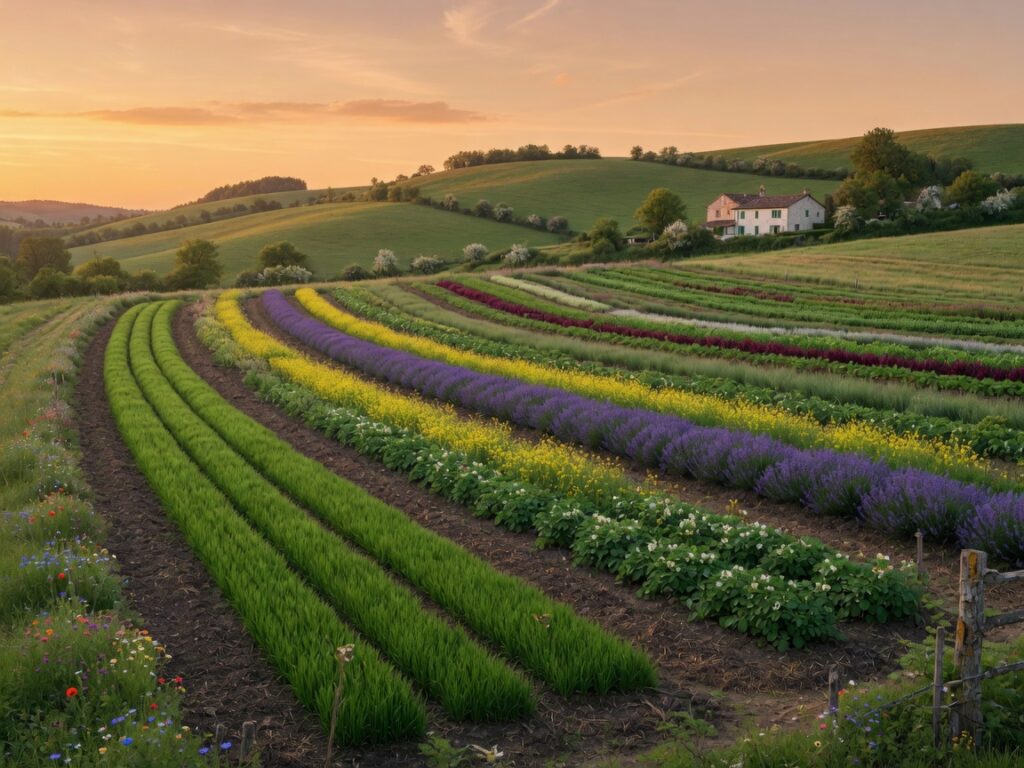
The European Commission has adopted a new strategic approach to research and innovation in agriculture, forestry, rural development, and food systems — a move that could reshape how farmers, businesses, and researchers across the continent respond to climate change, resource scarcity, and shifting consumer demand. Coming at a moment when food security has re-entered the political mainstream, the strategy signals that sustainable agriculture is no longer a niche concern but a central pillar of EU competitiveness and resilience policy.
At its core, the plan prioritizes healthy diets, resource efficiency, zero pollution, consumer empowerment, and the scaling of fair business models. Rather than funding isolated pilot projects, the Commission is pushing for innovations that can move from lab and farm trials into widespread use — a recognition that Europe has often struggled to translate promising research into real-world impact at scale.
Why Scaling Matters More Than Invention
Europe has no shortage of innovative food systems pilots — precision fertilization, alternative proteins, regenerative soil management — but many stall before reaching commercial viability. The new strategy explicitly targets this gap, aiming to help promising models cross what researchers often call the “valley of death” between demonstration and market adoption.
This shift matters because the EU’s agri-food sector employs over 8.7 million people in primary production alone and represents roughly 7% of the bloc’s GDP when processing and retail are included. Small efficiency gains, multiplied across millions of farms, can have outsized environmental and economic effects. The strategy’s emphasis on agroecology — farming approaches that mimic natural ecosystems to reduce chemical inputs while maintaining yields — reflects growing scientific consensus that diversified, biologically-driven systems are more resilient to climate shocks than monoculture-dependent models.
Organic Growth and the Business Case for Resilience
The timing aligns with the latest EU Organic Awards, which spotlighted business models that not only reduce environmental impact but actively create rural jobs and add value along the supply chain. These case studies matter because they counter a persistent myth: that sustainability and profitability are in tension. Award-winning enterprises demonstrated that organic certification, when paired with smart branding and short supply chains, can command premium prices while strengthening local economies.
This is directly relevant to supply chain sustainability, an area where the EU has faced criticism for over-reliance on imported inputs — from animal feed to fertilizers — that expose the bloc to geopolitical shocks. Diversifying toward regenerative, locally-sourced systems reduces this exposure while supporting the Commission’s broader Green Deal ambitions, even as some of those targets have been softened under political pressure from farming lobbies.
Science Meets the Soil: Practical Tools for Farmers
Beyond policy frameworks, recent research offers farmers concrete tools. Scientists have developed cheaper, faster methods for testing soil phosphorus cycling — a critical but often overlooked nutrient that affects both crop yields and water pollution when mismanaged. Better testing means farmers can apply fertilizer more precisely, cutting costs and runoff simultaneously.
Parallel research into soil-microbe interactions is advancing climate-resilient farming techniques, helping crops withstand drought and heat stress — increasingly urgent as southern and central Europe face more frequent extreme weather events. These innovations dovetail with rising interest in plant-based food production, as shifting some agricultural land and investment away from resource-intensive livestock systems toward diversified cropping can further reduce the sector’s emissions footprint, provided the transition is managed with fairness toward livestock-dependent rural communities.
Public Support and Political Reality
Crucially, fresh Eurobarometer-style evidence shows strong public backing for policies that protect farmers while improving food security — a signal to policymakers that voters want both environmental ambition and economic stability for rural communities. This dual mandate is politically delicate but not contradictory: the Commission’s strategy attempts to thread this needle by framing sustainability investments as long-term protection for farm livelihoods, not a threat to them.
What This Means for Europe and Beyond
- Farmers may gain access to new funding streams and technical support for adopting regenerative practices.
- Food businesses face growing pressure — and opportunity — to demonstrate fair, resilient supply chains.
- Consumers should expect more transparency around sourcing and environmental impact on food labels.
- Global trade partners will watch closely, as EU standards often influence international market expectations.
Key takeaway: The EU’s new agri-food innovation strategy marks a shift from scattered experimentation toward systemic change — betting that resilient, agroecological, and fairly structured food systems can deliver both environmental and economic security. Its success will depend on whether funding, farmer buy-in, and consumer trust can scale together, not in isolation.