AgRI 2040 and Food 2040: How the EU Plans to Redesign Europe’s Food Future
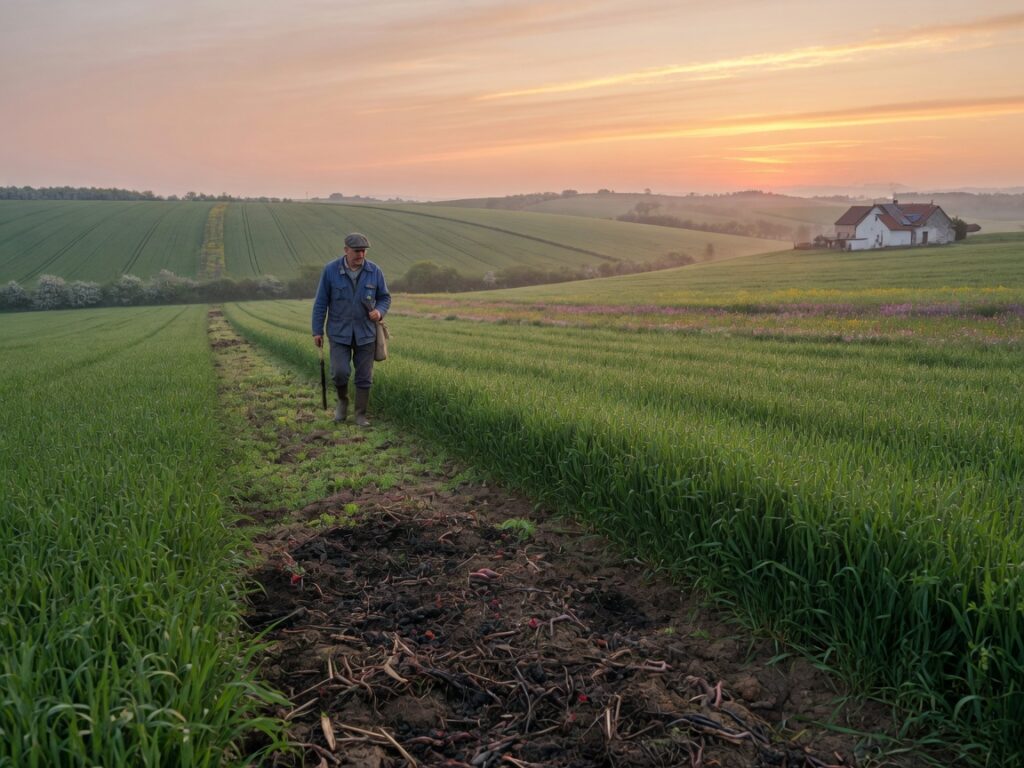
On 24–25 September, Brussels became the epicentre of a conversation that will shape what Europeans eat, how it’s grown, and who profits from it for the next fifteen years. The EU AgRI 2040 Conference brought together policymakers, researchers, farmers, businesses, and NGOs to hammer out research and innovation priorities for agriculture, forestry, rural development, and food systems. It’s a deceptively technical gathering with enormous stakes: the outcomes will steer billions in EU funding and determine which technologies and practices reach farms and supermarket shelves by 2040.
The conference builds on the European Commission’s Agri-Food Innovation Strategy, launched on 8 September, which formally links AgRI 2040 with a parallel Food 2040 initiative. Together, they represent Brussels’ most ambitious attempt yet to align research funding, regulation, and market incentives around one goal: a competitive, resilient, and genuinely sustainable agriculture sector that can withstand climate shocks while feeding a continent.
Why Research Policy Is Becoming the New Climate Lever
For years, EU agricultural policy meant subsidies and quotas. AgRI 2040 signals a shift: research and innovation are now treated as the primary lever for transforming food systems. The priorities discussed in Brussels spanned climate adaptation, biodiversity protection, soil health, water management, cropping systems, livestock, the bioeconomy, and digitalisation including AI and robotics.
This matters because Europe’s soils are degrading faster than most citizens realise — the European Environment Agency estimates over 60% of EU agricultural soils are in an unhealthy state. Meanwhile, water stress is intensifying across southern Europe, and biodiversity loss on farmland continues despite decades of policy attempts. By framing these as innovation challenges rather than purely regulatory ones, the Commission hopes to unlock private investment and accelerate deployment of solutions already sitting in research pipelines: precision irrigation, regenerative cropping systems, and AI-driven pest monitoring among them.
Crucially, the strategy explicitly targets smaller farmers, who often lack capital to adopt new technologies. Without deliberate support mechanisms, innovation risks widening the gap between large agribusiness and family farms — a tension likely to dominate implementation debates over the coming years.
Agroecology and Organic Production Gain Institutional Weight
A parallel signal came on 23 September, when the EU Organic Awards honoured innovators from seven countries. While symbolic, the awards reflect a broader institutional tilt toward agroecology, organic farming, and nature-positive production models — approaches that reduce chemical inputs, restore soil biology, and shorten supply chains.
This isn’t happening in isolation. The EU’s Farm to Fork ambitions (25% organic farmland by 2030) remain a backdrop to AgRI 2040, even though that target now looks difficult to reach — organic land currently covers roughly 10.5% of EU farmland, according to Eurostat. Embedding agroecological principles into the 2040 research agenda suggests Brussels is hedging its bets: pushing organic growth through market incentives and consumer trust rather than regulation alone, while also exploring hybrid models that blend agroecology with precision technology.
Globally, this positions Europe distinctly against major producers like the US and Brazil, where scale and yield optimisation still dominate policy. The EU’s bet is that resilience, traceability, and lower environmental footprint will become competitive advantages in export markets increasingly sensitive to sustainability credentials — including growing demand for plant-based alternatives and lower-impact proteins.
Supply Chains as the New Battleground
Perhaps the most business-relevant theme emerging from these initiatives is supply chain sustainability. Stronger, more diversified value chains featured prominently in AgRI 2040 discussions, reflecting lessons learned from pandemic-era disruptions and the war in Ukraine, which exposed Europe’s dependence on concentrated input sources, particularly fertilisers and animal feed.
For businesses, this translates into concrete near-term implications:
- Increased EU funding calls tied to traceability technology and blockchain-based provenance systems
- Regulatory alignment pressure for companies seeking Common Agricultural Policy or Horizon Europe funding
- Growing procurement preference for shorter, regional supply chains over global commodity sourcing
- New market opportunities for certified organic and agroecological products carrying premium pricing
What This Means Going Forward
The real test for AgRI 2040 and Food 2040 will be translation — turning Brussels conference priorities into funding calls, farm-level adoption, and consumer behaviour change. Previous EU strategies, including Farm to Fork, have struggled with implementation gaps and farmer pushback, notably during the 2023–2024 protests across France, Germany, and Poland.
Key takeaway: Europe is betting that research-driven innovation, not just regulation, can deliver sustainable food systems by 2040 — but success will hinge on whether smaller farmers, not just agribusiness and tech providers, are genuinely brought along for the transition.