Europe’s New Agri-Food Innovation Strategy: Turning Research into Resilient Food Systems
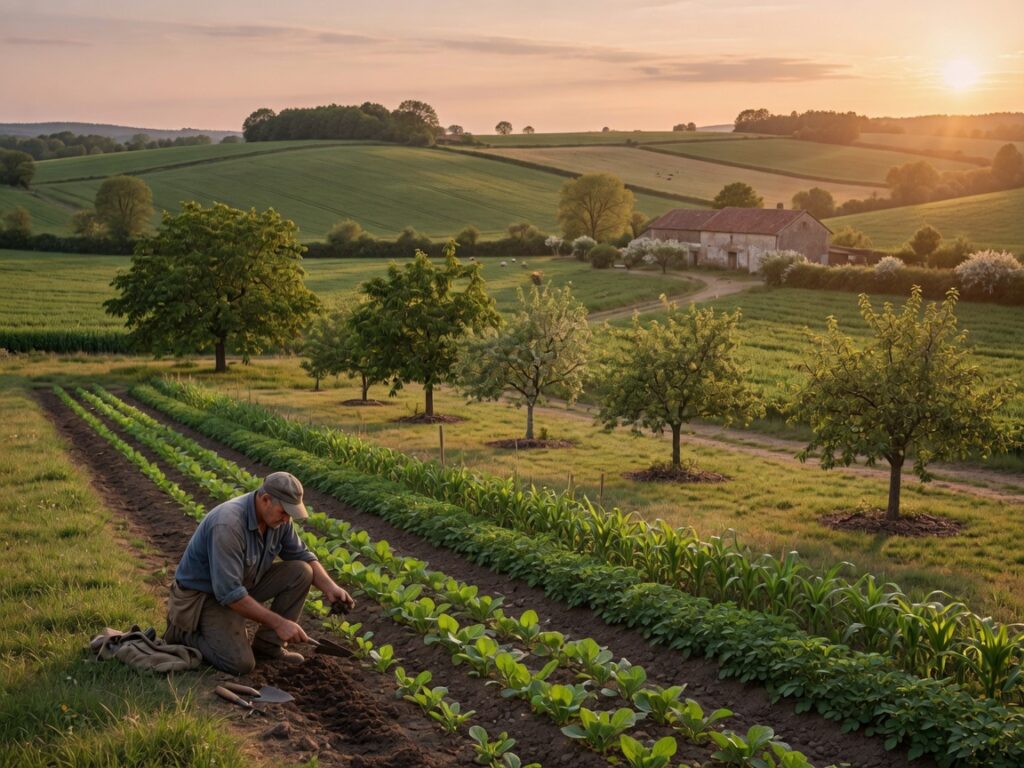
The European Commission has adopted a new strategic approach to agri-food research and innovation, formalised under the twin frameworks AgRI 2040 and Food 2040. The goal is deceptively simple: stop letting good science sit on a shelf and instead get it into the hands of farmers, food businesses, and consumers who need it now. With European agriculture facing mounting climate volatility, competitiveness pressures, and a generational shift in farming, the timing is not accidental.
This is more than another policy document. It represents an attempt to rewire how the EU connects research funding, digital tools, and market incentives to the practical realities of sustainable agriculture — from soil health in the Po Valley to forestry management in the Baltics.
From Lab to Field: Why Implementation Is the New Priority
For years, EU agricultural innovation policy has been criticized for a persistent gap between promising research and actual deployment. AgRI 2040 and Food 2040 are explicitly designed to close that gap. The strategy prioritizes soils and agri-ecosystem health, stronger and more transparent value chains, and the integration of digital technologies — including artificial intelligence and robotics — directly into farm operations.
Practical examples already circulating in the sector illustrate the direction of travel: AI-enabled soil monitoring systems that help farmers optimize inputs and reduce runoff; silvopastoral systems that combine grazing and forestry to reduce wildfire risk in Mediterranean regions; and pilot programs testing low-carbon, regenerative practices across supply chains, from dairy cooperatives in the Netherlands to grain producers in Central Europe. These are not abstract concepts — they are being tested in real fields, with real economic stakes for the farmers involved.
Crucially, the strategy links this innovation push to competitiveness. The Commission is framing sustainability not as a cost but as a resilience investment, arguing that European food systems that adapt fastest will also be the most economically viable in a increasingly volatile climate.
Climate Volatility Is Now a Business Risk, Not a Future Scenario
A recent Reuters analysis captured the urgency behind this shift, documenting how severe heat-related crop losses across Europe have pushed climate-resilient farming from a niche concern to a mainstream business imperative. Heatwaves and erratic rainfall have already disrupted yields for staples like wheat, olives, and wine grapes in southern Europe, with knock-on effects for food prices and rural incomes.
This is where agroecology enters the picture as a practical response rather than an ideological position. EU agricultural policy continues to promote crop rotation, agroforestry, eco-schemes, and organic farming — not merely for biodiversity gains, but because diversified, agroecological systems tend to show greater resilience under climate stress. Farms with better soil organic matter, for instance, generally retain water more effectively during droughts and recover faster after extreme weather events.
Retailers and food companies are responding in parallel. Supply chain sustainability commitments — once largely about carbon reporting — are increasingly tied to concrete adaptation investments: diversified sourcing regions, drought-resistant crop varieties, and closer collaboration with farmers on regenerative transition plans.
What This Means for Producers, Businesses, and Consumers
The practical implications of this shift span the entire food system:
- For farmers: Access to EU innovation funding will increasingly favor projects with measurable field outcomes, rewarding early adopters of digital and agroecological tools.
- For food businesses: Expect growing pressure to demonstrate resilience in sourcing, not just emissions reductions, as climate disruptions affect input availability and pricing.
- For consumers: The strategy’s emphasis on food systems transformation intersects with dietary shifts already underway, including rising interest in plant-based products as part of diversified, lower-impact diets.
- For policymakers: Success will depend on whether funding mechanisms genuinely accelerate uptake, rather than simply generating more pilot projects that never scale.
Globally, the EU’s approach echoes — and in some respects leads — broader international momentum. The UN Food and Agriculture Organization has repeatedly flagged agroecological transition as essential to meeting both climate and food security targets, while comparable resilience-focused strategies are emerging in the US and parts of Asia, albeit with less regulatory coherence than the EU’s integrated framework.
Key Takeaway
AgRI 2040 and Food 2040 mark a shift in emphasis: from setting sustainability goals to proving they can be delivered at scale, on real farms, within real market conditions. As climate volatility increasingly becomes a bottom-line issue rather than a distant risk, the success of Europe’s agri-food transition will be measured not by the ambition of its strategies, but by how quickly innovation reaches the field — and how resilient food systems prove to be when the next heatwave arrives.