Europe’s New Agri-Food Strategy: Betting on Innovation to Build Climate-Resilient Food Systems
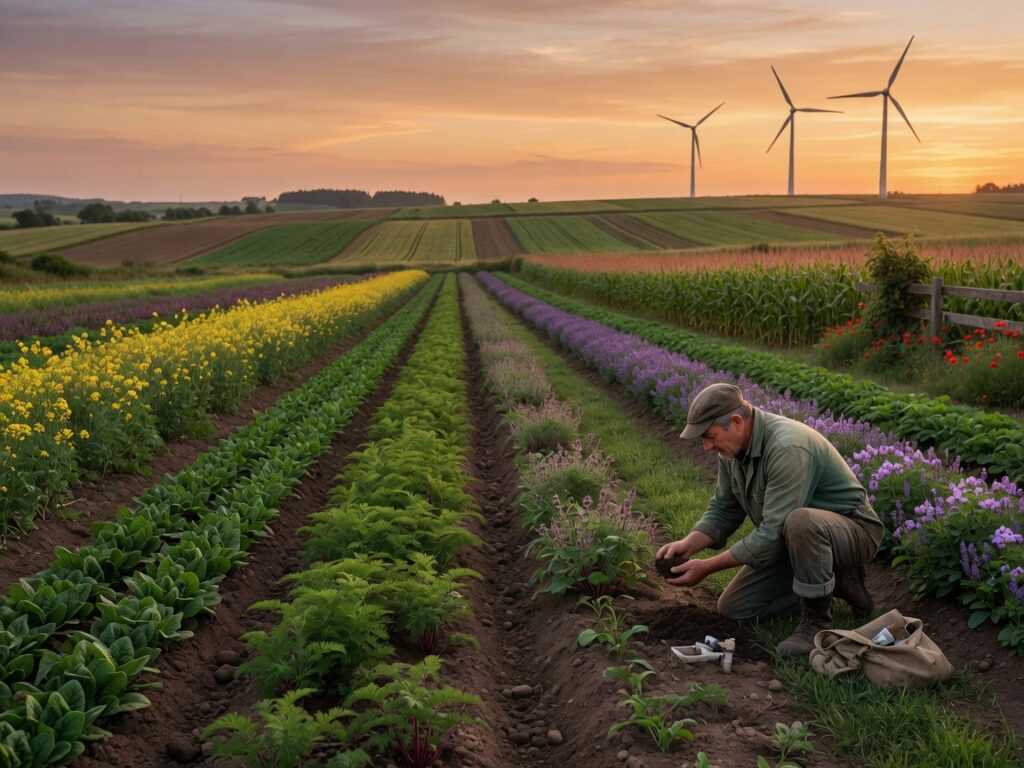
Europe’s food and farming sector just received its clearest policy signal in months. The European Commission has adopted a new Strategic Approach to Research and Innovation for competitive, resilient and sustainable agriculture, forestry, rural areas and food systems, bundling two flagship frameworks — AgRI 2040 and Food 2040 — into a single roadmap. The timing is not accidental: heatwave-driven crop losses, volatile food prices, and mounting biodiversity pressures have made it clear that Europe’s agri-food model needs deeper structural change, not incremental fixes.
For citizens, this could mean more stable and resilient food supply chains. For businesses and farmers, it signals stronger institutional backing for scalable, climate-smart solutions. And for policymakers, it reflects a broader global shift: food systems are no longer treated as a side issue in climate policy, but as a central pillar of resilience strategy.
Why This Strategy Matters Now
The Commission’s move comes at a moment when the fragility of Europe’s food production is increasingly visible. A recent Reuters report highlighted how heatwave-driven crop losses are sharpening pressure on farms and food prices across the continent, pushing climate-resilient farming higher up the political agenda. Droughts, erratic rainfall, and heat stress are no longer distant risks — they are recurring operational realities for European farmers.
By aligning research and innovation funding across agriculture, forestry, rural development, and food systems, the new strategy aims to close the gap between scientific breakthroughs and real-world deployment. This matters because Europe has long been strong on research but slower on scaling innovation into farms, processing facilities, and retail chains. The strategy explicitly targets that bottleneck, prioritizing solutions that are both environmentally sound and commercially viable — from drought-tolerant crop varieties to precision farming tools and soil health monitoring.
Crucially, the plan reinforces sustainable agriculture not as a niche pursuit but as a competitiveness issue. Resilience and profitability are increasingly framed as complementary goals rather than trade-offs.
The Global Context: Foresight, Nutrition, and Equity
Europe’s move doesn’t exist in isolation. IFPRI’s newly released Global Agrifood Systems Outlook to 2050 provides a long-term foresight lens on the same challenges — climate change, biodiversity loss, nutrition security, trade disruption, and rural livelihoods. The report strengthens the case for systems-level thinking, where agroecology, diversified production, and social inclusion are treated as interconnected priorities rather than separate policy silos.
This global perspective is echoed in a recent policy review published in Frontiers focusing on South Africa’s food systems, which explores pathways toward affordable, healthy diets. The findings reinforce a trend visible from Brussels to Pretoria: sustainability policy is increasingly judged by whether it also delivers nutritional and economic equity, not just emissions reductions. This is pushing governments to integrate dietary shifts — including greater support for plant-based food options — alongside production-side reforms.
Taken together, these developments suggest a maturing global consensus: resilient food systems require coordinated action on production methods, dietary patterns, and market structures simultaneously.
Implications for Business, Policy, and Supply Chains
For companies operating in Europe’s agri-food sector, the strategic shift carries practical implications:
- Funding priorities will likely favor climate adaptation technologies, resilient seed varieties, and digital farm-management tools.
- Supply chain sustainability becomes a strategic necessity rather than a compliance checkbox, as heat-related disruptions increasingly affect sourcing reliability and pricing.
- Insurance and risk management tools tied to climate volatility are expected to grow in relevance for farmers and food companies alike.
- Diet-related policy, including incentives for plant-based alternatives, may gain further traction as governments seek to align health and environmental goals.
Policymakers, meanwhile, face the challenge of translating high-level strategy into actionable funding mechanisms and regulatory clarity — a task that will determine whether AgRI 2040 and Food 2040 become transformative frameworks or largely symbolic ones.
Key Takeaway
Europe’s new agri-food innovation strategy arrives at a pivotal moment, as climate pressures and global foresight reports converge on the same conclusion: food systems must become more resilient, equitable, and innovation-driven. Whether this translates into meaningful change will depend on execution — but the direction is now unmistakably set toward a more integrated, sustainable, and climate-adapted food future.