From Crisis to Prevention: Europe’s 2040 Vision Aligns With a Global Shift in Food Systems
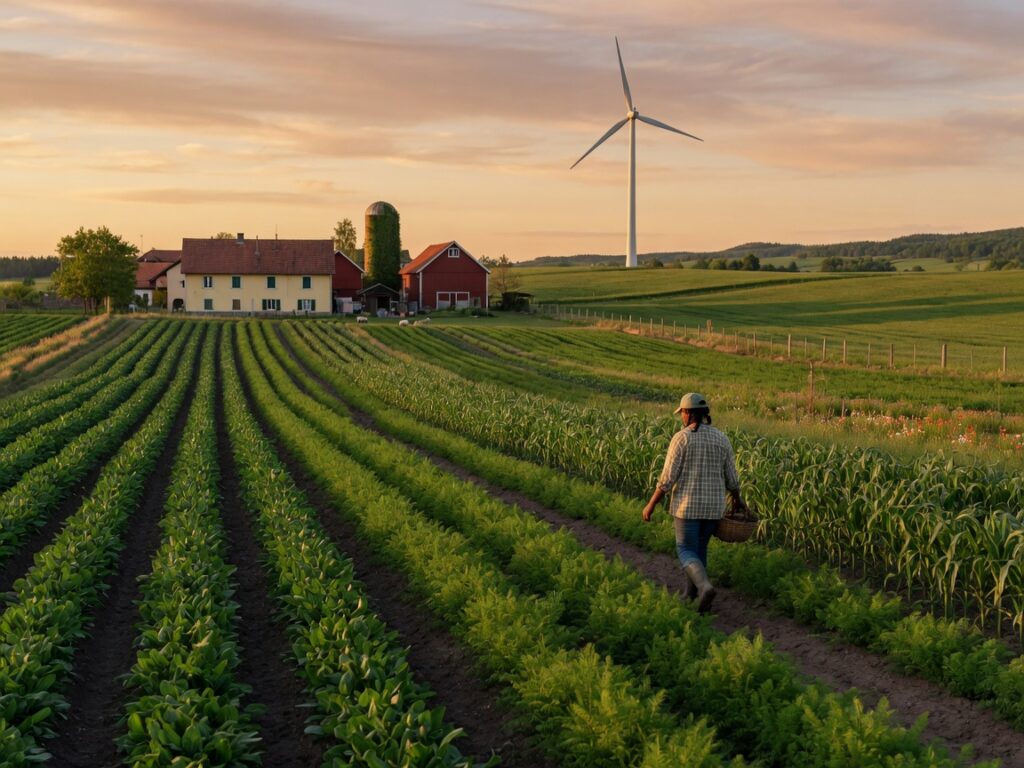
Food security is being rewritten from the ground up. This week, the European Commission adopted its new Agri-Food Innovation Strategy, a framework linking two long-term roadmaps — AgRI 2040 and Food 2040 — to guide research, deployment and uptake of innovation across Europe’s farms, forests, rural areas and food supply chains. The strategy will be unpacked at a major Brussels conference on 24–25 September, but its significance is already clear: Brussels is betting that sustainable agriculture and resilient food systems are no longer optional add-ons to policy, but the backbone of Europe’s economic and environmental security.
Crucially, this European move is not happening in isolation. From New Delhi to Kigali, governments and industry leaders are converging on strikingly similar priorities — climate resilience, digital agriculture, and supply-chain stability — suggesting a genuine global realignment in how food systems are planned and financed.
Europe’s Bet: Innovation as the Backbone of Rural Resilience
The EU’s new strategy positions research and innovation as the connective tissue between competitiveness and sustainability. Rather than treating farming, forestry and food production as separate policy silos, AgRI 2040 and Food 2040 are designed to work together, steering funding toward technologies and practices that make rural economies more resilient while cutting environmental impact.
For businesses, this signals where EU innovation funding — including successor programs to Horizon Europe — is likely to flow: precision farming tools, soil health monitoring, low-emission livestock and crop systems, and digital traceability across supply chains. For citizens, the payoff is meant to be tangible: more stable food prices, shorter and more transparent supply chains, and rural communities better equipped to withstand climate shocks.
The strategy also gives renewed institutional weight to agroecology and diversified farming systems, both seen as central to reducing dependency on volatile input markets — a lesson reinforced by recent fertilizer and energy price shocks that exposed just how fragile conventional, input-heavy models can be.
A Global Pattern: From Reaction to Prevention
Europe’s strategic pivot mirrors a broader international shift. At the ASEAN–India Ministerial Meeting on Agriculture and Forestry in New Delhi, ministers set shared priorities for 2026–2030 that read almost like a mirror of the EU’s own ambitions: climate-resilient agriculture, low-emission rice cultivation, water productivity, AI-enabled digital farming, soil health, food safety, agroforestry and resilient value chains.
Meanwhile, the Africa Food Systems Forum in Kigali — drawing more than 5,000 delegates from over 50 countries — marked a deliberate shift from emergency food aid toward investment-led resilience. Deal-making, blended finance and policy dialogue took center stage, reflecting a growing consensus that resilience must be built and financed before disruption hits, not after.
This is the throughline connecting Brussels, New Delhi and Kigali: a move from crisis response to prevention. Global food-system leaders are increasingly vocal that keeping food, fertilizer and seed flows stable — and investing in resilience ahead of shocks — is far cheaper than managing the fallout of failed harvests, trade disruptions or price spikes. It’s a lesson learned the hard way from the pandemic, the war in Ukraine, and successive extreme-weather seasons.
What This Means for Supply Chains, Diets and Investment
These converging strategies carry concrete implications:
- Supply-chain sustainability is becoming a board-level issue, not just a compliance checkbox — companies sourcing from Europe, Asia or Africa will face mounting pressure to demonstrate traceability and climate resilience.
- Demand for diversified proteins, including plant-based alternatives, is likely to grow as part of broader efforts to reduce emissions and dependency on resource-intensive livestock systems, particularly within EU dietary and Farm to Fork-adjacent policy discussions.
- Digital and AI-enabled agriculture — flagged as a priority across all three regions — will accelerate, but access and affordability for smallholders remain a critical open question.
- Investment flows are shifting toward prevention: insurance mechanisms, climate-adapted seed varieties, and regional stockpiling are gaining ground over reactive aid.
For European decision-makers, the challenge will be translating high-level strategy into funding that reaches small and mid-sized farms, not just large agribusiness players. For global partners, the alignment of priorities offers an opening for coordinated action — on trade, standards and shared technology — that could make resilient food systems less of an aspiration and more of an operational reality.
Key takeaway: Whether in Brussels, New Delhi or Kigali, the message is consistent — the future of food security depends on building resilience into agriculture and food systems now, through innovation, diversification and smarter finance, rather than scrambling to respond once the next shock arrives.