Europe’s Next Farming Blueprint: How CAP 2028–2034 and New Research Priorities Are Redrawing Sustainable Agriculture
Europe’s agricultural policy is entering a decisive phase. This month, the European Commission published new guidance for the Common Agricultural Policy (CAP) 2028–2034, spotlighting best practices in agri-environmental and climate action. At the same time, Brussels is preparing to host the EU AgRI 2040 Conference on 24–25 September, a major gathering dedicated to research and innovation for resilient food systems. Together, these moves signal that sustainable agriculture is no longer a peripheral policy goal in Europe — it is becoming the organizing principle of the continent’s entire farming strategy.
For farmers, agribusinesses, and policymakers, the message is clear: the next CAP cycle will reward measurable environmental performance, and the EU is actively investing in the science needed to make that transition workable at scale.
CAP 2028–2034: Clearer Signals for Farmers and Agribusiness
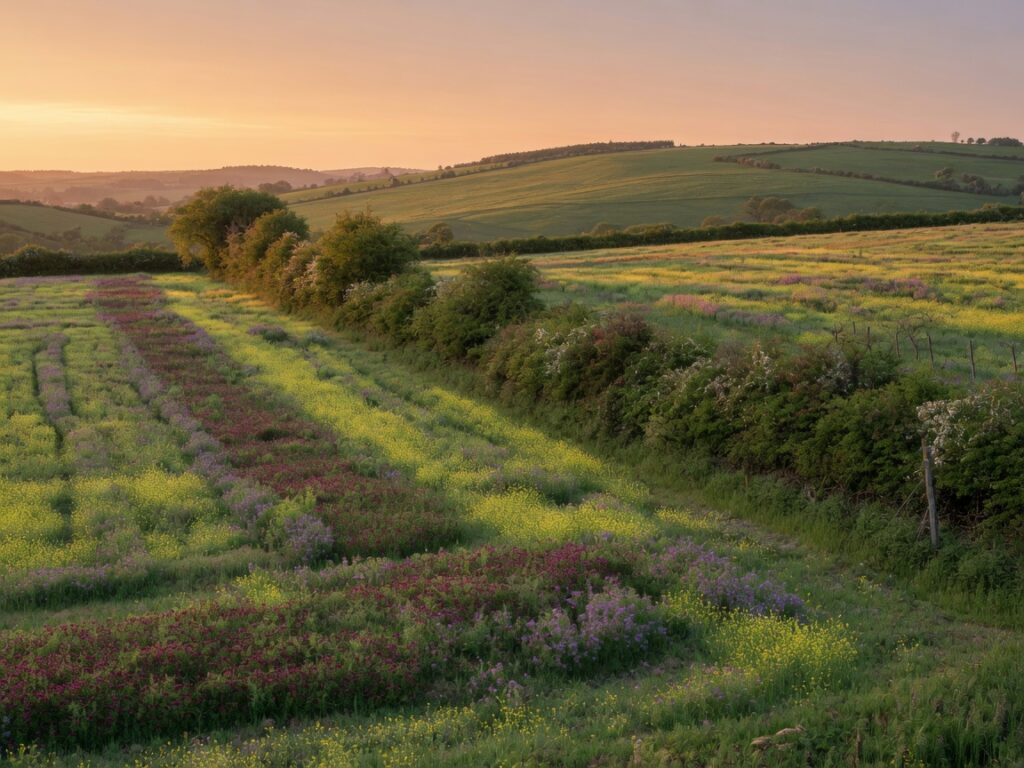
The Commission’s new guidance document distills lessons from the current CAP period into concrete best practices for agri-environmental and climate schemes — covering everything from cover cropping and reduced tillage to biodiversity strips and precision nutrient management. Unlike previous iterations, this guidance aims to reduce ambiguity around what qualifies for eco-scheme payments, giving farm businesses more confidence to invest early in low-impact practices.
This matters because CAP remains the largest slice of the EU budget, and its environmental architecture increasingly determines the shape of food systems across the bloc. Analysts expect the 2028–2034 framework to push further toward outcome-based payments — rewarding actual soil carbon retention or biodiversity gains rather than simple practice adoption. That shift could accelerate the mainstreaming of agroecology principles: diversified crop rotations, integrated pest management, and closer alignment between livestock and land use.
- Clearer eligibility criteria for agri-environmental payments across member states
- Stronger links between climate mitigation and farm income support
- Early guidance intended to help national governments draft their CAP strategic plans well ahead of 2028
Research and Innovation: The AgRI 2040 Conference and Regenerative Agriculture
Policy alone cannot deliver resilient farming — it requires innovation pipelines, and that’s where the AgRI 2040 Conference comes in. Bringing together researchers, farmer organizations, and industry, the Brussels event will focus on future-proofing agriculture, forestry, and rural economies against climate volatility, biodiversity loss, and shifting global trade dynamics.
In parallel, the European Environmental Bureau (EEB) has released an updated report on regenerative agriculture across the EU and UK, evaluating how current incentive structures support — or hinder — soil health, biodiversity, and long-term farm resilience. The report arrives at a pivotal moment: as CAP guidance takes shape, civil society groups are pushing for regenerative and agroecological approaches to be treated as the default rather than the exception.
This convergence of research funding, policy design, and civil society input reflects a broader European recognition that food systems transformation requires more than subsidies — it needs a robust evidence base, farmer training, and de-risked pathways for transitioning away from input-intensive monocultures.
A Global Dimension: Financing Resilience Beyond Europe
Europe’s farming transition doesn’t exist in isolation. The Global Agriculture and Food Security Program (GAFSP) has opened a $163 million grants call supporting country-led investments in food security, climate resilience, and market access for smallholder farmers, primarily in lower-income regions. This global financing push underscores how supply chain sustainability is now a shared concern linking European retailers, importers, and producers to farming communities far beyond EU borders.
As European buyers face tightening due diligence rules — including deforestation-free sourcing requirements — the resilience of smallholder supply chains abroad directly affects the availability and cost of commodities on European shelves, from cocoa to soy-based animal feed and even plant-based protein ingredients increasingly popular with European consumers.
What This Means for Businesses and Citizens
For farmers, the near-term implication is preparation: understanding which practices are likely to be rewarded under the next CAP cycle can inform investment decisions today. For agri-food businesses, the AgRI 2040 agenda offers a window into where EU research funding — and eventually regulation — is headed. For citizens, these shifts translate into a food system that, at least on paper, is being engineered for greater climate resilience and biodiversity protection.
Key takeaway: Europe is methodically building the policy, research, and financial scaffolding for a more resilient agricultural model — one where sustainable agriculture, agroecology, and supply chain accountability are increasingly interlinked, with implications reaching well beyond the continent’s borders.