Europe’s Farms Face a Costly Climate Reckoning — And a Business Opportunity in Resilience
Europe’s agri-food sector is sending two signals at once, and both matter. On one hand, the European Commission reports that the EU agri-food sector consolidated its global position in the first half of 2026, a sign of continued export strength and competitiveness. On the other, Reuters reports that a single June heatwave could cost EU and British farmers up to €2.3 billion in crop losses. Read together, these two facts tell a clear story: Europe’s food systems are commercially resilient but climatically exposed, and the gap between those two realities is where the next decade of agricultural policy, investment, and innovation will play out.
Why Climate Losses Are Becoming a Structural Business Risk
For years, extreme weather in agriculture was treated as a seasonal anomaly — bad luck to be absorbed and forgotten by the next harvest. That framing is no longer credible. The €2.3 billion heatwave estimate reported by Reuters is not an isolated event; it follows a pattern of recurring droughts, floods, and heat spikes that have hit European wheat, maize, and fruit yields over the past several summers.
This matters far beyond the farm gate. Crop losses ripple into food prices, processor margins, retailer sourcing strategies, and insurance markets. For businesses across the food value chain, climate volatility is now a line item in risk assessments, not a footnote in sustainability reports. That shift is pushing sustainable agriculture and climate adaptation from a compliance exercise into a core element of financial planning and supply-chain sustainability strategy.
Notably, the European Commission’s parallel finding — that the EU agri-food sector strengthened its global standing in early 2026 — suggests the sector is not retreating under this pressure. Instead, competitiveness and climate resilience appear to be converging as complementary priorities rather than competing ones.
Regenerative Practices Move From Pilot Projects to Bankable Strategy
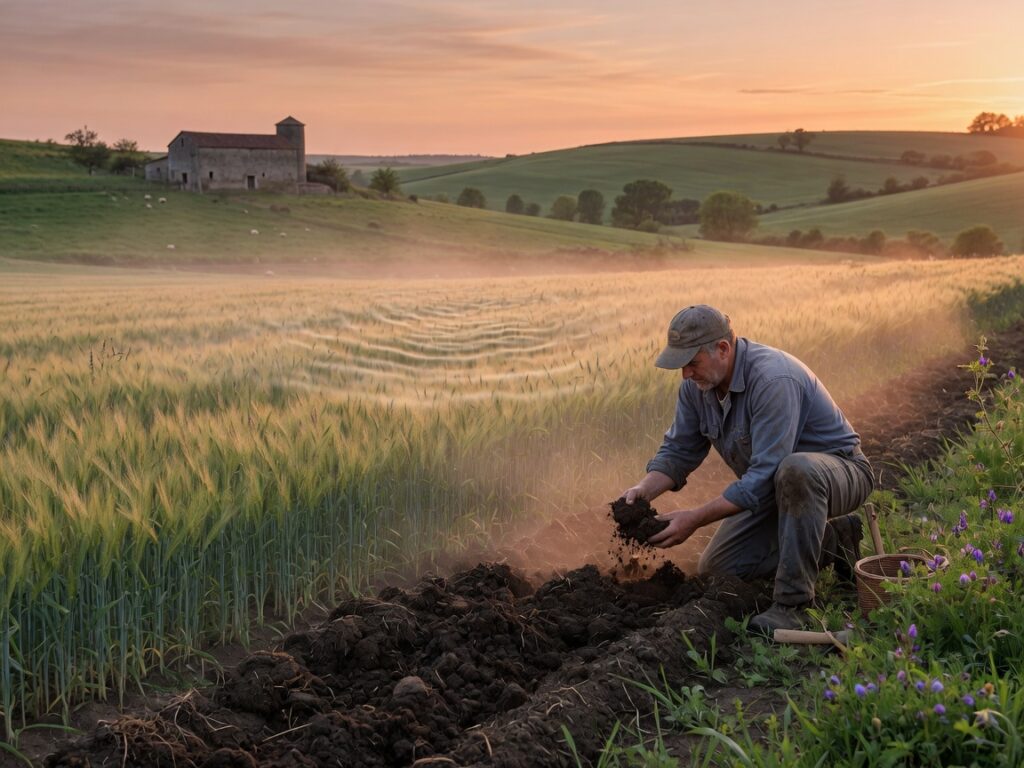
One of the more consequential shifts in recent coverage is financial, not agronomic. Lenders and investors are increasingly designing products tied to soil health metrics and reduced tillage, effectively pricing regenerative practices as risk-reduction tools rather than niche environmental gestures. This is a meaningful evolution for agroecology: practices once confined to demonstration farms and subsidy schemes are being evaluated through the same lens as any other investable business improvement.
Healthier soils retain more water, buffer temperature extremes, and reduce input costs over time — all factors that directly address the kind of heatwave vulnerability now costing farmers billions. If soil-health-linked lending scales across Europe, it could unlock capital for smaller and mid-sized farms that have historically lacked access to transition financing, while giving input suppliers, agri-tech firms, and data analytics providers a genuine market opportunity tied to measurable outcomes rather than marketing claims.
This financial mainstreaming also strengthens the broader case for diversified food systems, including greater integration of plant-based ingredients and crop rotations that reduce dependence on the most heat-vulnerable monocultures.
Packaging and Logistics Join the Resilience Agenda
Climate resilience isn’t confined to the field. Innovation in food logistics — particularly fibre-based thermal packaging and lower-carbon cold-chain alternatives to plastic foam — is emerging as a practical lever for emissions reduction across distribution networks. For exporters and retailers under growing pressure to demonstrate supply-chain sustainability, these material shifts offer a tangible, verifiable way to cut carbon footprints without redesigning entire logistics networks overnight.
Combined with EU sustainability disclosure rules and evolving low-carbon labeling expectations, these packaging innovations suggest that decarbonization is spreading beyond production into distribution — a necessary expansion if Europe’s food exports are to remain both climate-credible and commercially competitive on global markets.
What This Means for Farmers, Businesses, and Policymakers
- Farmers face growing pressure to adopt resilience-building practices, but also growing financial incentives to do so as lending products evolve.
- Food businesses should treat climate volatility as a supply-chain sustainability issue requiring diversified sourcing and investment in adaptive logistics.
- Investors have a widening window to fund regenerative and agroecological transitions with measurable, bankable returns.
- Policymakers will need to align EU competitiveness goals with faster, better-funded climate adaptation support for the sectors most exposed to heat and drought.
Key takeaway: Europe’s agri-food sector is proving it can be both globally competitive and climatically vulnerable at the same time — and closing that gap through regenerative agriculture, resilient supply chains, and smarter finance is no longer optional. It is becoming the defining competitive strategy for the decade ahead.