As Heatwaves Grip Europe, Climate-Resilient Farming Moves to the Center of Food Policy
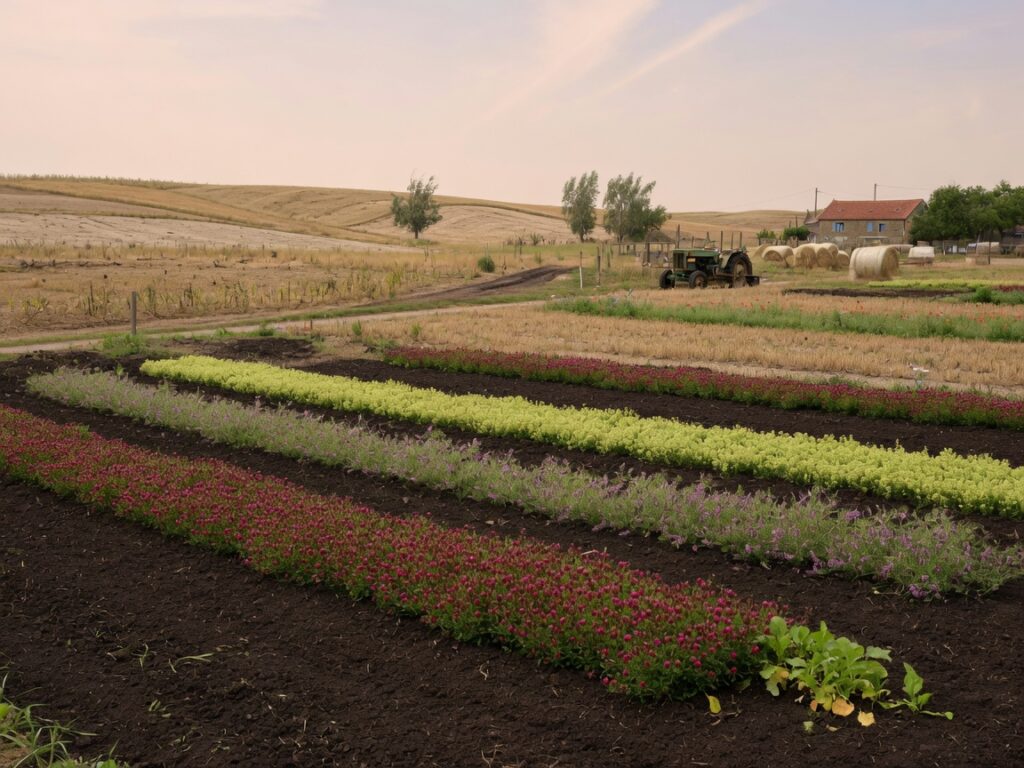
Record heat and prolonged drought across southern Europe this summer have done more than stress crops and water reserves—they have accelerated a policy shift already underway. From Brussels to New Delhi, sustainable agriculture is no longer a niche concern for specialists; it is becoming a central pillar of climate and food security strategy. Reuters recently reported growing momentum behind farming methods designed to withstand climate extremes, while global events like the UNCCD COP17 are giving soil health and agroecology a dedicated diplomatic stage. The message emerging from multiple continents is consistent: resilient food systems require rethinking how, and with what inputs, we grow food.
Europe’s Drought Wake-Up Call
Europe’s 2024–2025 heatwaves have exposed the vulnerability of conventional, high-input farming to climate volatility. Yield losses, falling water tables, and stressed soils have pushed farmers, researchers, and policymakers toward practices once considered alternative: regenerative agriculture, agroforestry, cover cropping, and reduced tillage. According to Reuters, interest in these approaches is rising precisely because they improve soil water retention and organic matter—two factors critical to surviving prolonged dry spells.
This is not simply a technical adjustment. It reflects a broader recognition that agroecology—an approach integrating ecological principles into farm design—offers a pathway to reduce dependence on synthetic fertilizers and pesticides while building long-term resilience. For European policymakers already navigating the Common Agricultural Policy’s evolving sustainability targets, the drought crisis adds urgency to funding soil-health initiatives and diversifying cropping systems.
A Global Policy Convergence
Europe’s experience is mirrored by developments elsewhere, suggesting a genuine global convergence rather than isolated national responses. At the UNCCD COP17, a dedicated Food Systems and Soil Health Day placed agroecology squarely within the international response to desertification and drought—signaling that soil degradation and food security are now treated as intertwined crises requiring coordinated solutions.
Indonesia and the FAO have similarly formalized this shift, launching a 2026–2030 Country Programming Framework explicitly aimed at building sustainable, resilient, and inclusive agrifood systems. Meanwhile, India offers perhaps the most striking real-world evidence of scale: more than 1.8 million farmers have adopted regenerative and natural farming practices across 880,000 hectares, according to recent reporting. This uptake is significant not only environmentally but economically, with potential effects on input costs, yields, and rural incomes that other regions—including parts of Europe—are watching closely.
Together, these developments illustrate that food-system reform is advancing on parallel tracks: top-down policy frameworks (FAO, UNCCD, EU strategies) and bottom-up farmer adoption, particularly in regions where climate stress is already reshaping agricultural viability.
Implications for Supply Chains and Diets
These shifts carry consequences well beyond the farm gate. As supply chain sustainability becomes a boardroom priority for food companies and retailers, sourcing strategies are increasingly scrutinized for climate resilience, not just carbon footprint. Companies dependent on water-intensive crops or monoculture supply chains face growing exposure to yield volatility, price spikes, and reputational risk if they fail to diversify sourcing toward regenerative or agroecological producers.
There is also a dietary dimension. As soil health and low-input farming gain traction, so too does interest in plant-based diets, which generally require fewer resources and exert less pressure on land and water systems than intensive livestock production. This does not mean abandoning animal agriculture, but rather integrating it more thoughtfully—through agroforestry and mixed farming systems—into resilient food landscapes.
For European consumers and businesses, this convergence of climate pressure and policy attention suggests that transparency around farming practices, water use, and soil management will increasingly influence purchasing decisions and regulatory compliance alike.
Key Takeaway
The evidence from Europe’s heatwaves, COP17’s agenda, Indonesia’s FAO partnership, and India’s farmer-led transformation all point in the same direction: climate resilience and food security are no longer separate conversations. Building resilient food systems through agroecology, soil health, and diversified supply chains is emerging as the practical, evidence-based response to a warming world—one that European policymakers, businesses, and citizens can no longer afford to treat as optional.