Gene Editing, Soil Microbes, and Farm Bills: Europe’s New Blueprint for Sustainable Agriculture
A quiet but significant convergence is taking shape across global food systems. In Brussels, lawmakers have endorsed a science-based approach to crop innovation. In Mexican fields, researchers are uncovering microbial allies that could reduce dependence on chemical inputs. And in Washington, farm bill negotiations continue to test how far governments will go to support sustainable agriculture. Together, these developments suggest that the future of farming will be defined not by a single technology or policy, but by the interplay of science, soil, and capital.
Europe’s Gene-Editing Signal: A Global Reference Point
The European Parliament’s endorsement of New Genomic Techniques (NGTs) marks one of the most consequential shifts in EU agricultural policy in years. For over two decades, Europe maintained some of the world’s strictest rules on genetically modified organisms. The new stance distinguishes NGTs — precision tools like CRISPR-based gene editing — from older GMO categories, opening a faster regulatory path for crops engineered to resist drought, disease, and pests without introducing foreign DNA.
This matters far beyond Europe’s borders. As the EU is often a reference point for food safety standards worldwide, its shift toward science-led innovation could influence regulatory debates in Africa, Latin America, and Asia, where climate-resilient crops are urgently needed. For food systems under mounting pressure from heatwaves, erratic rainfall, and shrinking arable land, faster access to resilient plant varieties could be a meaningful climate adaptation tool — provided safeguards on biodiversity and farmer autonomy keep pace.
Soil Microbiology: The Quiet Agroecology Revolution
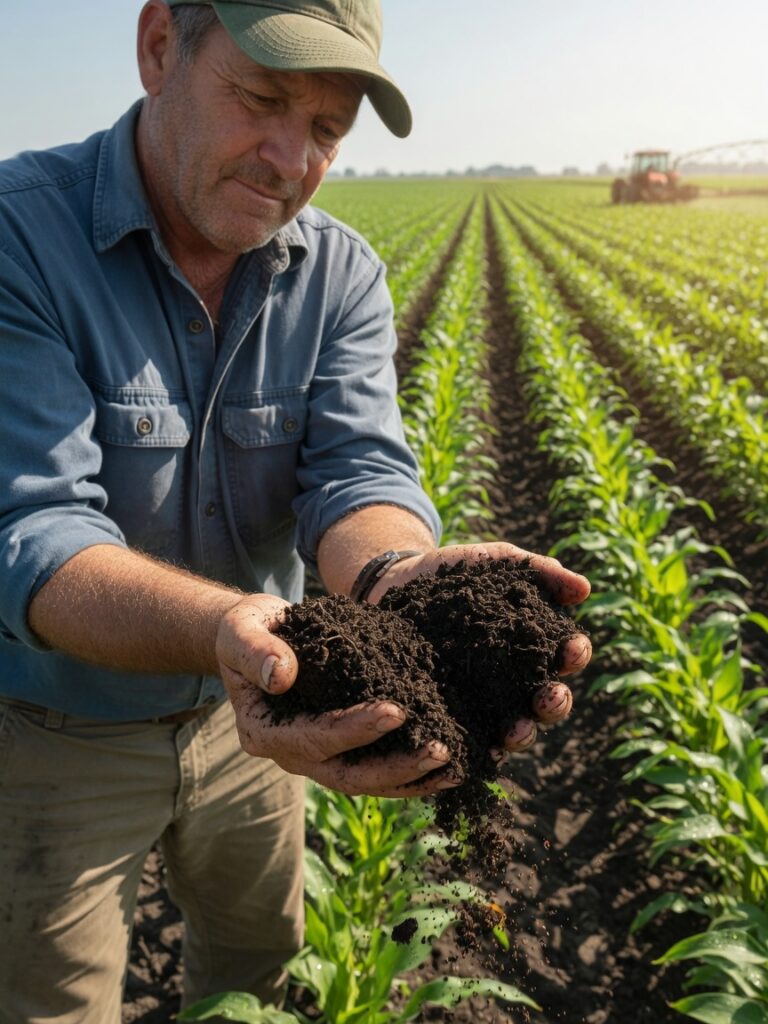
While gene editing captures headlines, some of the most promising sustainability gains are happening underground. Researchers in Mexico have identified beneficial soil microorganisms capable of improving crop productivity while restoring degraded soils — reducing farmers’ reliance on synthetic fertilizers and pesticides. This research fits squarely within the growing field of agroecology, which treats soil health, biodiversity, and natural nutrient cycles as the foundation of resilient farming rather than an afterthought.
Microbial inoculants and biofertilizers are gaining traction globally because they offer a lower-cost, lower-input alternative for smallholder farmers who cannot afford expensive chemical inputs. In regions where fertilizer prices have remained volatile since the 2022 energy shock, these biological solutions offer a practical bridge between productivity and environmental restoration. For Europe, where the Farm to Fork strategy aims to cut fertilizer use by 20% by 2030, such research offers a complementary, nature-based pathway to meet ambitious targets without sacrificing yields.
Policy Uncertainty and the Business Case for Sustainability
Across the Atlantic, the U.S. Senate’s ongoing farm bill negotiations illustrate a familiar tension: political will for sustainable agriculture often outpaces the speed of legislative action. Despite progress, the bill remains unfinished, leaving farmers, conservation groups, and food businesses navigating a policy vacuum. As the National Sustainable Agriculture Coalition has noted, this delay creates real uncertainty for programs funding soil conservation, climate-smart practices, and support for beginning farmers.
Yet private capital is stepping in where public policy lags. Whole Foods Market and the National Young Farmers Coalition recently launched a fund specifically targeting beginning farmers who adopt environmentally sustainable practices — a sign that retail and supply chain sustainability commitments are becoming a parallel engine for change. This mirrors a broader European trend, where retailers and food manufacturers increasingly set their own sourcing standards for regenerative and plant-based products, sometimes moving faster than national regulation.
What This Means for the Road Ahead
These three storylines — genomic innovation, microbial soil science, and policy-plus-capital momentum — point to a food system in transition. No single solution will “fix” agriculture’s sustainability challenges. Instead, resilience will likely come from combining:
- Science-based crop innovation that speeds adaptation without compromising biodiversity safeguards
- Agroecological practices, including microbial inputs, that restore soil health and cut chemical dependency
- Coordinated public policy and private investment that de-risk the transition for farmers, especially newcomers
For European policymakers, the challenge is to keep NGT regulation transparent and evidence-based while continuing to fund soil-health research and support next-generation farmers through instruments like the Common Agricultural Policy.
Key takeaway: Sustainable agriculture’s next chapter won’t be written by a single breakthrough, but by the alignment of smarter science, healthier soils, and steadier investment — a convergence Europe is well positioned to help lead globally.