Financing the Farm Transition: How Regenerative Agriculture, Smarter Supply Chains, and Methane Cuts Are Reshaping Food Systems
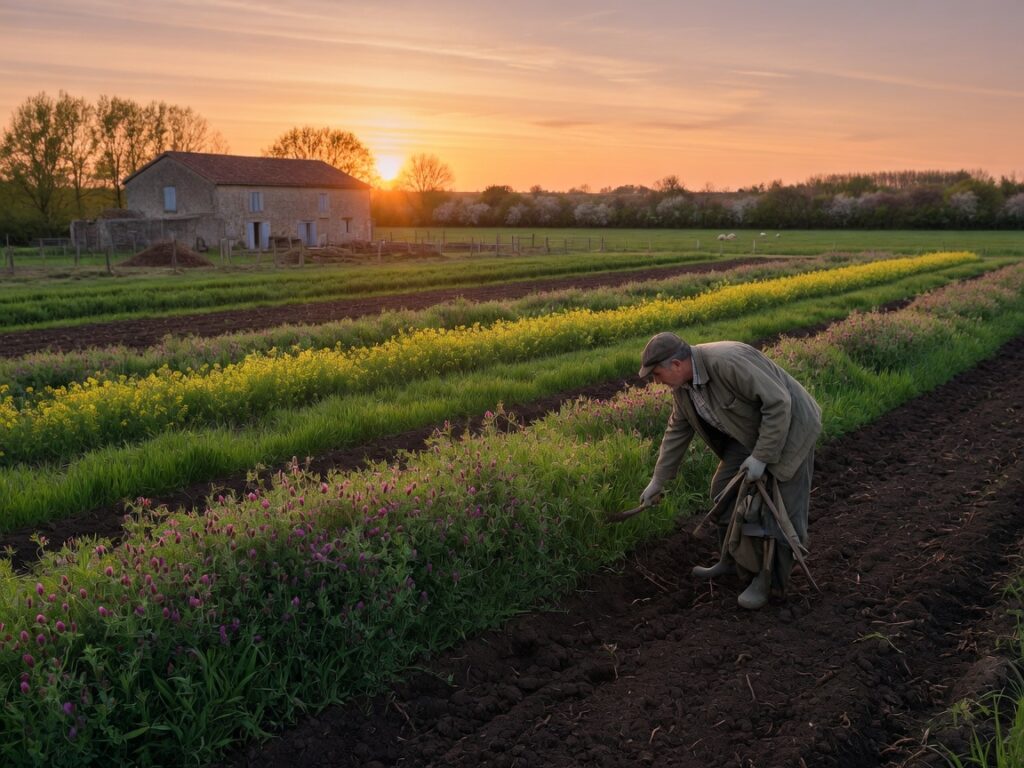
Europe’s food and agriculture sector is entering a phase where sustainability is no longer a side project but a financial and operational priority. While no single headline-grabbing breakthrough emerged in the last 48 hours, a consistent pattern is visible across recent industry and policy signals: money, logistics, and science are converging around sustainable agriculture in ways that could reshape how food is grown, moved, and consumed across the continent and beyond.
From new lending models tied to soil health to fibre-based packaging replacing plastic in cold chains, and from methane-reducing feed additives to expanding low-carbon produce lines, the direction of travel is clear even if the pace varies by sector. Here’s what’s driving the shift, and what it means for citizens, businesses, and policymakers.
Regenerative Agriculture Gets a Financial Backbone
One of the more notable developments is the emergence of lending pilots explicitly linked to regenerative farming practices. Rather than treating soil conservation as a cost, some financial institutions are beginning to treat it as a bankable asset — offering better loan terms to farmers who adopt cover cropping, reduced tillage, or crop rotation strategies that build soil carbon and resilience.
This matters because agroecology and regenerative methods have long struggled with an adoption gap: the ecological benefits are well documented, but the upfront costs and multi-year payback periods discourage farmers operating on thin margins. Tying finance directly to regenerative outcomes could close that gap, particularly in the EU, where the Common Agricultural Policy already channels billions toward environmental schemes but has faced criticism for slow, uneven uptake.
Business interest in soil-conservation programs also appears to be growing beyond agriculture itself, with food companies and retailers exploring how to embed regenerative sourcing into supply commitments — a sign that pressure is coming as much from corporate sustainability targets as from public subsidy.
Supply Chains: The Quiet Frontier of Decarbonization
Supply chain sustainability remains one of the least visible but most consequential arenas for emissions reduction in food systems. Recent coverage points to expansion in fibre-based thermal packaging — an alternative to polystyrene and plastic foam used in cold-chain logistics for perishable goods. Given that an estimated third of global food loss occurs during transport and storage, packaging innovations that maintain temperature control while cutting plastic use address two problems at once: waste and emissions.
Cold-chain logistics is a particularly stubborn source of environmental impact because refrigerated transport is energy-intensive and often reliant on high-warming refrigerants. Innovations in insulated, recyclable, or compostable packaging materials offer incremental but meaningful gains, especially as European retailers face mounting pressure from packaging waste regulations, including the EU’s Packaging and Packaging Waste Regulation, which sets binding recycling and reduction targets through the decade.
Methane Cuts and the Livestock Sector’s Slow Pivot
Livestock remains one of the toughest sectors to decarbonize, but movement is visible here too. Reports indicate approval of a methane-reducing feed additive methodology under Japan’s carbon-credit framework, joining similar mechanisms already active in parts of Europe and the United States. These additives, which alter rumen fermentation in cattle, can reduce methane emissions per animal by measurable margins and are increasingly tied to tradable carbon credits — creating a financial incentive layered on top of the environmental one.
This complements broader momentum toward plant-based alternatives and sustainable protein diversification, as European consumers and retailers continue shifting toward lower-impact diets alongside — not necessarily instead of — improvements in conventional livestock systems. Expanding sustainable rice programs and low-carbon produce lines suggest a similar dual-track approach in crop systems: improving existing production while scaling alternatives.
What This Means for Food Systems Going Forward
Taken together, these developments suggest that sustainability in food and agriculture is maturing from pilot projects into financial and regulatory infrastructure. For farmers, this could mean easier access to capital tied to environmental performance. For food companies, it means supply chain choices — packaging, sourcing, ingredient additives — are becoming measurable sustainability levers rather than marketing add-ons. For policymakers, particularly in the EU, the challenge is ensuring these fragmented innovations scale coherently rather than remaining isolated pilots.
Key takeaway: No single breakthrough defines this moment, but the cumulative direction is unmistakable — sustainable agriculture, agroecology, and supply chain innovation are becoming interlinked financial and operational strategies, not just environmental aspirations. The coming months will show whether Europe can turn this momentum into consistent, scalable policy and market outcomes.