From Pilot to Plate: How Regenerative Farming Is Becoming a Business Model
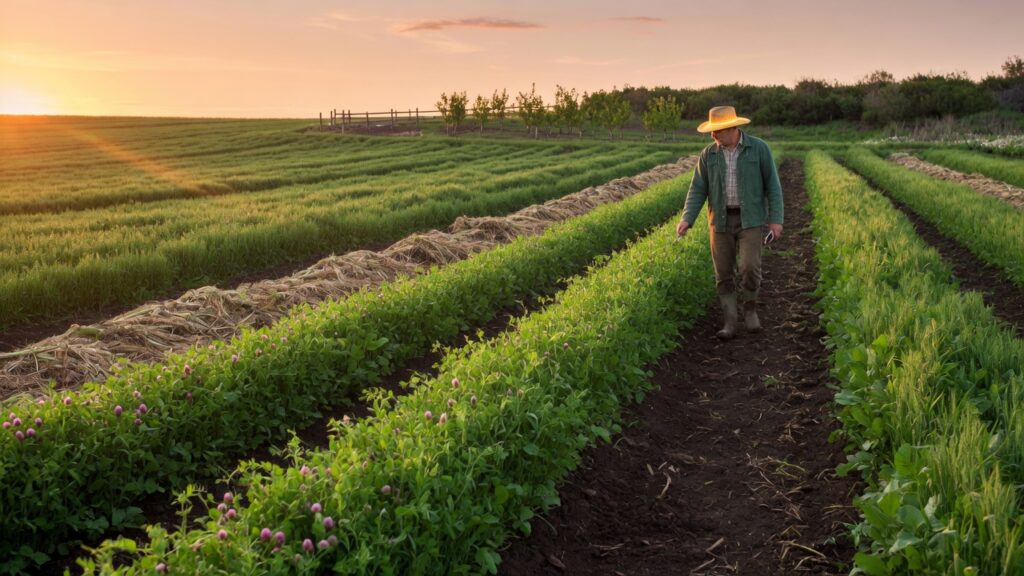
For years, regenerative and low-carbon farming lived mostly in pilot projects, research trials, and corporate sustainability reports. That is changing fast. In the past 48 hours alone, a wave of announcements from financiers, retailers, food companies, and governments shows that sustainable agriculture is being woven directly into commercial strategy — not treated as a side project bolted onto climate goals. The message is clear: cutting emissions, restoring soil health, and protecting farm margins are increasingly seen as the same task, not competing priorities.
This shift matters far beyond the farm gate. Agriculture and land use account for roughly a quarter of global greenhouse gas emissions, and in Europe, where the Common Agricultural Policy is under pressure to align with the EU Green Deal and Farm to Fork strategy, proving that food systems can decarbonize while remaining economically viable is now a political as well as environmental necessity.
Finance Is Following the Soil
Perhaps the clearest signal of maturity in this space is money moving toward regenerative practices at scale. Farmers Business Network (FBN), backed by the Walton family, has launched what it describes as a first-of-its-kind lending program offering farmland loans explicitly tied to regenerative agriculture outcomes. Rather than treating soil health as a nice-to-have, the program links credit terms to practices such as reduced tillage, cover cropping, and lower synthetic input use.
This is significant because access to affordable capital has long been one of the biggest barriers to transitioning away from conventional, high-input farming. When lenders start pricing risk based on soil health and input efficiency, it sends a market signal that agroecology-aligned practices are not just environmentally sound but financially resilient — particularly as input costs and climate volatility squeeze conventional margins.
Retailers and Supply Chains Are Becoming the New Enforcers
If finance is pulling regenerative farming from below, retailers are pushing it from above. Tesco’s move to stock low-carbon potatoes marks one of the largest real-world tests yet of consumer appetite for climate-labeled staple foods. Unlike niche organic lines, potatoes are a high-volume, low-margin category — meaning success or failure here will offer a genuine read on whether sustainability claims can survive at supermarket scale rather than just in premium aisles.
Similarly, Tilda’s expansion of its sustainable rice programme to 3,840 farms is a notable case study in supply chain sustainability. Rice is one of the most water- and methane-intensive staple crops globally, and Tilda reports measurable reductions in both emissions and water use across its expanded network. For a European market heavily reliant on imported rice, this kind of supplier-level intervention illustrates how food companies are increasingly managing climate risk not through offsets, but through direct changes in how raw ingredients are grown.
Together, these moves suggest that:
- Retail procurement is becoming a primary lever for scaling low-carbon farming practices
- Water stewardship is emerging as a parallel priority alongside carbon reduction
- Supply chain transparency is shifting from voluntary reporting to embedded sourcing criteria
Methane and Policy: The Next Frontier
While soil and water dominate headlines, methane remains agriculture’s stubborn climate problem — particularly from livestock. Japan’s approval of a methane-cutting feed additive methodology under its J-Credit scheme is a meaningful policy development, allowing livestock producers to generate tradeable carbon credits for adopting emissions-reducing feed practices.
This mirrors growing interest in Europe around feed additives, methane inhibitors, and livestock management as credible decarbonization tools — an area where the EU’s own carbon farming initiatives and voluntary credit frameworks are still being refined. It also reflects a broader global trend: governments are beginning to treat agricultural methane reduction as investable and creditable, not just aspirational.
What This Means Going Forward
None of these developments alone will transform global food systems overnight. But collectively, they point to a structural shift: regenerative and low-carbon agriculture is being integrated into lending criteria, retail contracts, and national carbon markets simultaneously. For European policymakers and food businesses, this raises an important question — whether current EU frameworks are moving fast enough to keep pace with market-driven models emerging in the US, UK, and Asia.
There are also implications for consumers, who may increasingly encounter low-carbon labeling not as a premium niche but as a mainstream retail category — alongside the parallel growth of plant-based alternatives, which continue to compete for the same sustainability-conscious shelf space.
Key takeaway: Sustainable agriculture is no longer just a climate commitment — it is increasingly a bankable, retail-ready business model, and the next two years will show whether this momentum can scale from thousands of farms to entire food systems.