EU Targets Waste Incineration with Carbon Pricing as Europe Swelters Through Record June Heat
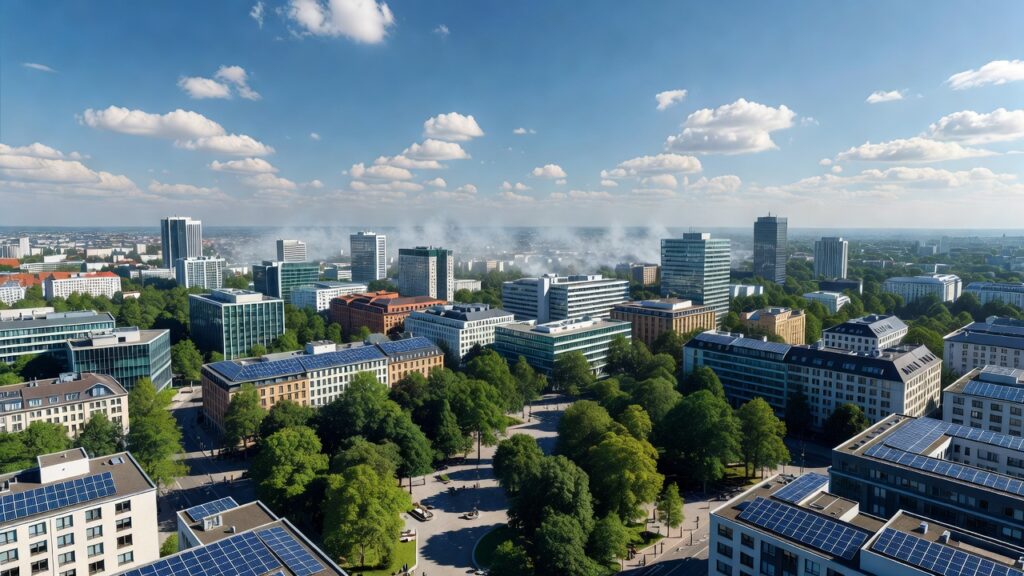
Two headlines landed this week that, taken together, paint a vivid picture of where Europe stands on climate change: the European Union is moving to bring waste incineration plants under its carbon pricing regime, and Western Europe just endured its warmest June on record. One is a policy signal about the future; the other is a weather warning about the present. Both demand attention.
Putting a Price on Burning Waste
EU officials have confirmed plans to include waste incineration in the bloc’s Emissions Trading System (ETS) — the cornerstone of European environmental policy and the world’s largest carbon market. Under the proposal, operators of waste incineration plants would be required to purchase allowances for every tonne of CO₂ they emit, a compliance cost that could fundamentally reshape the economics of waste management across the continent.
The logic is straightforward: if you make pollution expensive, you incentivise cleaner alternatives. In practice, this means incineration operators will face mounting pressure to invest in carbon capture technology, shift feedstocks, or lose market share to lower-emission waste treatment methods such as anaerobic digestion, mechanical-biological treatment, or — best of all — upstream waste reduction and recycling. Municipal authorities that rely on incineration contracts will also need to factor rising costs into long-term infrastructure planning.
Critics argue the move could increase household waste bills and disproportionately affect lower-income communities. Supporters counter that the measure is long overdue: waste incineration is a significant source of CO₂ and other pollutants, and excluding it from carbon pricing has effectively subsidised a high-emission sector at the expense of cleaner competitors. The ETS already covers power generation, heavy industry, and aviation. Waste is a logical — and necessary — next step.
A Record June That Cannot Be Ignored
The policy debate is unfolding against a backdrop of accelerating climate disruption. Reuters confirmed that Western Europe experienced its warmest June on record in 2025, with a severe late-month heatwave forcing school closures, straining electricity grids, and triggering heat-stress alerts across multiple countries. The human and economic costs were immediate and tangible.
This is no longer a distant projection from a climate model. The consequences of rising temperatures — disrupted public services, surging energy demand, threats to biodiversity and conservation areas, and increased mortality among vulnerable populations — are arriving faster than many policymakers anticipated. The UN’s latest climate reporting confirms that atmospheric CO₂ reached unprecedented highs in 2024, with methane and nitrous oxide also hitting record levels. The science is unambiguous: without faster mitigation, these extremes will become the norm.
For European infrastructure planners, the record June is a stress test that revealed weaknesses in power supply resilience and urban heat management. Renewable energy sources — solar in particular — provided some relief during peak demand, but the episode underscored how much work remains to build genuinely climate-resilient systems.
Global Context: Diverging Paths on Emissions Regulation
While the EU tightens its environmental policy framework, the contrast with other major economies is sharpening. The US Environmental Protection Agency has proposed easing emissions rules for heavy trucks and engines — a significant regulatory rollback that will affect air quality, public health, and the competitiveness of cleaner transport technologies. For European manufacturers and fleet operators already adapting to stricter standards, the divergence creates both challenges and opportunities in global markets.
The broader conservation picture remains alarming. Nature loss and climate change are increasingly understood as twin crises that reinforce each other: degraded ecosystems are less able to absorb carbon, regulate temperatures, or buffer communities against extreme weather. Effective environmental policy must address both simultaneously.
What This Means for Citizens, Business, and Decision-Makers
- Waste sector operators should begin assessing their carbon exposure and exploring investment in lower-emission technologies before ETS inclusion becomes law.
- Municipal authorities need to revisit long-term waste contracts and infrastructure plans in light of rising compliance costs.
- Citizens should expect gradual changes in waste service costs — and can accelerate the transition by reducing waste at source.
- Policymakers must ensure that carbon pricing revenue is reinvested in just-transition measures, protecting vulnerable households from disproportionate impacts.
The key takeaway is this: Europe’s record June heatwave and its push to price waste incineration emissions are not separate stories. They are two expressions of the same underlying reality — that the cost of inaction on climate change, whether measured in degrees, euros, or disrupted school days, is rising faster than the cost of acting. The EU’s expansion of carbon pricing is imperfect and will face resistance, but it moves in the right direction. The question is whether the pace of policy matches the pace of the crisis.