EU Emissions Drop 40% Below 1990 Levels: What the Latest Data Means for Climate Policy
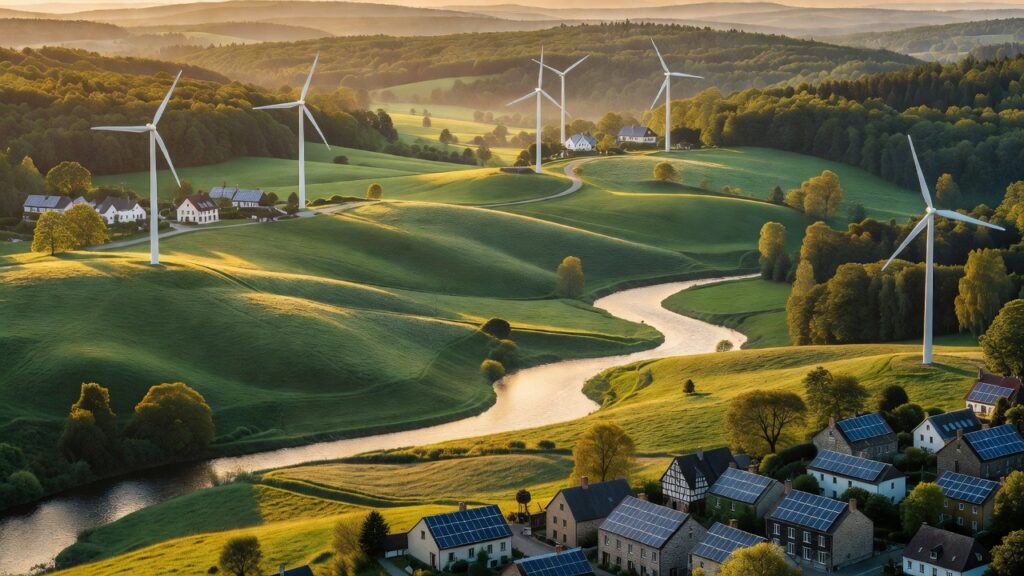
The European Union has reached a milestone that few would have predicted when the first climate targets were set three decades ago: greenhouse gas emissions across the bloc are now 40% below 1990 levels, according to the latest data from the European Environment Agency (EEA). A further 3% drop between 2023 and 2024 confirms that the EU’s trajectory of decarbonisation is holding — even as geopolitical pressures, energy costs, and industrial competitiveness concerns test the resolve of policymakers and businesses alike.
For citizens, professionals, and decision-makers tracking EU Green Deal progress, this data is more than a headline. It is a benchmark against which the next wave of climate policy and environmental regulation will be measured — and a signal that the rules shaping investment, trade, and daily life are not going away.
A Decade of Policy Is Paying Off — But the Hard Part Lies Ahead
The 40% reduction figure reflects cumulative progress driven by the energy transition, efficiency improvements, and the steady expansion of the EU Emissions Trading System (ETS). Yet the easy gains — largely achieved through phasing out coal in power generation — are mostly behind us. The sectors still lagging, particularly transport and buildings, are precisely those that affect ordinary Europeans most directly.
The EU’s legally binding targets make the stakes clear:
- A 55% reduction by 2030 compared to 1990 levels (the “Fit for 55” package)
- A proposed 90% reduction by 2040, currently under legislative discussion
- Full climate neutrality by 2050, enshrined in the European Climate Law
Going from 40% to 55% in just six years requires a pace of change significantly faster than what the EU has averaged over the past three decades. That pressure is already visible in the expansion of the ETS to cover buildings and road transport — a politically sensitive move that will directly affect heating costs and fuel prices for households and small businesses.
Carbon Markets and Border Measures: The Regulatory Architecture Tightens
At the heart of the EU’s carbon markets strategy is the reformed ETS, now broadened beyond heavy industry and aviation to encompass new sectors. Alongside it, the Carbon Border Adjustment Mechanism (CBAM) is moving toward full operationalisation by 2026. CBAM effectively places a carbon price on imports of steel, cement, aluminium, fertilisers, electricity, and hydrogen — ensuring that companies outside the EU cannot undercut European producers by avoiding equivalent carbon costs.
For global supply chains, this is a structural shift. Non-EU exporters selling into the European market will need to account for the carbon intensity of their production processes and report accordingly. For European importers and manufacturers, CBAM creates both a competitive shield and an incentive to push suppliers toward cleaner production. Sustainability reporting obligations — already expanding under the Corporate Sustainability Reporting Directive (CSRD) — will increasingly intersect with carbon pricing compliance.
Industrial Competitiveness and the Clean-Tech Bet
One of the most contested debates within the Green Deal framework is whether ambitious environmental regulation strengthens or undermines European industrial competitiveness. The EU’s answer, reflected in REPowerEU and the Net-Zero Industry Act, is to treat clean technology as an economic opportunity rather than a cost burden.
Accelerated permitting for renewables, investment support for net-zero manufacturing, and the build-out of EV charging infrastructure are all part of an industrial strategy designed to keep production — and jobs — in Europe while decarbonising it. Whether this bet pays off depends heavily on execution speed and on whether clean-tech investment flows match policy ambition.
What This Means for Businesses and Citizens
The immediate implications of the current policy landscape are concrete:
- Companies operating in or exporting to the EU must integrate carbon costs and sustainability reporting into their core business planning — not as compliance exercises, but as strategic priorities.
- Investors will find that the regulatory floor under green assets is rising, while carbon-intensive assets face growing transition risk.
- Citizens will see the energy transition accelerate in their homes and transport choices, with both costs and opportunities attached.
Key Takeaway
The EU’s 40% emissions reduction is a genuine achievement — and a foundation, not a finish line. With the 2030 target demanding faster action, carbon markets expanding, CBAM coming into full force, and sustainability reporting requirements deepening, the regulatory environment around the EU Green Deal is becoming more demanding, not less. For anyone operating in the European economy, understanding this architecture is no longer optional. It is the baseline for doing business in a climate-conscious continent.