Europe’s Green Industrial Push: Battery Storage, Hydrogen, and the Water-Energy Nexus
Europe’s clean energy transition is no longer just a policy ambition — it is becoming industrial reality. A wave of strategic investments across battery storage, offshore wind, and green hydrogen is reshaping the continent’s energy landscape, while a growing water crisis in North Africa underscores just how tightly resource management and renewable energy are intertwined. This week’s developments offer a clear snapshot of where the green economy is heading — and why it matters beyond Europe’s borders.
EU Backs Bulgaria’s Battery Storage as a Strategic Net-Zero Asset
In a significant move under the Net-Zero Industry Act (NZIA), the European Union has granted official strategic project status to a 200-MW battery energy storage system developed by Bulgaria-based International Power Supply (IPS). The project, known as Exeron X-BESS, is a fully integrated system designed to boost net-zero technology production capacity within the EU and accelerate energy efficiency solutions at scale.
This designation is more than symbolic. Strategic project status under the NZIA unlocks faster permitting, preferential access to funding, and greater visibility for investors — tools the EU is deploying deliberately to reduce dependence on non-European supply chains for clean technology. Bulgaria, often seen as one of the EU’s more fossil fuel-dependent economies, is now home to a flagship project in the bloc’s industrial green strategy. It signals that the energy transition is a pan-European effort, not limited to wealthier western member states.
For citizens and businesses, this kind of energy storage infrastructure is critical: it stabilises electricity grids increasingly powered by variable solar and wind sources, helping to smooth supply and keep prices more predictable.
Hydrogen and Offshore Wind: Corporate Giants Scale Up
Two other major developments this week confirm that Europe’s clean energy buildout is accelerating at the industrial level. In Rotterdam — already Europe’s largest port and a key hub for the energy transition — French industrial gases firm Air Liquide has finalised its investment in a 200-MW electrolyser project, with TotalEnergies secured as a major off-taker. This is one of the largest green hydrogen infrastructure commitments in Europe to date, and it positions the Netherlands as a central node in the continent’s emerging hydrogen economy.
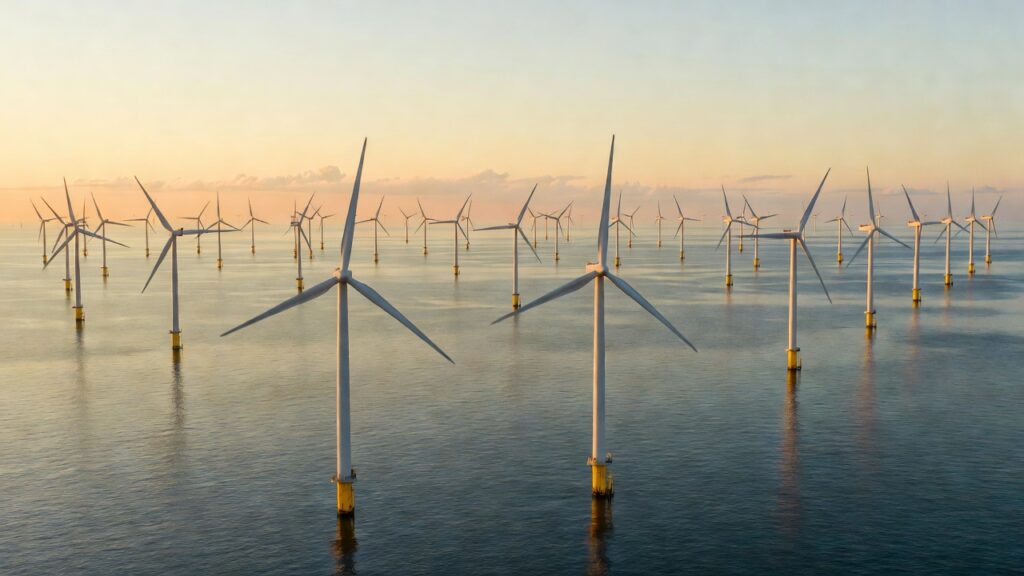
Meanwhile, Scotland has granted offshore consent for Ocean Winds’ Caledonia wind farm, a 2 GW offshore wind project that represents a major expansion of UK renewable capacity. Though the UK has left the EU, its offshore wind ambitions remain deeply connected to European energy security and the broader goal of decarbonising the electricity grid. Projects of this scale create thousands of jobs, stimulate regional economies, and generate clean power for millions of homes.
Together, these investments illustrate a maturing market: large corporations are now committing capital at a scale that moves the needle on Europe’s renewable energy targets, with hydrogen and wind emerging as complementary pillars of a decarbonised industrial system.
The Water-Energy Nexus: A Crisis That Demands Integrated Thinking
Beyond Europe, a stark reminder of why the energy transition cannot be separated from broader resource management challenges comes from Morocco. Facing seven consecutive years of drought, the country has set an ambitious target: sourcing 60% of its drinking water from desalinated seawater by 2030. Desalination is energy-intensive — and making it sustainable requires massive investment in renewable energy to power the process.
This water-energy nexus is not a distant problem. Southern Europe — Spain, Portugal, Italy, Greece — is experiencing increasingly severe droughts linked to climate change. The technologies and policy frameworks being developed in Morocco and the broader Mediterranean region will be directly relevant to European water security within this decade.
What These Developments Mean for the Road Ahead
Taken together, this week’s news points to several important trends:
- EU industrial policy is working — the Net-Zero Industry Act is delivering tangible projects, from Eastern Europe to major western ports.
- Green hydrogen is moving from pilot to infrastructure — the Rotterdam electrolyser project is a milestone for Europe’s hydrogen economy.
- Offshore wind remains a cornerstone of the continent’s renewable energy strategy, with multi-gigawatt projects now entering consent and construction phases.
- Water security is the next frontier — renewable-powered desalination will be essential for climate resilience across the Mediterranean and beyond.
The clean energy transition is accelerating — but its success depends on connecting the dots between electricity, industry, and water. Europe is building the infrastructure. The question now is whether policy, investment, and public engagement can keep pace with the urgency of the challenge.