When AI Meets the Energy Crisis: New York’s Data Center Moratorium Signals a Global Reckoning
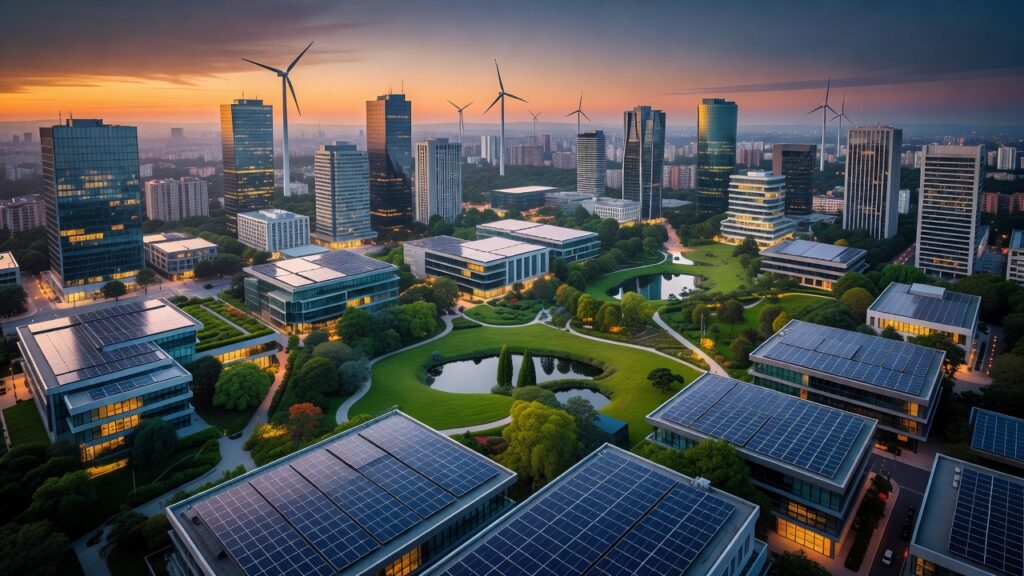
For the first time in the United States, a state government has said enough. New York has imposed a one-year moratorium on the construction of large new data centers, citing surging electricity costs, strained water supplies, and the mounting burden placed on local communities by the artificial intelligence boom. Reported by Reuters, the move is more than a local policy decision — it is a warning shot heard around the world, and one that Europe’s cleantech and smart city planners cannot afford to ignore.
The Hidden Cost of the AI Boom: Energy and Water Under Pressure
Data centers are the physical backbone of the digital economy, and their appetite for resources is staggering. A single large-scale facility can consume as much electricity as a small city, and many rely on millions of litres of water per day for cooling systems. As artificial intelligence workloads intensify — driven by large language models, real-time inference, and cloud computing expansion — these demands are growing exponentially.
New York’s moratorium directly names this pressure: rising power costs, strained water supplies, and community burdens are no longer abstract concerns but measurable, immediate problems. The decision reflects a broader tension at the heart of the energy transition: how do we power the digital infrastructure of the future without undermining the sustainability goals we have set for that same future?
This question is equally urgent in Europe. The EU’s data center sector already accounts for roughly 2.7% of total electricity consumption, a figure the European Commission expects to grow significantly by 2030. Countries like Ireland and the Netherlands have already introduced local restrictions on new data center approvals in recent years, citing grid stability and renewable energy targets. New York’s moratorium suggests this is becoming a global governance trend, not a regional anomaly.
Green Innovation Offers Pathways — But Policy Must Keep Pace
The good news is that green technology and cleantech innovation are already developing solutions to the water-energy security challenge. Two recent scientific breakthroughs deserve particular attention in this context:
- Solar desalination without brine waste: New research has demonstrated the feasibility of solar-powered water purification systems that eliminate the toxic brine byproduct traditionally associated with desalination. For data centers in water-stressed regions, this could represent a genuinely sustainable cooling alternative.
- Natural hydrogen from underground rocks: The discovery of naturally occurring hydrogen reserves in geological formations offers a potential low-carbon energy source that requires no electrolysis or green hydrogen production infrastructure. If scalable, this could help power energy-intensive facilities without adding pressure to electricity grids.
Meanwhile, Germany’s Chancellor Friedrich Merz has called for a rapid expansion of capacity to protect the maritime economy, signalling that green infrastructure investment is climbing the political agenda across sectors. The maritime angle matters here too: offshore wind, subsea cables, and port electrification are all part of the same integrated energy transition ecosystem that data centers depend upon.
The challenge is that innovation pipelines and policy cycles rarely move at the same speed. Moratoriums like New York’s are blunt instruments — necessary, perhaps, but not substitutes for the nuanced regulatory frameworks that Europe has been developing through initiatives like the European Green Deal and the Energy Efficiency Directive.
Implications for Smart Cities and European Cleantech Strategy
For urban planners and smart city architects, New York’s decision reinforces a principle that European cities have been grappling with: digital infrastructure is physical infrastructure, and it must be planned with the same environmental rigour as roads, buildings, or energy grids. Embedding data center development within broader urban sustainability frameworks — including renewable energy procurement, water recycling mandates, and community impact assessments — is no longer optional.
For the European cleantech sector, the moratorium also creates a strategic opportunity. Companies developing energy-efficient cooling systems, AI-optimised grid management tools, and low-carbon computing architectures are suddenly operating in a policy environment that rewards their solutions. Investors and decision-makers should take note: the intersection of AI infrastructure and green innovation is becoming one of the most consequential arenas in the global energy transition.
Key takeaway: New York’s data center moratorium is a landmark moment that crystallises the growing conflict between unchecked digital growth and sustainable resource management. For Europe — already further along the regulatory path — it is both a validation of proactive policy and a reminder that green technology adoption must accelerate alongside, not behind, the AI revolution. The cities and economies that solve this equation first will define the next chapter of the energy transition.