New York’s Data Center Moratorium: Why AI’s Energy Hunger Is Forcing a Sustainability Reckoning
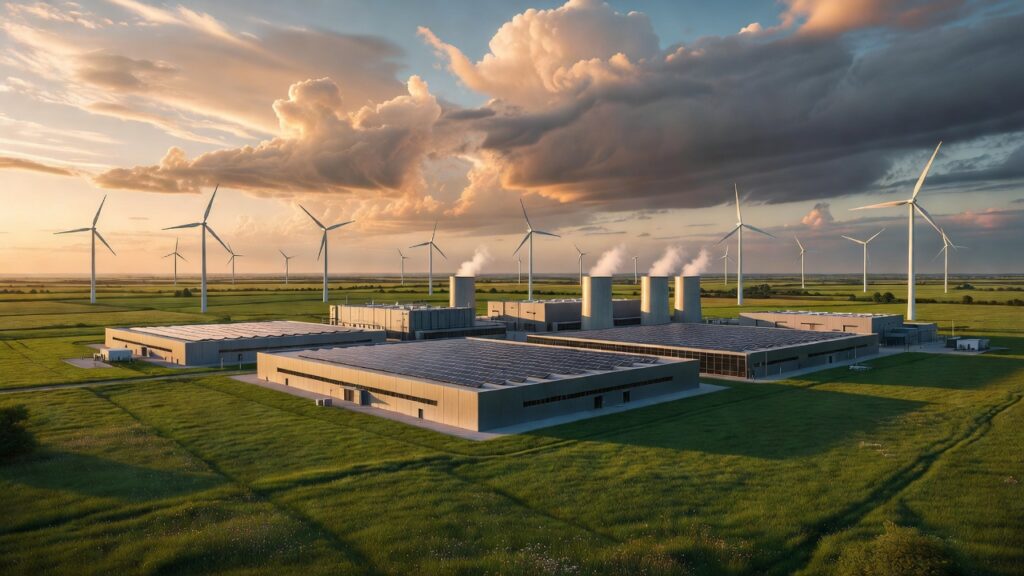
New York has become the first U.S. state to impose a formal moratorium on large-scale data center construction — a one-year pause driven by mounting concerns over energy costs, water consumption, and the burden these facilities place on local communities. The move, reported by Reuters, signals a turning point in how governments are beginning to treat AI infrastructure not as an abstract technological asset, but as a concrete environmental and social challenge with measurable consequences.
For sustainability professionals, ESG analysts, and policymakers on both sides of the Atlantic, the decision raises an urgent question: is the current model of AI-driven digital expansion compatible with the resource constraints of a climate-stressed world?
The Hidden Environmental Cost of the AI Boom
Data centers are the physical backbone of artificial intelligence. Every chatbot query, every image generated, every large language model trained requires enormous computational power — and that power demands electricity and water at industrial scale. A single large hyperscale data center can consume tens of millions of gallons of water per year for cooling, while drawing hundreds of megawatts from local grids.
New York’s moratorium directly targets this dynamic. State legislators cited rising power costs, strained water supplies, and community disruption as the primary drivers — concerns that are no longer theoretical. In many regions, new data center projects have been linked to grid instability, increased reliance on fossil fuel peaker plants, and the displacement of industrial or residential land use.
This is not an isolated American story. Across Europe, similar tensions are emerging. Ireland — home to a vast concentration of hyperscale facilities serving the EU market — has seen its grid operator warn repeatedly that new data center approvals risk compromising national energy security. The Netherlands temporarily restricted new builds in the Amsterdam region as early as 2019. These precedents suggest New York’s moratorium is less an outlier and more an acceleration of a global regulatory trend.
ESG Under Pressure: Corporate Responsibility in the Age of AI Infrastructure
The data center debate is increasingly framed within the language of ESG — Environmental, Social, and Governance criteria. For investors and sustainable finance practitioners, the question is no longer simply whether a tech company has a net-zero pledge, but whether its infrastructure choices align with that commitment in practice.
Several dynamics are converging:
- Energy sourcing transparency: Major cloud providers have made ambitious renewable energy commitments, but critics argue that additionality — whether their purchases actually drive new clean energy onto the grid — remains insufficiently verified.
- Water disclosure gaps: Unlike carbon emissions, water consumption is rarely reported with the same rigor in corporate sustainability disclosures, creating blind spots for ESG rating agencies and investors.
- Community impact: The social dimension of ESG is increasingly relevant, as data centers can strain local infrastructure while generating relatively few jobs per megawatt consumed.
The European Union’s Corporate Sustainability Reporting Directive (CSRD) and the broader push toward double materiality reporting are beginning to close some of these gaps — requiring large companies to disclose not only financial risks from environmental factors, but also their own impact on ecosystems and communities. Data center operators with significant EU exposure will face growing scrutiny under this framework.
A Circular Economy Lens: Can AI Infrastructure Go Green?
The moratorium model is a blunt instrument — useful for buying time, but not a long-term solution. The more durable path lies in applying circular economy principles to digital infrastructure itself.
Some leading operators are already experimenting with waste heat recovery systems that redirect thermal output to district heating networks — a model gaining traction in Scandinavia and increasingly discussed in Germany and France. Others are investing in immersion cooling technologies that dramatically reduce water dependency. Siting decisions, too, matter: locating facilities near renewable energy sources and in cooler climates can significantly reduce both carbon and water footprints.
Regulators and green business advocates are pushing for mandatory sustainability standards for new data center approvals — minimum energy efficiency thresholds, water use intensity limits, and binding renewable energy sourcing requirements. The EU’s European Green Deal framework provides a natural vehicle for such standards at scale.
Implications for Europe and the Road Ahead
New York’s moratorium will likely embolden European regulators who have been cautious about restricting digital infrastructure investment. It demonstrates that democratic governments can and will intervene when AI-driven growth conflicts with sustainability commitments — and that such interventions can come quickly.
For businesses operating in this space, the message is clear: proactive ESG integration is no longer optional. Companies that get ahead of regulation — by investing in efficient infrastructure, improving disclosure, and engaging meaningfully with local communities — will be better positioned in an environment where sustainable finance flows increasingly toward verifiable green performance.
Key takeaway: The AI boom is not exempt from the rules of planetary boundaries. New York’s one-year pause is a warning signal for an industry that has long treated energy and water as unlimited inputs. Whether in Albany or Amsterdam, the era of consequence-free digital expansion is ending — and the companies and policymakers who recognize this earliest will shape what comes next.