Climate Policy at a Crossroads: Germany’s Heating Law Rollback and a World Under Pressure
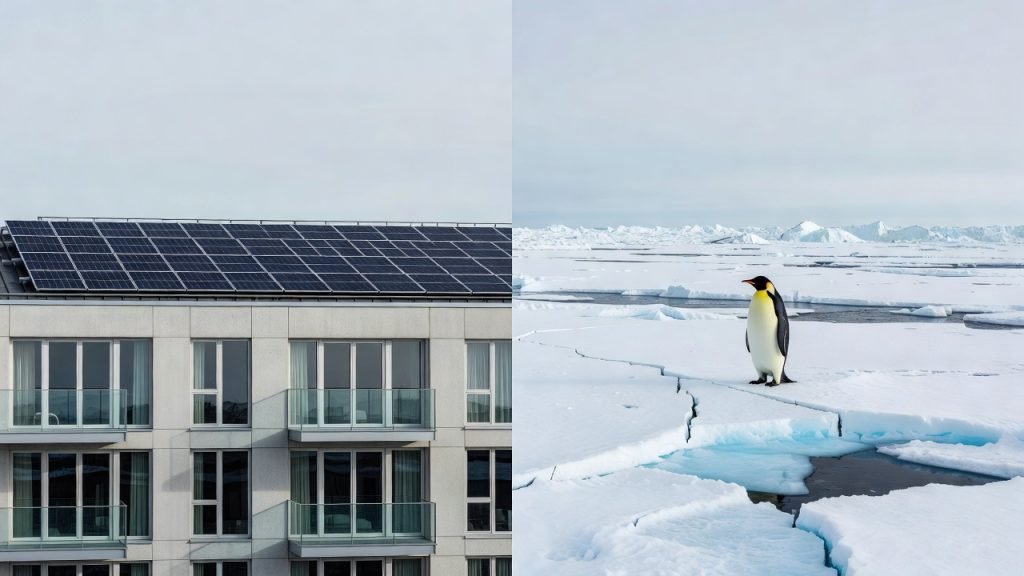
In a week that underscored the widening gap between climate ambition and political reality, Germany quietly dismantled one of its most debated green building rules — while scientists warned that the natural world is running out of time. From Berlin’s parliament to Antarctic ice sheets, the signals are converging: environmental policy is under strain, and the consequences are no longer abstract.
Germany Steps Back from Renewable Heating Targets
The German Bundestag has passed a revised heating law that removes the requirement for new buildings to source at least 65% of their heating energy from renewable sources. The original mandate, part of the so-called Gebäudeenergiegesetz (Buildings Energy Act), had sparked fierce public debate over costs and implementation timelines since its introduction in 2023. Critics argued it placed an unfair financial burden on homeowners and the construction sector; supporters warned that scrapping it would set back Germany’s climate targets significantly.
The rollback is more than a domestic issue. Germany is the European Union’s largest economy and a bellwether for renewable energy policy across the continent. If Berlin retreats from binding green building standards, it sends a signal to other member states — and to Brussels — that ambitious climate legislation can be unwound under political pressure. The EU’s broader goal of achieving climate neutrality by 2050 depends heavily on decarbonising the building sector, which accounts for roughly 40% of total energy consumption in Europe, according to the European Commission.
This development mirrors a parallel trend in the United States, where the Trump administration has finalised a regulatory change removing protections designed to prevent damage to wildlife habitats under the Endangered Species Act. Taken together, these moves reflect a global pattern of environmental policy rollbacks that prioritise short-term economic relief over long-term ecological resilience.
El Niño, Coral Bleaching, and the Emperor Penguin’s Collapse
While policymakers debate mandates, the climate system is not waiting. Meteorologists now place a 97% probability on El Niño persisting into early spring 2027, with the phenomenon expected to strengthen through the end of 2026. The implications are severe: El Niño-driven ocean warming raises the risk of record global temperatures and could trigger a fifth mass coral bleaching event — a catastrophe for marine biodiversity and the hundreds of millions of people who depend on reef ecosystems for food and coastal protection.
The biodiversity crisis is already claiming iconic victims. The emperor penguin has been officially declared an endangered species, a direct consequence of climate change degrading the Antarctic sea ice on which the species depends for breeding. Scientists have long warned that without dramatic reductions in greenhouse gas emissions, emperor penguin colonies could decline by more than 90% by the end of the century. Their endangered status is not just a conservation milestone — it is a measurable indicator of how profoundly human activity is reshaping the planet’s living systems.
A Breakthrough in Clean Hydrogen Offers a Counterpoint
Amid the troubling headlines, a promising development from the University of Birmingham offers a rare note of optimism. Researchers have developed a perovskite-based catalyst that could make clean hydrogen production significantly cheaper and more accessible. Hydrogen is widely regarded as a critical tool for decarbonising hard-to-electrify sectors — from heavy industry to long-distance shipping — and cost has historically been the primary barrier to its widespread adoption.
If this technology can be scaled, it could accelerate the transition to renewable energy in sectors where solar and wind alone are insufficient. Europe, which has staked much of its industrial decarbonisation strategy on green hydrogen through the REPowerEU plan, would stand to benefit considerably.
What This Means for Europe and the Planet
The convergence of these stories reveals a tension that will define the coming decade: the gap between the pace of climate change and the pace of political will. Key takeaways include:
- Policy continuity matters: Reversing renewable energy mandates, even under legitimate cost pressures, undermines investor confidence and long-term decarbonisation pathways.
- Biodiversity and climate are inseparable: The emperor penguin’s endangered status and coral bleaching risks remind us that conservation cannot be separated from emissions reduction.
- Innovation must be matched by regulation: A hydrogen breakthrough means little without the policy frameworks to deploy it at scale.
The fundamental takeaway is this: the climate and biodiversity crises do not pause for political cycles. Every rollback has a cost measured not only in future emissions, but in species lost, reefs bleached, and communities made more vulnerable to extreme weather. Europe has positioned itself as a global leader in environmental policy — but leadership requires consistency, especially when it is most inconvenient.