Europe’s Green Pivot: Electric Economy, CSRD Reform, and the Fight Against Forever Chemicals
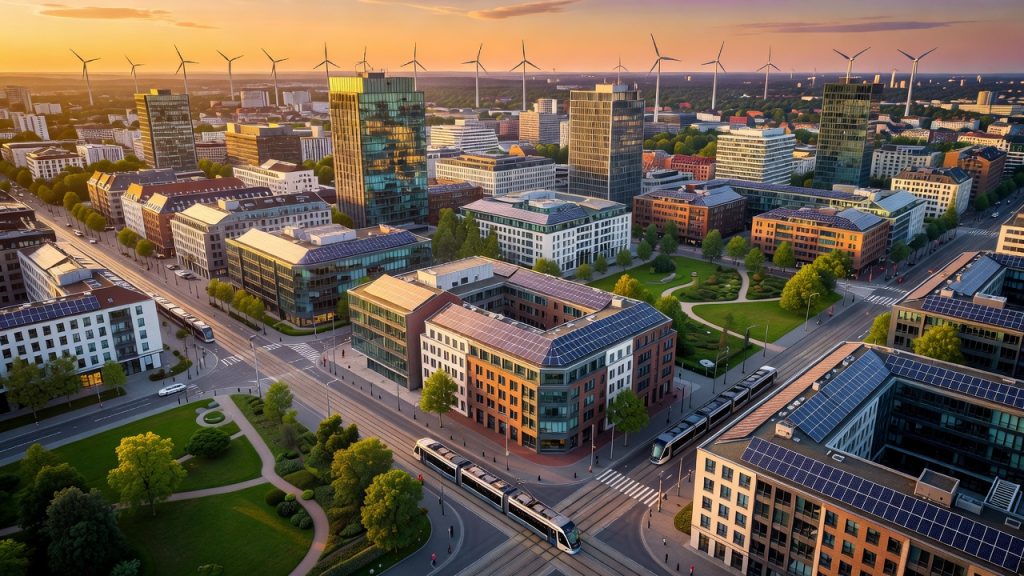
The European Union is entering a defining phase of its green transition. From sweeping plans to electrify its economy to a long-overdue crackdown on toxic chemicals, Brussels is signalling that sustainability is not a footnote — it is the framework. At the same time, proposed reforms to corporate sustainability reporting are reshaping how companies disclose their environmental and social impact. For citizens, businesses, and decision-makers, the changes arriving in 2025 are significant and interconnected.
A Major Bet on Electricity: The EU’s New Energy Strategy
The European Commission is advancing a comprehensive package of policies and funding mechanisms designed to shift large parts of the EU economy away from oil and gas and toward electricity. The initiative targets sectors that have historically lagged in decarbonisation — including industry, heating, and transport — by making electrification economically attractive and structurally supported.
This push comes as the EU reaffirms its commitment to climate neutrality by 2050, with 2030 interim targets requiring a 55% reduction in greenhouse gas emissions compared to 1990 levels. Electrification is central to that math. Renewable electricity generation in the EU reached a record share in 2024, and policymakers are now working to ensure that clean power translates into clean consumption across the entire economy.
Adding urgency to the European effort is the contrasting trajectory in the United States, where the EPA under the current administration has proposed rolling back heavy-truck and engine emissions rules introduced in 2023. The potential U.S. rollback underscores a growing transatlantic divergence on climate policy — and reinforces the EU’s positioning as the global benchmark for green business regulation and corporate responsibility.
CSRD Reform: Streamlining Without Weakening Sustainability Reporting
Alongside the energy transition agenda, the EU has proposed significant updates to the Corporate Sustainability Reporting Directive (CSRD). The headline change is a two-year postponement of reporting deadlines for many companies, giving businesses more time to build the internal systems needed for compliance. Disclosures will also be streamlined to better align with global frameworks, reducing duplication for multinationals reporting across jurisdictions.
Supporters of the reform argue it is pragmatic: many small and mid-sized companies were struggling with the complexity and cost of full CSRD compliance. Critics, however, warn that delays risk slowing the flow of reliable ESG data that investors and financial institutions rely on for sustainable finance decisions.
What remains non-negotiable is the direction of travel. The CSRD still requires companies to report on material sustainability risks, including Scope 3 emissions — the indirect emissions generated across a company’s value chain. This remains one of the most challenging and consequential areas of corporate responsibility reporting, pushing businesses to look beyond their own operations and engage suppliers, logistics partners, and customers in the transition.
Banning Forever Chemicals and Cleaning Up Industrial Emissions
Two further developments illustrate how the EU’s sustainability agenda is expanding beyond energy. France has passed landmark legislation to ban PFAS — per- and polyfluoroalkyl substances, commonly known as “forever chemicals” — from consumer products by 2026. France becomes only the second EU country after Denmark to take independent national action against these persistent toxic substances, which have been linked to serious health risks including cancer and hormonal disruption.
The move adds pressure on the European Commission to accelerate its own EU-wide PFAS restriction, currently under review by the European Chemicals Agency. For manufacturers operating in the circular economy, the message is clear: materials that cannot be safely reused, recycled, or eliminated have no long-term place in a sustainable product ecosystem.
Meanwhile, the EU has confirmed plans to include waste incineration plants in its Emissions Trading System (ETS), requiring these facilities to pay for their CO₂ emissions for the first time. With hundreds of incineration plants operating across Europe, this move is expected to accelerate investment in waste reduction, recycling infrastructure, and alternative technologies — reinforcing the economic logic of the circular economy.
What This Means for Businesses and Investors
Taken together, these developments send a consistent signal to markets: the cost of carbon, toxic materials, and unsustainable practices is rising — structurally and permanently. For companies navigating ESG strategy, the implications are practical:
- Electrification investment will be increasingly supported by EU funding and regulatory incentives — companies that move early will benefit from first-mover advantages.
- CSRD compliance, even with revised timelines, requires immediate internal preparation; the two-year delay is not a signal to pause.
- Supply chain scrutiny is intensifying — PFAS bans and Scope 3 reporting requirements mean sustainability due diligence must extend to every tier of the value chain.
- Carbon pricing is broadening — the inclusion of waste incineration in the ETS is a reminder that no high-emission sector will remain exempt indefinitely.
Key takeaway: Europe’s green transition is accelerating on multiple fronts simultaneously. Whether you are a corporate sustainability officer, an investor assessing ESG risk, or a citizen tracking policy, the direction is unambiguous — and the window for proactive adaptation is narrowing.