Solar Overtakes Gas, Green Hydrogen Advances: The Energy Shift Accelerating in 2026
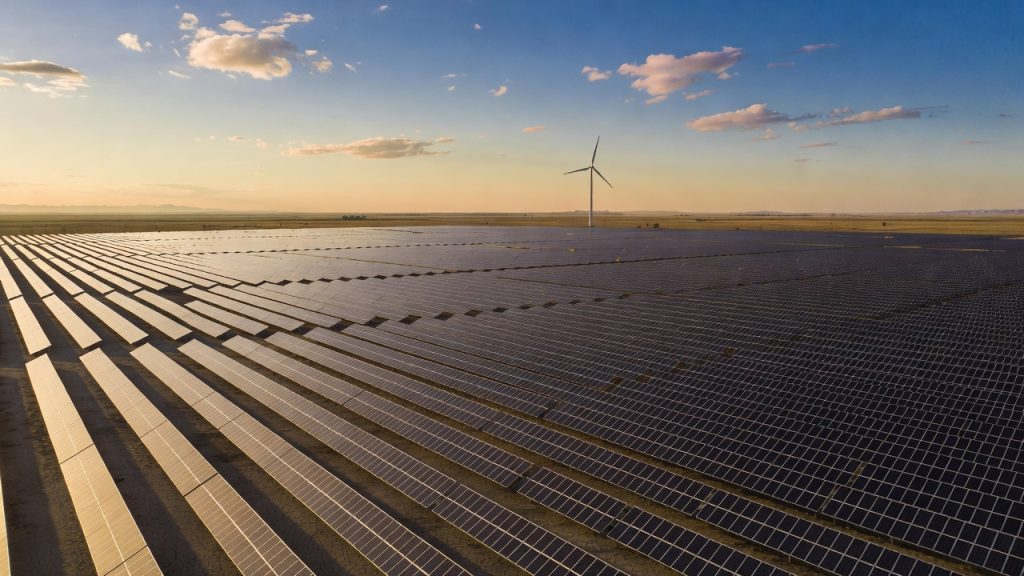
Something historic happened in the first five months of 2026: in California, utility-scale solar energy generated more electricity than natural gas. For the first time in the state’s history, a renewable source has overtaken fossil fuels as the dominant power supply over a sustained period. It is a milestone that resonates far beyond the Pacific coast — and one that carries direct lessons for Europe’s own clean energy transition.
California’s Solar Surge: A Signal for the World
According to data from the U.S. Energy Information Administration (EIA) and Canary Media, utility-scale solar generation within the CAISO grid — which covers most of California — jumped 21% compared to 2024. Over the same period, natural gas generation collapsed by a striking 60%. The numbers tell a clear story: the economics and infrastructure of renewable energy have reached a tipping point where fossil fuels simply cannot compete on a day-to-day basis.
This shift did not happen overnight. It is the result of years of policy commitment, grid investment, and falling costs for solar panels and battery storage. California’s grid operator has progressively integrated large-scale photovoltaic capacity alongside demand-response tools and storage systems that smooth out intermittency. The outcome is a model that European grid managers and policymakers are watching closely — particularly as the EU accelerates its own REPowerEU targets.
Europe’s Strategic Bets: Storage, Hydrogen, and Industrial Scale
While California dominates the headlines, Europe is making equally consequential moves in the energy transition. Under the EU Net-Zero Industry Act, the European Commission recently awarded strategic project status to Bulgaria’s Exeron battery energy storage system — a recognition that boosts funding access and permitting priority for net-zero production capacity on the continent. Battery storage is the critical complement to solar and wind energy: without it, surplus generation is wasted and grid stability suffers.
Equally significant is the progress on green hydrogen. Air Liquide has finalised a 200-MW electrolyser project in Rotterdam, with TotalEnergies confirmed as the off-taker. This is one of the largest green hydrogen production facilities in Europe, and its location in one of the continent’s most important industrial and port hubs signals that clean hydrogen is moving from pilot projects to genuine industrial scale. Green hydrogen is essential for decarbonising sectors that electricity alone cannot easily reach: steel, chemicals, heavy transport, and long-duration energy storage.
The cost challenge for hydrogen, however, remains real. That is why a breakthrough from the University of Birmingham is attracting attention: researchers have developed a perovskite-based catalyst that enables water-splitting — the core process of hydrogen production — at significantly lower temperatures than conventional methods. Lower operating temperatures mean lower energy consumption and reduced costs, potentially unlocking green hydrogen for a far wider range of applications and geographies.
Water, Energy, and the Resource Management Challenge
The energy transition does not exist in isolation. Resource management — particularly of water — is increasingly intertwined with clean energy strategy. Morocco offers a striking example: facing seven consecutive years of drought, the country has set an ambitious target to source 60% of its drinking water from desalinated seawater by 2030. Desalination is energy-intensive, which makes the integration of renewable energy into water infrastructure not just an environmental preference but an economic and strategic necessity.
This convergence of water security and clean energy is a challenge shared across the Mediterranean basin and beyond. As climate change intensifies pressure on freshwater resources, the ability to power desalination and water treatment with solar or wind — rather than fossil fuels — will become a defining factor in regional resilience.
What This Means for Citizens, Industry, and Policymakers
Taken together, these developments point to a clean energy system that is maturing rapidly across multiple fronts:
- Solar energy is now proven at scale to outcompete natural gas in real grid conditions.
- Battery storage is gaining strategic recognition and investment across Europe.
- Green hydrogen is transitioning from promise to infrastructure, with cost-reduction breakthroughs accelerating the timeline.
- Water and energy resource management are converging into a single policy challenge that demands integrated solutions.
For European citizens, this means cleaner air, greater energy independence, and more stable long-term energy prices. For industry, it signals a structural shift in input costs and supply chains. For policymakers, it underscores the urgency of maintaining — and strengthening — the regulatory frameworks that made this transition possible.
The key takeaway: the energy transition is no longer a future scenario. It is happening now, in real grids, in real industrial plants, and in real policy decisions. The question is no longer whether renewables can lead — it is how quickly the rest of the system can catch up.