Green Finance Hits 10% of Global Markets: What the Latest ESG Data Tells Us About the Energy Transition
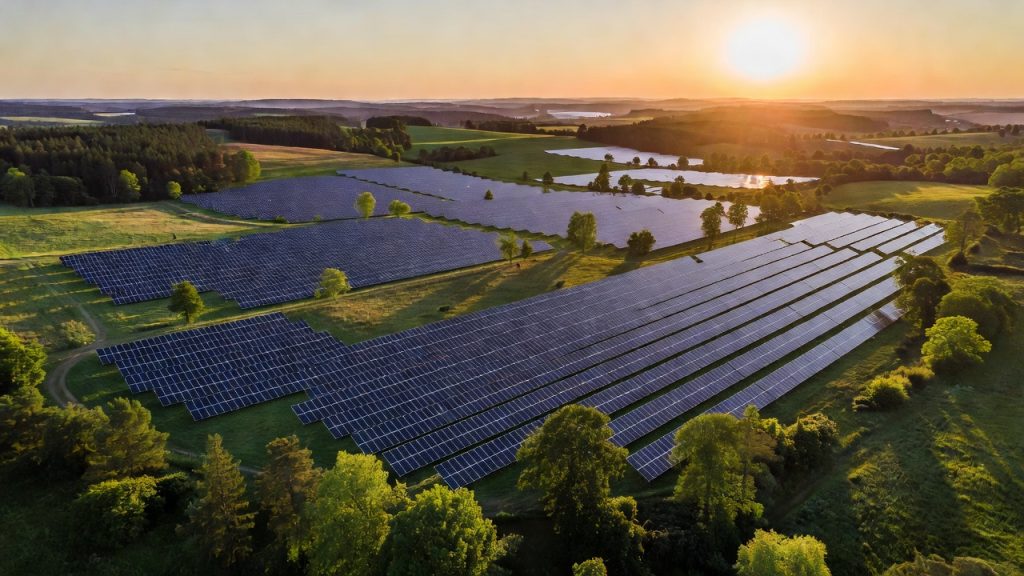
The global sustainability landscape is shifting faster than many anticipated. From stock exchanges to solar fields, from Beijing’s energy ministries to Brussels’ courtrooms, a convergence of policy decisions and financial data is reshaping how the world thinks about green business and corporate responsibility. The latest figures confirm what many ESG analysts have long argued: sustainable finance is no longer a niche — it is becoming the backbone of the global economy.
Green Companies Now Command Nearly 10% of Global Market Capitalisation
According to data published by the London Stock Exchange Group, green companies accounted for 9.9% of global market capitalisation in 2026, with green mergers and acquisitions representing 13.4% of all M&A activity over the past decade. These are not marginal numbers. They represent trillions of dollars in assets tied to businesses whose core value proposition is environmental sustainability.
For ESG investors and corporate strategists across Europe, this signals a structural shift. Sustainable finance is increasingly driving capital allocation decisions, not merely influencing them. The circular economy, renewable infrastructure, and clean technology sectors are attracting institutional money at a scale that would have seemed improbable just ten years ago. European asset managers, already operating under the EU’s Sustainable Finance Disclosure Regulation (SFDR), are well-positioned to capitalise on this momentum — provided regulatory clarity keeps pace with market growth.
China Raises the Bar on Clean Energy, While the U.S. Rushes to Lock In Subsidies
Two major developments on opposite sides of the globe are reshaping the global energy transition. China has updated its five-year energy plan, raising its target for non-fossil electricity sources to 50% by 2030, up from a 42.3% target set for 2025. This is a significant upward revision that positions China as an increasingly credible actor in global climate commitments — even as geopolitical tensions complicate international cooperation.
Meanwhile, in the United States, major solar developers have secured federal subsidies ahead of a July 4 legislative deadline, locking in financing for projects large enough to nearly double current U.S. renewable capacity. The urgency reflects both the scale of the opportunity and the political fragility of clean energy policy. Critics have raised concerns that rapid subsidy deployment could create market distortions, but proponents argue that without this intervention, renewable power costs would rise sharply — undermining the very economics that make the energy transition viable.
From a European perspective, both developments carry important lessons. The EU’s own renewable targets under REPowerEU depend on stable, long-term policy frameworks — precisely the kind of certainty that last-minute deadline rushes in Washington undermine.
EU Regulatory Turbulence: Private Jets, Methane Rules, and the Limits of Green Certification
Europe’s own sustainability governance is under pressure. In a notable ruling, the EU’s second-highest court annulled a European Commission decision that had excluded the manufacture of private jets from the list of environmentally sustainable activities under the EU Taxonomy. The court found the exclusion unjustified, forcing a reassessment of green certification standards for aviation — a sector already under intense scrutiny for its climate impact.
Simultaneously, Germany has joined a growing coalition of member states pushing back against the EU’s proposed methane emissions rules for oil and gas imports. Berlin warns the policy could disrupt jet fuel supplies and worsen energy shocks linked to the ongoing Iran conflict. The tension highlights a recurring challenge in EU sustainability policy: balancing long-term ESG commitments with short-term energy security imperatives.
Implications for Businesses and Decision-Makers
Taken together, these developments point to several critical implications for European companies and policymakers committed to corporate responsibility and sustainable growth:
- ESG integration is now financially material. With green companies approaching 10% of global market cap, ignoring sustainability metrics is increasingly a fiduciary risk, not just a reputational one.
- Regulatory uncertainty remains a core ESG risk. Court rulings on taxonomy classifications and member-state resistance to methane rules illustrate how quickly the compliance landscape can shift.
- Global competition for clean energy leadership is intensifying. China’s revised targets and U.S. subsidy acceleration mean European industry must advocate for equally ambitious and stable domestic frameworks.
- The circular economy and green M&A are growth vectors. A decade of data showing 13.4% of M&A in green sectors suggests that sustainable business models are not just ethical choices — they are strategic ones.
Key takeaway: The economics and politics of sustainability are converging at speed. For businesses, investors, and policymakers across Europe, the question is no longer whether to embed ESG principles into core strategy — it is how quickly and how deeply to do so before the competitive and regulatory windows narrow further.