EU Locks In 90% Emissions Cut by 2040: What It Means for Europe and the Planet
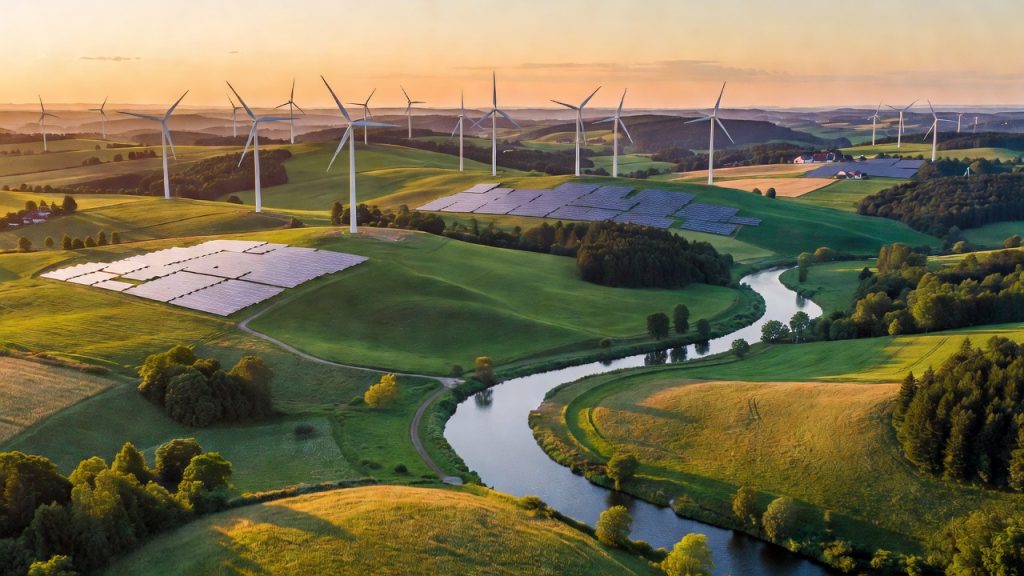
The European Union has taken one of its most consequential steps yet in the fight against climate change. On Thursday, EU member states gave final approval to a legally binding target of reducing greenhouse gas emissions by 90% by 2040, compared to 1990 levels. The decision, pushed through despite notable political resistance from some member states and industry lobbying groups, cements Europe’s position as the world’s most ambitious actor in global environmental policy — and sets the stage for sweeping changes across energy, industry, and daily life.
A Landmark Target in a Shifting Global Landscape
The 2040 climate target serves as a critical bridge between the EU’s existing 55% reduction goal for 2030 and the long-term ambition of net-zero emissions by 2050, enshrined in the European Climate Law. Reaching 90% will require a dramatic acceleration of renewable energy deployment, a near-complete phase-out of fossil fuels in power generation, and far stricter pollution controls across transport, agriculture, and manufacturing.
The timing is significant. The approval comes just months before COP30 in Belém, Brazil, where global leaders will assess progress under the Paris Agreement. It also arrives as Turkey and Australia finalize a split-hosting agreement for COP31 in 2026 — a sign that climate diplomacy is becoming increasingly complex and geographically distributed. Meanwhile, China has announced an acceleration of its carbon intensity reduction plan, targeting a 17% drop per unit of GDP during its current five-year plan, surpassing the pace set in the previous 2020–2025 period. Europe and China moving in the same direction — even if through different mechanisms — sends a powerful signal to the rest of the world.
Renewable Energy: Promise and Commercial Reality
Achieving a 90% emissions cut will depend heavily on scaling up renewable energy at unprecedented speed. Yet the same week the EU announced its target, Exxon Mobil halted plans for a major global hydrogen production facility, citing insufficient customer demand. The move is a sobering reminder that the energy transition faces real commercial headwinds, even as the policy direction becomes clearer.
Green hydrogen has been positioned as a cornerstone of Europe’s decarbonisation strategy, particularly for hard-to-abate sectors like steel, cement, and long-haul transport. But high production costs, underdeveloped infrastructure, and uncertain demand have slowed private investment. The EU’s new target may help de-risk long-term investments by providing regulatory certainty — but bridging the gap between political ambition and market readiness remains one of the central challenges of the decade.
Biodiversity and Conservation Under Pressure
Climate policy does not exist in isolation. Alongside the EU’s announcement, a troubling development unfolded across the Atlantic: the Trump administration took the first steps to loosen protections for the North Atlantic right whale, one of the world’s most endangered marine mammals, by relaxing vessel speed restrictions in its habitat zones. With fewer than 370 individuals estimated to remain, the species can ill afford reduced conservation safeguards.
This move underscores a widening transatlantic divide on environmental policy — and highlights why marine biodiversity conservation must be treated as inseparable from the broader climate agenda. Ocean ecosystems play a critical role in carbon absorption, and the degradation of marine habitats compounds the very climate risks that policies like the EU’s 2040 target are designed to address.
Implications for Businesses and Citizens
For European companies, the 90% target is not a distant abstraction — it is a planning horizon. Sectors from automotive to agriculture will need to accelerate decarbonisation strategies, invest in clean technologies, and prepare for tighter emissions regulations. For citizens, the transition promises cleaner air and lower long-term energy costs, but also demands investment in home retrofits, electric mobility, and new skills.
- Energy sector: Accelerated phase-out of coal and gas; massive expansion of solar, wind, and storage.
- Industry: Pressure to adopt green hydrogen, carbon capture, and circular economy models.
- Transport: Faster shift to electric vehicles and low-emission public infrastructure.
- Agriculture: Stricter methane and nitrous oxide reduction requirements.
Key takeaway: The EU’s 90% emissions target by 2040 is a defining moment for European climate leadership — ambitious, legally binding, and consequential for every sector of the economy. But ambition alone is not enough. Closing the gap between policy targets and commercial reality, while safeguarding biodiversity alongside the climate, will define whether this decade becomes a true turning point or another missed opportunity.