EU Green New Deal 2.0: How a €500 Billion Cleantech Fund Is Reshaping Europe’s Economy
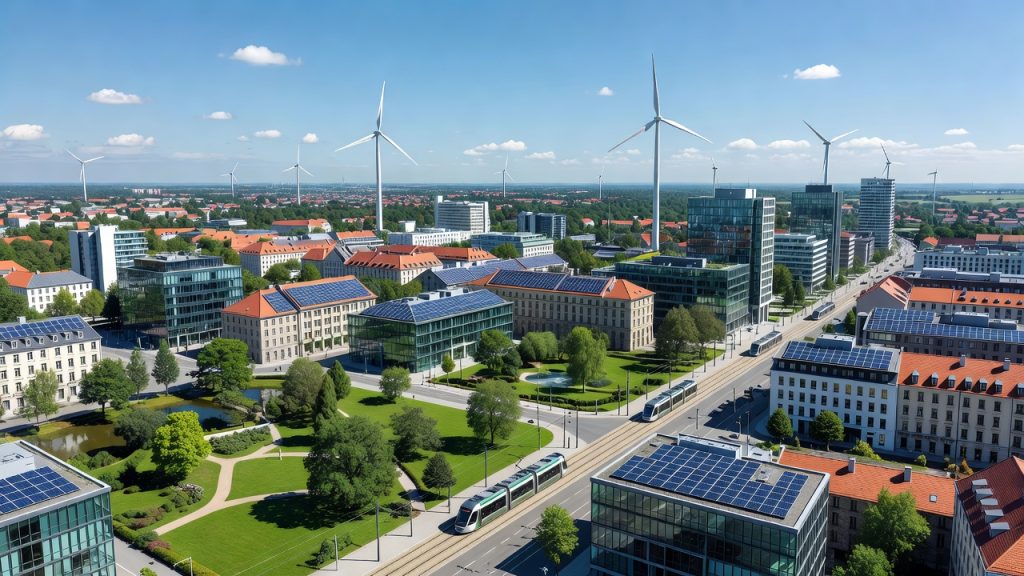
Europe has crossed a major threshold. The European Union has officially adopted the Green New Deal 2.0, a sweeping policy package that combines a binding pan-European carbon pricing mechanism with a €500 billion investment fund dedicated to cleantech and the energy transition. The move signals not just political ambition, but a structural reshaping of how European economies produce, build, move, and consume energy.
For citizens, businesses, and policymakers alike, the implications are immediate and far-reaching. From utility bills to construction sites, from logistics fleets to city grids, green technology is no longer optional — it is becoming the operating standard.
Carbon Pricing and Cleantech Investment: The Twin Engines of Change
At the heart of the Green New Deal 2.0 are two complementary mechanisms designed to accelerate the energy transition at scale. The mandatory carbon pricing system establishes a unified cost for carbon emissions across EU member states, removing the patchwork of national schemes that previously allowed regulatory arbitrage. Businesses that delay decarbonisation will face rising costs; those that invest early will gain a competitive edge.
The €500 billion cleantech fund is equally significant. It represents one of the largest coordinated public investments in green innovation in history, targeting renewable energy infrastructure, grid modernisation, and emerging technologies such as hydrogen and advanced energy storage. According to the European Commission’s official press release, 70% of medium-sized businesses across the EU must invest in renewable or eco-friendly technologies by the end of 2026 — a mandate that will ripple through supply chains, procurement decisions, and workforce planning across the continent.
This is not happening in isolation. Global cleantech investment has hit an all-time high, with over 70% of North American and European medium-sized businesses already planning renewable technology adoption by 2026. The EU is not leading from behind — it is codifying a trend already underway and accelerating it with regulatory force.
Building Smarter: Low-Carbon Construction and the Rise of Smart Cities
One of the most tangible frontiers of green innovation is in construction. A breakthrough in low-carbon building materials — specifically CO₂-injected concrete and carbonated aggregates — is now capable of reducing the carbon footprint of construction projects by up to 40%. Given that the built environment accounts for nearly 40% of global energy consumption and a significant share of CO₂ emissions, this is a critical development.
The growth of smart cities is closely linked to these advances. The number of smart buildings worldwide is projected to reach 115 million by 2026, integrating energy management systems, real-time consumption monitoring, and automated efficiency tools. For European cities already investing in urban renewal — from Amsterdam to Milan, from Vienna to Barcelona — these technologies offer a path to meeting climate targets while improving quality of life for residents.
Grid modernisation, funded in part through the new cleantech investment pool, will be essential to support this transition. Accelerated infrastructure upgrades will affect citizen utility costs in the short term, but are designed to deliver long-term price stability and energy independence.
Moving Without Fossil Fuels: Hydrogen, Electric Mobility, and Circular Logistics
Transport is another sector undergoing rapid transformation. Hydrogen-powered logistics fleets and electric delivery vans are increasingly replacing fossil fuel-dependent vehicles, supported by new government subsidies for hydrogen infrastructure across Europe. This shift is central to the circular economy vision embedded in the Green New Deal 2.0 — reducing not just emissions, but systemic dependency on imported fossil fuels.
Meanwhile, advanced carbon capture, utilisation, and storage (CCUS) technologies are approaching a critical inflection point. System installations are expected to double in 2025 compared to 2024’s total capacity, offering a complementary tool for hard-to-abate sectors where electrification alone is insufficient.
What This Means for Businesses and Citizens
The Green New Deal 2.0 creates both obligations and opportunities. For businesses, the 2026 investment mandate demands strategic planning now — those who treat it as a compliance burden rather than a competitive opportunity risk falling behind. For citizens, the transition will bring visible changes: smarter homes, cleaner transport options, and energy bills increasingly tied to domestic renewable sources rather than volatile global fossil fuel markets.
- Businesses must audit their technology roadmaps against the 2026 renewable investment threshold.
- Cities should accelerate smart infrastructure procurement to leverage EU fund access.
- Citizens can expect short-term utility adjustments as grids modernise, with long-term cost and environmental benefits.
The key takeaway: The EU’s Green New Deal 2.0 is not a distant policy aspiration — it is a legally binding framework with a tight timeline and €500 billion in firepower. Green technology, cleantech investment, and the energy transition have moved from the margins of economic policy to its very centre. Europe is placing a large, deliberate bet on green innovation, and the window to align with that direction is narrowing fast.