EU Locks In 90% Emissions Cut by 2040 and Launches €65B Social Climate Fund: What It Means for Europe
The European Union has taken its most decisive step yet on climate action. With a formally amended EU Climate Law now enshrining a legally binding 90% net greenhouse gas emissions reduction by 2040 — compared to 1990 levels — and the activation of a €65 billion Social Climate Fund, Brussels has drawn a clear line in the sand. The EU Green Deal is no longer just a vision: it is becoming hard law, with real money and real consequences attached.
A Binding 2040 Target: Bridging 2030 and Climate Neutrality by 2050
Until now, the EU’s legally binding milestones under the EU Climate Law included a 55% net emissions reduction by 2030 and full climate neutrality by 2050. The new 2040 target fills the critical gap between these two horizons, giving industry, investors, and policymakers a concrete intermediate benchmark to plan around.
This matters enormously for carbon markets and emissions trading. Road transport will officially enter the Emissions Trading System (ETS) starting in 2027, placing a direct carbon price on one of Europe’s most stubborn sources of pollution. Combined with the mandate that all new cars and vans must be zero-emission by 2035 — with intermediate reductions of 55% for cars and 50% for vans by 2030 — the regulatory pressure on the mobility sector is now substantial and legally enforceable. For automakers and fleet operators, the message from Brussels could not be clearer.
From a global perspective, the EU’s 2040 target positions Europe as the most ambitious major economy on climate timelines, ahead of the United States and China, which have set 2050 and 2060 net-zero targets respectively. This raises the stakes for international climate diplomacy and could influence upcoming rounds of the Paris Agreement’s global stocktake.
The Social Climate Fund: Putting Justice at the Heart of the Transition
One of the most politically significant elements of this legislative package is the Social Climate Fund, totalling over €86 billion — with €65 billion drawn from the EU budget — designed to cushion the impact of the green transition on vulnerable households, micro-enterprises, and small businesses. This is not a minor footnote: it is a direct acknowledgement that environmental regulation without social protection risks becoming a driver of inequality.
The fund will support measures including energy efficiency renovations, access to zero-emission transport, and direct income support for those most exposed to rising energy costs. Member states will be required to submit Social Climate Plans outlining how they intend to deploy the funds, ensuring accountability and targeting.
This approach reflects a broader shift in EU climate policy toward what is increasingly called the just transition — the principle that decarbonisation must not leave workers, low-income citizens, or structurally disadvantaged regions behind. For sustainability reporting purposes, companies operating in Europe should expect growing scrutiny of their own social transition strategies, in line with the Corporate Sustainability Reporting Directive (CSRD).
Renewables, F-Gases, and the Net-Zero Industry Act: Filling Out the Framework
The 2040 target does not stand alone. It is backed by a suite of reinforcing measures that together form a comprehensive climate policy architecture:
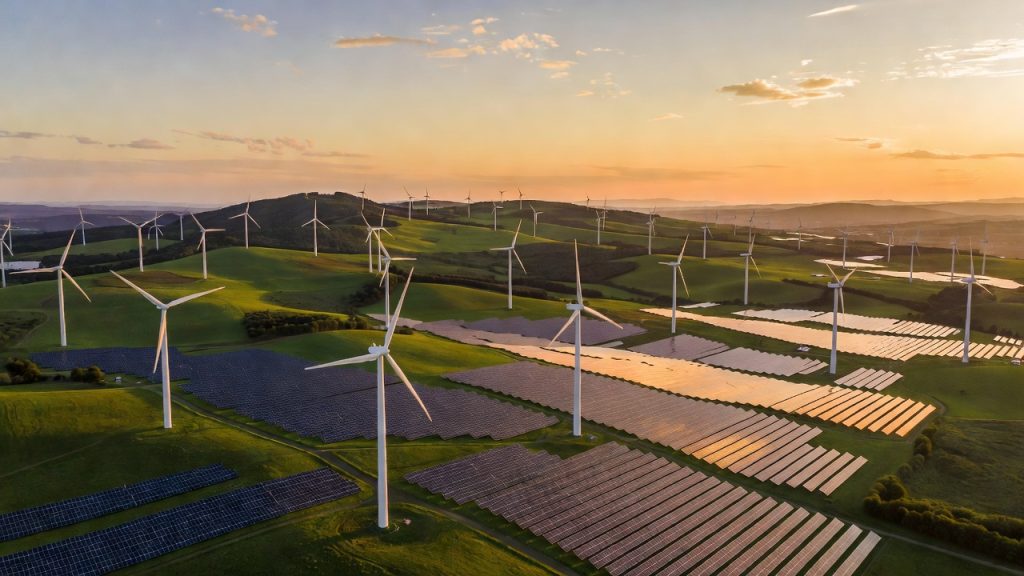
- Renewable energy target raised to 42.5% by 2030 (with ambition to reach 45%), up from the previous 32%, accelerating investment in wind and solar infrastructure across the continent.
- The Net-Zero Industry Act sets benchmarks for domestic clean technology manufacturing, reducing dependence on third-country supply chains for solar panels, wind turbines, and battery storage.
- Revised regulations on fluorinated gases (F-gases) and methane emissions target two potent but often overlooked contributors to global warming, closing gaps in the EU’s overall emissions accounting.
Together, these instruments send a powerful signal to capital markets: the EU’s green economy is not a policy experiment — it is the regulatory baseline for doing business in Europe.
Implications for Citizens, Businesses, and Policymakers
For citizens, the Social Climate Fund offers tangible support during a period of rising energy costs, but also signals that the shift to heat pumps, electric vehicles, and energy-efficient homes is now a policy priority backed by public investment. For businesses, particularly those subject to ETS obligations or sustainability reporting requirements, the tightening of carbon markets and the 2040 milestone will require accelerated decarbonisation roadmaps. For policymakers at national and regional level, the challenge is now one of implementation: translating EU law into effective national measures before the next compliance deadlines arrive.
Key takeaway: The EU has moved from climate ambition to climate architecture. With a binding 90% target, a funded social safety net, and tighter rules across transport, energy, and industry, the EU Green Deal has entered its most consequential legislative phase. The question is no longer whether Europe will decarbonise — but whether the rest of the world will keep pace.