EU Green New Deal 2.0: How €500 Billion and Mandatory Carbon Pricing Are Reshaping Europe’s Clean Tech Future
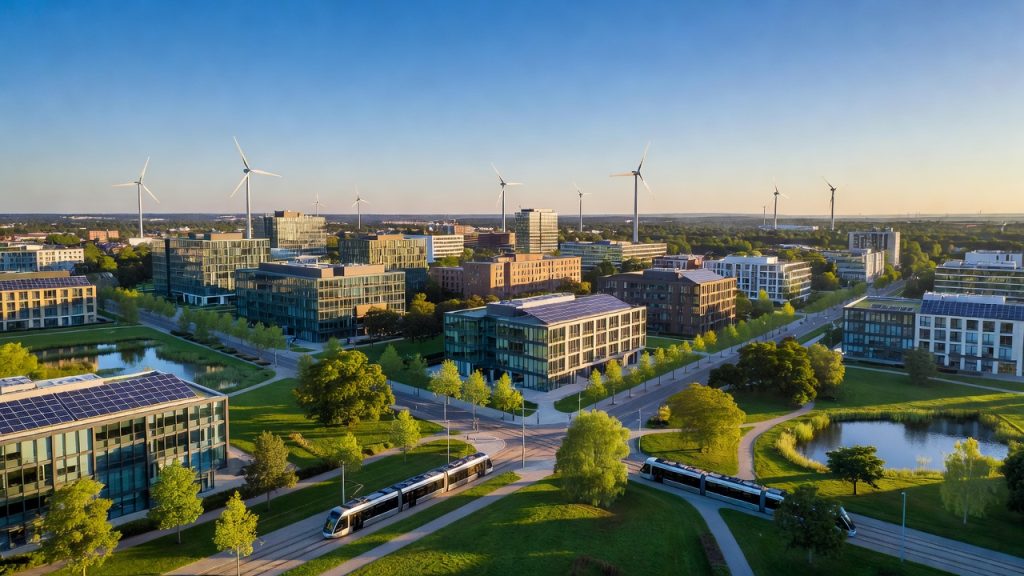
Europe has just raised the stakes on climate action. The European Commission has officially adopted the Green New Deal 2.0, a landmark policy package that combines binding carbon pricing with an unprecedented €500 billion investment fund targeting cleantech, electric mobility, and smart city infrastructure. Set to take full effect by January 2027, the deal signals a decisive shift: the energy transition is no longer a voluntary ambition — it is now a legal obligation with real financial muscle behind it.
A Binding Carbon Price and the €500 Billion Cleantech Fund
At the heart of the Green New Deal 2.0 is a mandatory EU-wide carbon pricing mechanism, replacing the patchwork of national schemes that have long created an uneven playing field for European businesses. Under the new framework, companies across all member states will be required to cut emissions by 60% before 2030 — a target that goes significantly beyond previous voluntary commitments.
To support this transition, the €500 billion cleantech fund will channel capital into three priority areas: renewable energy infrastructure, electric mobility, and smart city development. Citizens will also benefit directly, with subsidies available for electric vehicles and home energy upgrades such as heat pumps and solar panels. This dual approach — regulatory pressure combined with financial incentives — reflects lessons learned from the original Green Deal, which critics argued lacked the enforcement teeth needed to drive systemic change.
The timing is significant. Global cleantech investment hit an all-time high in Q2 2026, and according to recent industry data, 70% of medium-sized businesses in North America and Europe are already planning to adopt renewable technologies by the end of the year. The EU’s new framework is designed to accelerate and consolidate this momentum, rather than wait for market forces alone to deliver results.
Breakthrough Technologies Driving the Transition
The policy arrives at a moment of genuine technological acceleration. A Stanford University study released alongside the Commission’s announcement projects that carbon capture and storage (CCUS) costs could fall by a factor of six in the coming years, making synthetic fuel production commercially scalable for the first time. This development is particularly relevant for hard-to-decarbonize sectors such as aviation, shipping, and heavy industry — areas where electrification alone is not yet a complete solution.
Meanwhile, hydrogen-powered transport is emerging as a credible complement to battery electric vehicles. Fuel cell electric vehicles (FCEVs) are already being deployed across major European logistics corridors, offering longer range and faster refueling times for freight operators. The EU’s investment fund is expected to support the expansion of hydrogen refueling infrastructure, a critical bottleneck that has slowed adoption to date.
Smart buildings are also entering a new phase. New EU mandates require all new constructions to integrate biodegradable electronics and AI-driven climate prediction systems, targeting a 37% reduction in construction-related emissions. This positions smart city development not just as an urban convenience, but as a core pillar of Europe’s decarbonization strategy.
What This Means for Businesses and Citizens
For European businesses, the Green New Deal 2.0 is both a challenge and an opportunity. The binding 60% emissions reduction target will require significant capital investment and operational restructuring — particularly for energy-intensive industries. However, the €500 billion fund also represents a substantial source of financing for companies willing to lead on green innovation.
For citizens, the direct subsidy programs for EVs and home energy upgrades lower the financial barrier to participation in the energy transition. Combined with the long-term reduction in energy costs that renewable infrastructure promises, the deal is designed to make sustainable living more economically accessible — not just an option for the affluent.
- Carbon pricing becomes binding EU-wide from January 2027
- €500B fund targets cleantech, EV infrastructure, and smart cities
- CCUS cost reductions could unlock scalable synthetic fuels
- Hydrogen logistics fleets already operating on key European corridors
- Smart building mandates aim for 37% fewer construction emissions
Key takeaway: The EU Green New Deal 2.0 is the most comprehensive climate policy framework Europe has ever adopted. By combining mandatory carbon pricing, massive public investment, and support for breakthrough green technologies, it sets a new global benchmark for what serious climate governance looks like — and puts Europe firmly at the center of the next chapter of the energy transition.