Solar Desalination, AI Wind Forecasting, and Europe’s 2040 Climate Target: Green Tech Is Accelerating
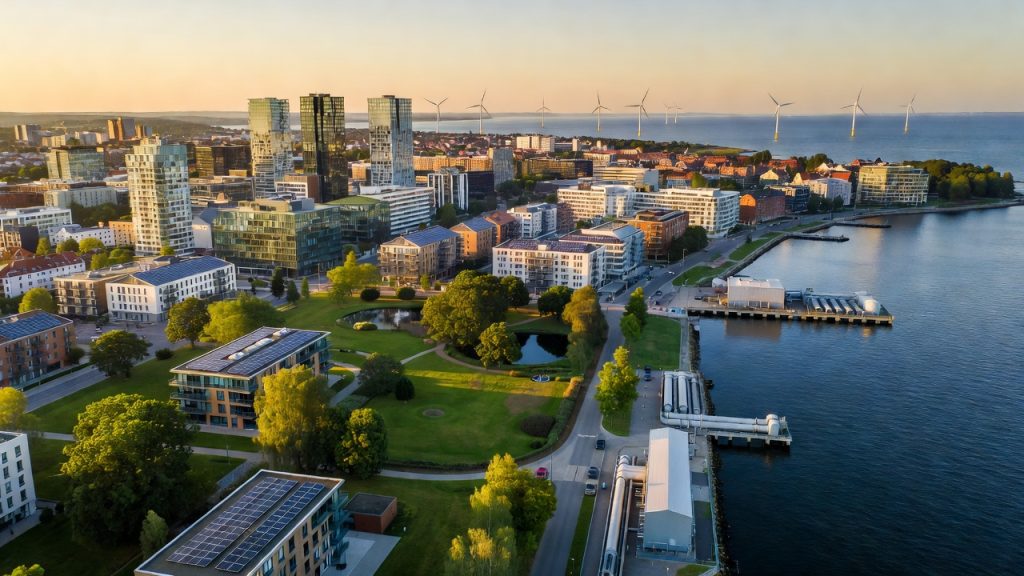
Europe has just set one of the most ambitious climate benchmarks in its history. With EU member states giving final approval to a 2040 climate target of 90% greenhouse gas emission reductions, the bloc is sending an unmistakable signal to industry, investors, and innovators: the energy transition is not slowing down. And the timing could not be more fitting — a new wave of green technology breakthroughs is emerging precisely when policymakers need practical tools to back up their commitments.
A Policy Milestone That Reshapes the Innovation Landscape
The EU’s 2040 climate law, now formally approved, sets a binding trajectory between the current 2030 target of at least 55% net emission reductions and the goal of climate neutrality by 2050. For the green technology sector, this is not just symbolic. It defines the regulatory environment in which businesses must invest, innovate, and compete for the next two decades.
Stricter decarbonization expectations will accelerate demand for smart energy systems, clean industrial processes, and electric mobility infrastructure across the continent. Companies that have already integrated sustainability planning into their operations will find themselves ahead of the curve; those that have not will face mounting compliance pressure. Notably, the EU also approved a scaled-back version of its corporate supply-chain due diligence rules, reducing some environmental and human-rights compliance burdens — a pragmatic concession that keeps the broader sustainability agenda intact while easing near-term costs for smaller businesses.
The global context matters too. China has announced plans to cut its carbon intensity by 17% in its current five-year plan, a move that will ripple through global clean-tech supply chains and manufacturing. For European companies sourcing solar panels, batteries, or wind components, this signals both competitive pressure and potential opportunity as Chinese producers accelerate their own green transitions.
Cleantech Breakthroughs: Water Security and Wind Energy in Focus
Against this policy backdrop, two recent research developments stand out for their real-world potential in the green innovation pipeline.
The first is a solar-powered desalination system capable of producing drinking water without generating toxic brine — the harmful saline byproduct that has long been one of the main environmental drawbacks of conventional desalination technology. By eliminating brine discharge, this system addresses a critical barrier to scaling up water security solutions in coastal and arid regions. For smart cities planning climate-resilient infrastructure, and for southern European countries already experiencing worsening droughts, this kind of applied cleantech could prove transformative.
The second breakthrough comes from the energy sector: an AI framework capable of predicting wind patterns in seconds, dramatically reducing the computational time needed for wind energy forecasting. Accurate, fast wind prediction is essential for grid operators managing the variability of renewable energy sources. As Europe pushes to expand offshore and onshore wind capacity to meet its 2040 targets, tools that make wind power more reliable and grid-friendly are not a luxury — they are an operational necessity.
Electric Cooking and the Quiet Expansion of Electrification
Not all green technology news arrives with fanfare. India’s decision to extend the deadline for strict energy-efficiency norms for countertop induction hobs to January 1, 2027 is a quieter but meaningful development. It reflects a global trend: the electrification of cooking, heating, and everyday appliances as part of the broader shift away from fossil fuels. For European appliance manufacturers and retailers with exposure to Asian markets, this timeline adjustment affects product planning and export strategies. More broadly, it underscores that electric mobility and electrification of end uses — from transport to kitchens — are advancing on multiple fronts simultaneously.
What This Means for Businesses, Citizens, and Decision-Makers
The convergence of regulatory acceleration and applied innovation creates a clear set of implications:
- Businesses operating in Europe must align long-term investment plans with the 90% emissions pathway — the 2040 target will shape procurement, infrastructure, and product development decisions.
- Citizens stand to benefit from faster deployment of clean energy, improved air quality, and more resilient water and energy systems enabled by technologies like solar desalination and AI-driven grid management.
- Decision-makers and investors should pay close attention to emerging cleantech categories — water technology, AI-powered energy systems, and electrification solutions — as the policy environment increasingly rewards early movers.
Key takeaway: Europe’s 90% climate target is not just a political declaration — it is a structural driver for green technology investment and innovation. The breakthroughs in solar desalination and AI wind forecasting are early indicators of the practical solutions that will define the next chapter of the energy transition. The race is on, and the tools to win it are already taking shape.