The EU Green Deal Is Being Quietly Dismantled — Here’s What’s Actually Changing
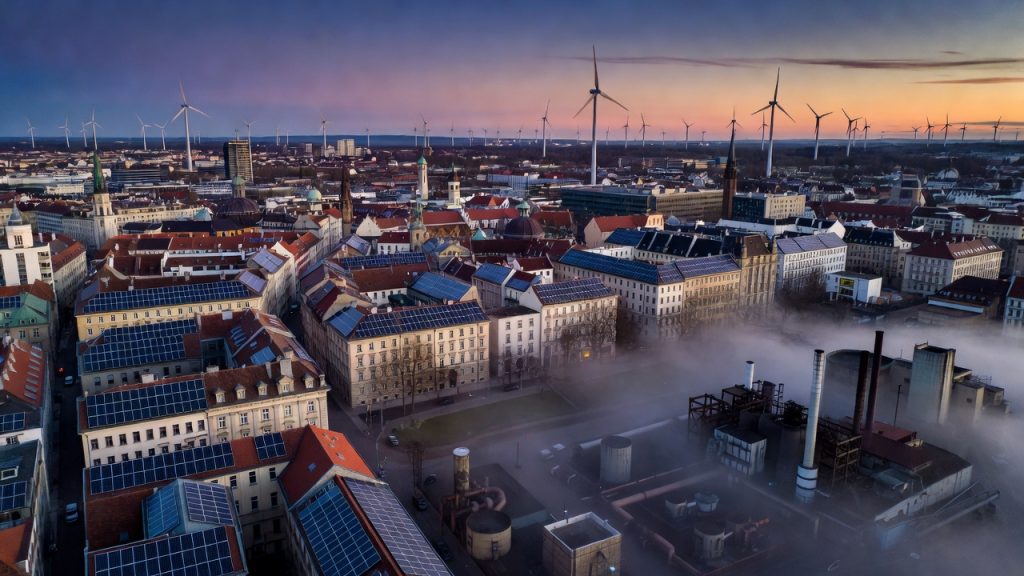
The European Union built its reputation as a global climate leader on the ambition of the Green Deal — a sweeping legislative agenda designed to make Europe the world’s first climate-neutral continent by 2050. But a major report published in December 2025 by Deutsche Welle paints a sobering picture: that ambition is being steadily hollowed out, one policy revision at a time. The rollback is not dramatic or sudden. It is incremental, technical, and easy to miss — which is precisely what makes it so consequential.
A Target Lowered, A Gap Widened
The EU’s own Scientific Advisory Board recommended a 90–95% reduction in greenhouse gas emissions by 2040 — the level scientists say is necessary to keep Europe on track for net zero. Member states, however, have agreed on a softer 85% target, with up to 5% of that reduction permitted through foreign reforestation projects rather than domestic emissions cuts.
This distinction matters enormously. Offsetting emissions through forests planted abroad is not the same as structurally decarbonising European industry, transport, and agriculture. It shifts the burden, delays transformation, and introduces significant uncertainty around permanence and accountability. For a bloc that has long positioned itself as the benchmark for credible climate policy, this is a meaningful step backwards.
Carbon Markets, Reporting Rules, and the ICE Ban: What Has Changed
The erosion of EU climate policy is visible across several interconnected areas:
- Carbon pricing delayed: The extension of the EU Emissions Trading System (ETS) to cover buildings and road transport — known as ETS2 — has been pushed back from 2027 to 2028. This delays a critical price signal that would incentivise households and businesses to switch to cleaner heating and mobility solutions.
- Sustainability reporting diluted: The Corporate Sustainability Reporting Directive (CSRD), once designed to bring transparency to thousands of European companies, has been significantly narrowed. Mandatory sustainability reporting now applies only to large corporations with revenues in the hundreds of millions of euros, effectively exempting a vast portion of the business ecosystem from rigorous environmental disclosure.
- Due diligence weakened: The Corporate Sustainability Due Diligence Directive (CSDDD) — which requires companies to audit their supply chains for environmental and human rights violations — has been delayed until the end of 2026, with far fewer companies now in scope. This directly undermines efforts to address deforestation-free supply chains.
- The 2035 ICE ban under review: Perhaps the most symbolically charged reversal: the EU is officially reconsidering its landmark decision to ban the sale of new internal combustion engine vehicles by 2035. This creates deep uncertainty for automotive manufacturers who have already committed billions to electrification strategies.
Why This Is Happening — and Why It Matters Beyond Europe
The political context is not hard to read. Facing economic pressure, energy cost concerns, and a resurgent wave of industrial lobbying, several member states have pushed back against regulations they frame as burdensome. The argument is familiar: that aggressive environmental regulation threatens competitiveness, particularly as the United States and China pursue their own industrial strategies with fewer constraints.
But this logic carries a significant risk. Environmental regulation is not just a cost — it is a driver of innovation, investment certainty, and long-term resilience. When the EU weakens its climate policy framework, it does not simply slow domestic progress; it also undermines the global credibility of the European model. Countries and companies looking to Europe as a regulatory benchmark may recalibrate their own ambitions accordingly.
For businesses, the mixed signals are particularly damaging. Firms that invested early in green transitions — in clean technology, sustainable supply chains, or low-carbon infrastructure — now face a shifting regulatory landscape that rewards delay over ambition.
What This Means for Citizens, Businesses, and Policymakers
The cumulative effect of these changes is a Green Deal that still exists on paper but is progressively less enforceable in practice. Citizens concerned about air quality, energy bills, and climate resilience have fewer regulatory guarantees. Businesses seeking long-term certainty face a less predictable policy environment. And policymakers at the national level who championed bolder action find themselves with weaker tools.
The key takeaway is this: the EU Green Deal is not dead, but it is being significantly weakened at a moment when the science demands the opposite. Closing the gap between political commitment and legislative reality is not just an environmental imperative — it is an economic and strategic one. Europe’s ability to lead on climate in the years ahead will depend on whether it chooses coherence over convenience.