EU Backs Bulgarian Battery Storage as Strategic Project — What It Means for Europe’s Clean Energy Future
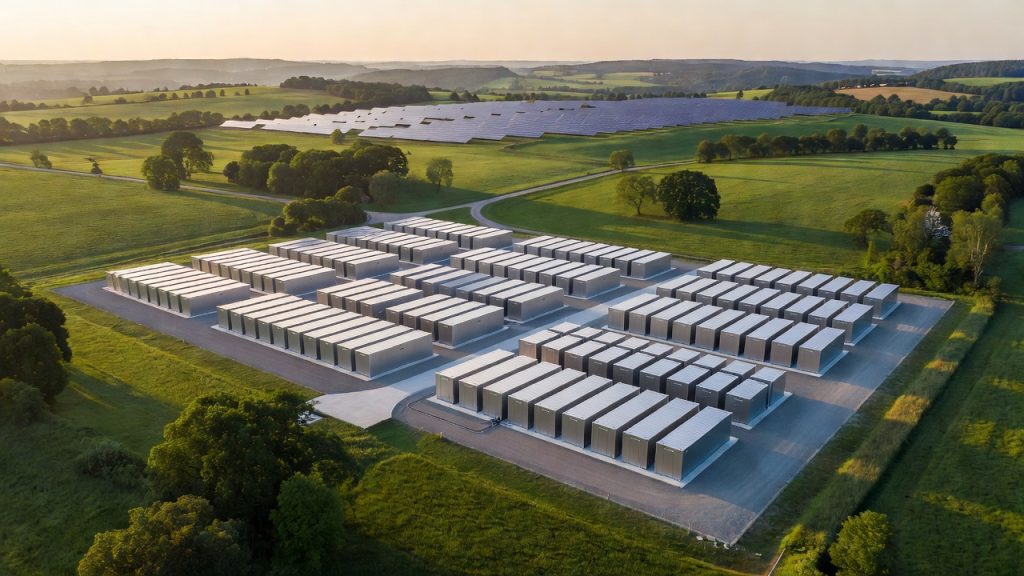
Europe’s push to build a sovereign clean-energy industrial base just gained a concrete milestone. The European Union has officially awarded strategic project status under the Net-Zero Industry Act (NZIA) to X-BESS, a fully integrated battery energy storage system (BESS) developed by Bulgaria-based International Power Supply. It is a policy signal with real-world consequences — for investors, grid operators, and the broader race to keep clean-tech manufacturing inside Europe’s borders.
Why Battery Storage Is Now a Strategic Priority
The Net-Zero Industry Act, adopted in 2024, was designed precisely for moments like this. By designating certain projects as “strategic,” the EU unlocks faster permitting, preferential access to funding, and stronger supply-chain coordination. Battery energy storage systems sit at the heart of the renewable energy transition: without large-scale storage, the intermittency of solar and wind power remains a structural bottleneck for grid stability.
X-BESS stands out because it is fully integrated and domestically manufactured — a distinction that matters enormously in a policy environment still scarred by Europe’s over-reliance on imported photovoltaic panels and battery cells, predominantly from China. Bringing BESS production capacity to Bulgaria, an EU member state with lower manufacturing costs and growing industrial infrastructure, directly addresses the competitiveness gap the NZIA was built to close.
For grid operators and utilities across Europe, the implications are practical: more locally sourced storage capacity means shorter supply chains, reduced geopolitical exposure, and potentially lower costs for grid-scale energy storage deployment over time.
A Broader Landscape of Caution and Acceleration
The X-BESS designation arrives against a global backdrop that is anything but uniform. In the solar sector, India has warned lenders against financing new solar module manufacturing facilities, citing overcapacity risks and concerns about project bankability. It is a reminder that the clean-energy boom carries its own financial vulnerabilities — and that policy support, while necessary, must be matched by disciplined capital allocation.
Meanwhile, the pace of renewable energy buildout in other regions is accelerating sharply. Colombia is on track to close 2025 with 2,685 MW of renewable capacity, a 49.2% increase from end-2024, according to Reuters. Latin America’s rapid expansion underscores that the global energy transition is not waiting for Europe to resolve its manufacturing debates — competition for investment, talent, and technology is intensifying worldwide.
For European decision-makers, the lesson is clear: strategic industrial policy must be paired with speed. Designations and frameworks are only as valuable as the projects they enable on the ground.
Resource Resilience: When Water Becomes an Energy Issue
One of the most underreported dimensions of the clean-energy transition is its intersection with water resilience. Morocco, after seven consecutive years of drought, has set a target to source 60% of its drinking water from desalinated seawater by 2030, up from roughly 25% today. Desalination is energy-intensive — and increasingly, it is being powered by renewable energy, creating a direct feedback loop between solar capacity, energy efficiency, and water security.
This dynamic is not unique to North Africa. Southern European countries, including Spain, Portugal, and Italy, face worsening water stress driven by climate change. The convergence of renewable energy, battery storage, and desalination infrastructure represents one of the most consequential areas of resource management investment for the coming decade — and one where European industrial policy, including tools like the NZIA, could play a defining role.
Implications for Investors and Policymakers
- Strategic-project status accelerates timelines — developers and suppliers linked to X-BESS and similar NZIA-designated projects should expect faster regulatory pathways.
- Solar-sector caution is warranted — financing scrutiny in India signals that overcapacity risk is a global concern, not just a European one; bankability assessments must evolve.
- Water-energy nexus investments are rising — desalination, water recycling, and energy-efficient infrastructure will attract growing capital as climate adaptation becomes inseparable from energy planning.
- Domestic manufacturing incentives work — but only when backed by consistent demand signals, long-term offtake frameworks, and skilled workforce development.
Key Takeaway
The EU’s strategic designation of Bulgaria’s X-BESS battery storage project is more than a bureaucratic milestone — it is a test case for whether Europe can translate clean-energy ambition into industrial reality. As renewable energy capacity grows globally and resource pressures intensify, the countries and regions that invest now in integrated storage, energy efficiency, and resilient infrastructure will be best positioned for the decades ahead. The policy tools exist. The question is whether implementation can match the urgency.