EU 90% Emissions Target by 2040: What It Means for Green Tech and Clean Innovation
The European Union has taken one of its most consequential climate steps to date. EU member states have given final approval to a binding target of cutting greenhouse gas emissions by 90% by 2040, cementing the bloc’s trajectory toward climate neutrality by 2050. For the green technology sector, this is not just a policy headline — it is a structural signal that will reshape investment, industrial strategy, and innovation priorities across the continent for the next two decades.
A Policy Signal That Rewires Investment Across Europe
Binding climate targets do something that voluntary commitments cannot: they force long-term planning. Utilities, manufacturers, transport operators, and infrastructure developers now have a legally anchored horizon against which to align capital allocation. The 90% target — covering net domestic reductions in greenhouse gas emissions — directly accelerates demand for clean power, electrification, energy efficiency, and low-carbon industrial solutions.
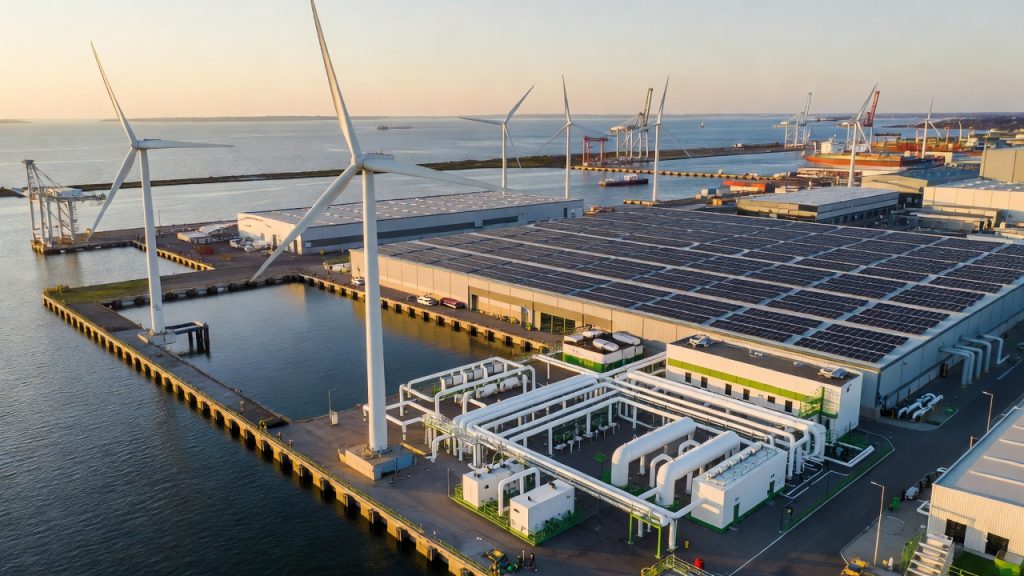
For the energy transition, this means the buildout of wind and solar capacity must accelerate further, grid infrastructure must be modernised at scale, and electric mobility must move from a growing market segment to the dominant paradigm in road transport. Smart cities, which depend on integrated energy management, real-time data, and flexible demand response, will find their business case strengthened as municipalities face tighter decarbonisation obligations.
Notably, the EU simultaneously approved a scaling back of parts of its corporate supply-chain due-diligence rules — a sign that European policymakers are actively trying to balance climate ambition with business competitiveness. For cleantech companies, this nuance matters: the regulatory environment will be demanding but not static, and adaptation will be a continuous requirement.
Hydrogen and Storage: The Technologies That Make 90% Possible
Reaching a 90% emissions reduction is not achievable through solar panels and electric cars alone. The hard-to-abate sectors — steel, cement, chemicals, heavy freight — require deeper solutions, and green hydrogen is central to that challenge.
Recent developments illustrate the momentum. A 200-MW electrolyser project in Rotterdam has reached a final investment decision, with TotalEnergies confirmed as offtaker — one of the largest green hydrogen commitments in Europe to date. At the research frontier, scientists have identified a lower-temperature hydrogen production process that could significantly reduce the energy cost of electrolysis, potentially making clean hydrogen cheaper to produce at industrial scale.
On the storage side, longer-duration batteries and emerging flow battery technologies are gaining traction as critical enablers for integrating variable wind and solar generation. Without adequate storage, a grid powered predominantly by renewables faces serious balancing challenges. These technologies are no longer experimental — they are moving into commercial deployment, and the 2040 target will accelerate that shift considerably.
Europe and the Global Race for Clean Industrial Leadership
Europe is not acting in isolation. China has outlined a 17% cut in carbon intensity during its current five-year plan, signalling continued pressure to decouple economic growth from emissions at a global level. This shapes international demand for renewables, storage systems, and low-carbon industrial equipment — markets where European companies are competing directly with Asian and American rivals.
The EU’s 2040 target, precisely because it is binding and long-term, gives European cleantech firms a home-market advantage: a guaranteed policy environment that justifies scaling up manufacturing, R&D, and export capacity. Green innovation thrives when regulatory certainty removes ambiguity from investment decisions.
Implications for Businesses, Cities, and Citizens
- Industry: Manufacturers in energy-intensive sectors must accelerate low-carbon transitions or face stranded assets as the 2040 deadline approaches.
- Investors: The binding target de-risks long-term cleantech investments and strengthens the case for green bonds and sustainable finance instruments.
- Smart cities: Urban planners and local governments gain a stronger policy mandate to invest in electrified transport, smart grids, and energy-efficient buildings.
- Citizens: Cleaner air, lower energy bills from efficiency gains, and new green jobs are the tangible benefits if the transition is managed well.
Key takeaway: The EU’s 90% emissions target for 2040 is more than a climate commitment — it is a green technology roadmap. From hydrogen electrolysers in Rotterdam to next-generation batteries and smart city infrastructure, the innovation ecosystem now has one of the clearest policy mandates in its history. The question is no longer whether the energy transition will happen, but how fast — and who will lead it.