EU Green Deal in 2025: What the 55% Emissions Target and Expanding Carbon Markets Mean for Business and Citizens
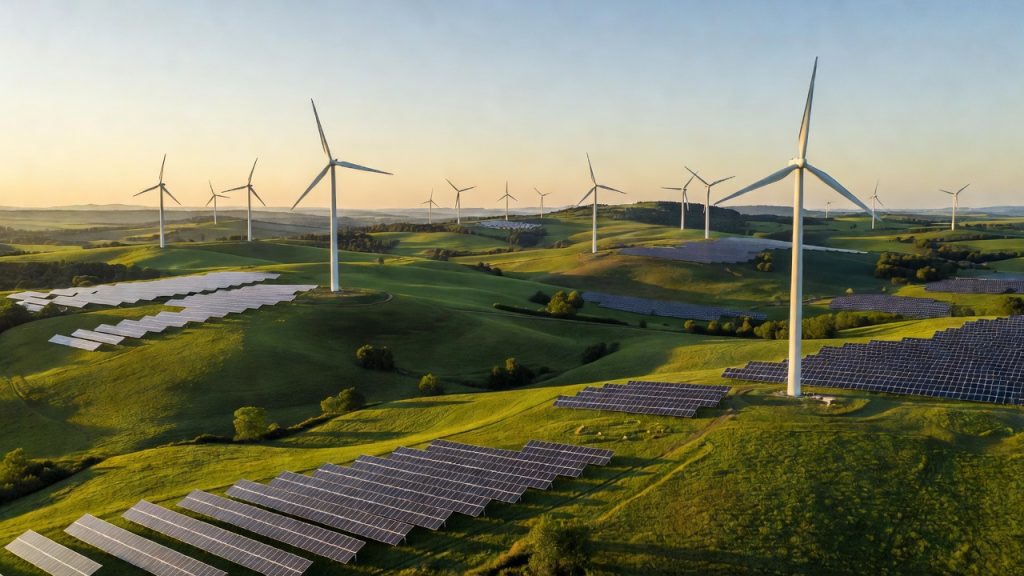
Europe’s climate ambition is no longer a distant promise — it is encoded in law, priced into markets, and increasingly felt in boardrooms, energy bills, and industrial planning cycles. The EU Green Deal, underpinned by the legally binding European Climate Law, continues to set the pace for global climate policy, even as debate intensifies over how to balance regulatory tightening with economic competitiveness. Understanding where the framework stands today matters for everyone from household consumers to multinational investors.
A Legally Binding Framework: The Climate Law and Fit for 55
At the core of Europe’s environmental regulation architecture sits the European Climate Law, which enshrines two non-negotiable milestones: a reduction of net greenhouse gas emissions by at least 55% by 2030 compared to 1990 levels, and full climate neutrality by 2050. These are not political targets that can be quietly shelved — they carry legal force and bind all EU member states.
The Fit for 55 package translates these goals into a dense web of sectoral policies covering energy efficiency, land use, transport, buildings, and industry. Together, they represent the most comprehensive overhaul of EU climate policy in a generation. For businesses operating across the single market, compliance is not optional: it is a structural condition of doing business in Europe.
Looking further ahead, the European Commission has signalled a 2040 interim target of a 90% net emissions reduction versus 1990 levels — a trajectory that will define the next wave of regulation, reshape long-term investment strategies, and set expectations for trading partners worldwide.
Carbon Markets and the Social Dimension: ETS Expansion and the Social Climate Fund
The EU Emissions Trading System (ETS) remains the flagship instrument of European carbon markets, putting a price on pollution and channelling revenues into the green transition. The system is expanding: buildings and road transport are being brought into a new parallel carbon pricing mechanism, directly affecting household energy and mobility costs.
To cushion the impact on the most vulnerable, the Social Climate Fund has been established — a dedicated instrument designed to support lower-income households and small businesses facing higher costs as carbon markets tighten. Funded through ETS revenues, it represents an acknowledgement that the green transition carries distributional risks that policy must actively manage.
This dual logic — pricing carbon while protecting people — is increasingly seen as a model for other regions grappling with how to decarbonise without deepening inequality. It also reflects a broader European approach: environmental regulation and social policy are not opposites, but must be designed together.
Industrial Decarbonisation and Sustainability Reporting: The Business Agenda
For European industry, the Green Deal is driving a parallel transformation in both operations and disclosure. The Corporate Sustainability Reporting Directive (CSRD) is extending mandatory sustainability reporting to thousands of companies, requiring detailed disclosures on climate risks, emissions, and transition plans. Combined with the EU Taxonomy — which defines what counts as a genuinely sustainable economic activity — this creates a new layer of accountability that investors and regulators are watching closely.
On the technology side, the EU’s industrial agenda is increasingly focused on scaling solutions such as renewable energy deployment, energy efficiency retrofits, and industrial carbon management — including carbon capture, storage, and reuse (CCUS). These are no longer niche research topics; they are becoming pillars of EU industrial strategy, backed by public investment frameworks and clean-tech incentives.
The tension between regulatory ambition and simplification demands remains real. Some industry voices argue that the cumulative compliance burden risks undermining European competitiveness, particularly against less-regulated markets. The Commission faces the challenge of maintaining climate credibility while ensuring the regulatory environment supports, rather than stifles, the very innovation Europe needs.
Implications: What This Means Going Forward
- For citizens: Energy and transport costs will continue to reflect carbon pricing, but social support mechanisms are being scaled up to offset impacts on lower-income households.
- For businesses: Mandatory sustainability reporting, carbon pricing, and sectoral decarbonisation targets are permanent features of the European market — early adaptation is a competitive advantage.
- For policymakers: The 2040 target of 90% net emissions reduction will require new legislative packages, making the current period a critical window for shaping the next regulatory cycle.
- Globally: The EU’s framework is influencing trading partners through mechanisms like the Carbon Border Adjustment Mechanism (CBAM), which applies a carbon price to imports from less-regulated markets.
Key takeaway: The EU Green Deal is not a single policy — it is a systemic transformation of how Europe produces energy, runs its industries, and accounts for environmental impact. The 55% target by 2030 and the 90% horizon for 2040 are now structural realities. For citizens, businesses, and decision-makers alike, the question is no longer whether to adapt, but how quickly and strategically to do so.