EU’s 90% Emissions-Cut Target by 2040: What It Means for Green Tech and the Global Cleantech Race
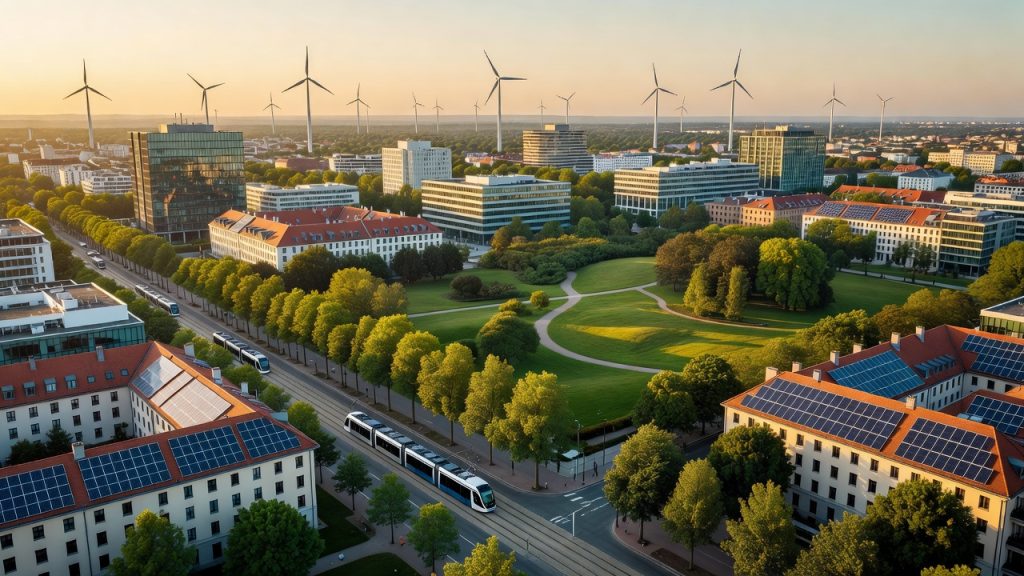
The European Union has taken one of its most consequential climate steps in years. EU member states gave final approval to a 90% greenhouse-gas emissions reduction target by 2040, cementing the bloc’s trajectory toward net zero and sending a powerful signal to investors, industries, and governments worldwide. For the green technology sector, this is not just a political milestone — it is a procurement roadmap, a regulatory compass, and an investment thesis rolled into one.
A Target That Reshapes Markets, Not Just Policy
The 2040 climate target sits between the EU’s existing 55% reduction goal for 2030 and its net-zero ambition for 2050. Closing that gap to 90% requires a dramatic acceleration across every sector of the economy. Clean energy, electric mobility, smart building retrofits, and industrial decarbonization are no longer niche opportunities — they become structural necessities under this framework.
For green technology companies, the implications are direct. Utilities will need to massively expand renewable energy capacity. Automakers and fleet operators face tighter pressure to accelerate the shift to electric vehicles. Cities pursuing smart city strategies — from intelligent energy grids to low-emission transport networks — will find stronger policy backing and, crucially, stronger financing signals from both public and private sources. The European Investment Bank and national green funds are likely to align their lending criteria with the new target, channeling capital toward cleantech at scale.
The decision also carries weight beyond Europe’s borders. Any global business supplying the EU market — from manufacturers to logistics providers — will need to align with the regulatory environment this target creates. Carbon border adjustment mechanisms and supply-chain due diligence rules, even in their partially rolled-back form, reinforce that access to the European market increasingly means meeting European climate standards.
Supply-Chain Compliance: A Mixed Signal for Green Innovation
Not every development this week pointed in the same direction. Alongside the 2040 target, the EU also finalized a rollback of some corporate supply-chain due-diligence obligations, reducing the scope of environmental and human-rights risk requirements for companies following sustained pressure from industry groups and several member states. In the short term, this lowers compliance costs for businesses. In the longer term, sustainability advocates warn it could weaken enforcement precisely where green innovation needs accountability most — in the raw material and manufacturing supply chains that underpin solar panels, batteries, and wind turbines.
This tension — ambitious end targets paired with softer intermediate compliance tools — is a recurring feature of EU climate governance. For cleantech innovators, it underscores the importance of building supply-chain transparency and traceability into products and platforms proactively, rather than waiting for regulatory mandates to catch up.
Global Context: India and China Add Momentum
The EU’s move does not happen in isolation. Two major developments from Asia this week reinforce that the energy transition is accelerating across multiple fronts simultaneously.
In India, the Ministry of New and Renewable Energy confirmed it will not extend the ALMM List-II deadline beyond June 1, 2026, meaning solar projects commissioned after that date must source compliant modules. This tightens procurement rules for one of the world’s fastest-growing solar markets, with direct consequences for supply-chain planning and project timelines across the global cleantech industry. Separately, India extended strict energy-efficiency norms for countertop induction hobs to January 2027, a quiet but meaningful push to electrify household cooking and reduce residential energy demand.
Meanwhile, China — the world’s largest emitter and largest cleantech manufacturer — signaled it plans to cut carbon intensity by 17% under its current five-year plan, according to Reuters. That figure will shape industrial policy, clean-tech investment priorities, and decarbonization strategies for the vast network of global supply chains tied to Chinese production.
Implications for Decision-Makers and Innovators
For professionals and decision-makers tracking the green technology landscape, this week’s convergence of signals points to several actionable conclusions:
- Investment horizons are lengthening and deepening. A legally anchored 2040 target gives infrastructure and technology investors the long-term visibility they need to commit capital to large-scale cleantech projects.
- Supply-chain resilience is a competitive advantage. Whether navigating India’s ALMM rules, EU due-diligence frameworks, or China’s industrial policy shifts, companies with transparent, compliant supply chains will move faster and face fewer disruptions.
- Electrification is the common thread. From electric mobility in European cities to electric cooking in Indian households, the shift away from fossil-fuel combustion at the point of use is accelerating globally — and the technology ecosystem enabling it is growing accordingly.
Key takeaway: The EU’s 90% emissions-cut target is more than a climate commitment — it is a structural signal that will reshape regulation, investment, and procurement across the entire green technology value chain. Combined with tightening supply-chain rules in India and China’s own decarbonization commitments, the global cleantech sector is entering a period of intensified policy-driven demand. For innovators, investors, and decision-makers, the direction of travel has never been clearer.