EU Locks In 90% Emissions Cut by 2040: What It Means for Europe and the Planet
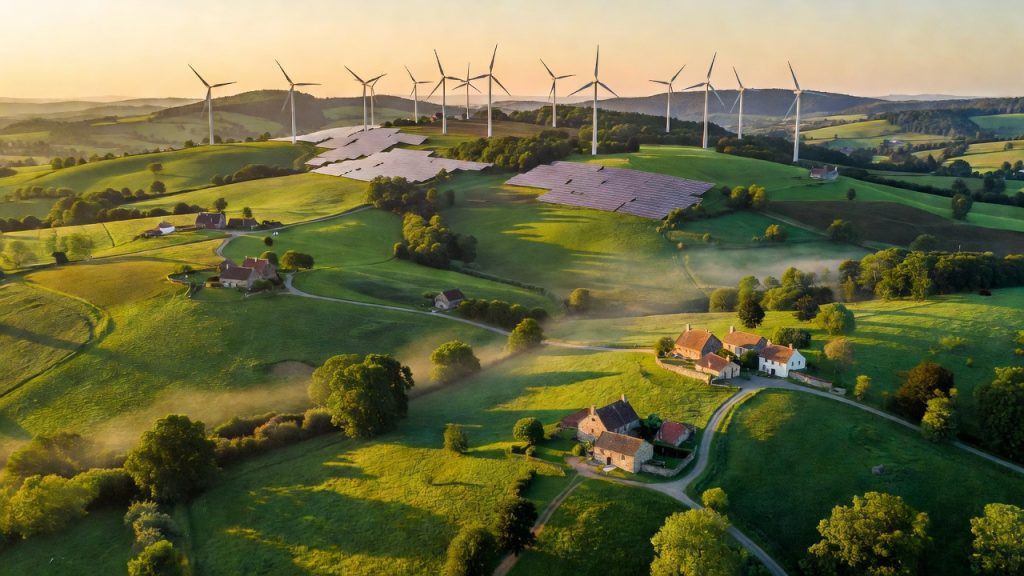
The European Union has taken one of its most significant climate steps in years. Member states gave final approval to a binding target of cutting greenhouse-gas emissions by 90% by 2040 compared to 1990 levels — a milestone that cements Europe’s position as the world’s most ambitious major economy on climate change. The decision arrives at a turbulent moment for environmental policy, with political resistance mounting across the continent and beyond, making the signal it sends all the more consequential.
A Landmark Target in a Complicated Political Landscape
The 90% target is not just a number — it is a legal anchor for decades of environmental policy, investment decisions, and industrial transformation. It bridges the EU’s current 2030 goal of a 55% net reduction and the continent’s overarching commitment to climate neutrality by 2050. For businesses, it provides the long-term regulatory certainty needed to plan decarbonization strategies, upgrade infrastructure, and shift toward renewable energy sources. For citizens, it translates into continued pressure on cleaner transport, heating, and energy systems.
Yet the approval comes alongside a notable contradiction. EU countries simultaneously gave the green light to scaling back corporate supply-chain due-diligence rules — the legislation that required large companies to identify and address environmental and human-rights risks across their operations. After sustained lobbying from industry groups and pressure from governments including the United States and Qatar, the rules have been significantly weakened. Critics warn this undermines the very sustainability safeguards needed to make the 2040 target credible. Supporters argue it reduces compliance burdens on firms already navigating a challenging economic environment. The tension between ambition and implementation has rarely been more visible.
Global Context: China, COP31, and a Stalled Hydrogen Giant
Europe does not act in a vacuum. The global climate picture this week offered a mixed set of signals. China announced plans to cut its carbon intensity by 17% under its current five-year plan — a meaningful commitment from the world’s largest emitter, though critics note that intensity-based targets allow absolute emissions to keep rising if the economy grows fast enough. Still, China’s industrial and clean-tech policies remain a defining variable in global decarbonization trajectories, shaping everything from solar panel supply chains to electric vehicle markets.
On the diplomacy front, Turkey and Australia finalized a split-hosting arrangement for COP31, with Turkey taking the host role and Australia leading the negotiation process. The unusual arrangement keeps the UN climate summit on track and gives two distinct regions — one a major emerging economy bridging Europe and Asia, the other a resource-rich nation accelerating its own renewable energy transition — a larger voice in shaping global climate governance.
Meanwhile, a sobering reminder of clean-energy’s market realities came from the United States: Exxon Mobil halted plans for one of the world’s largest green hydrogen production facilities, citing insufficient customer demand. The project’s collapse underlines a persistent challenge for the energy transition — even well-funded, large-scale clean-energy projects can stall when offtake markets are not mature, industrial customers are not ready, and the economics do not yet stack up. Pollution reduction and renewable energy deployment require not just technology and policy, but bankable demand.
Implications for Businesses, Citizens, and Policymakers
Taken together, this week’s developments reveal three fault lines that will define the next phase of European and global climate action:
- Ambition versus implementation: Setting a 90% target is essential, but without robust supply-chain rules, biodiversity protections, and pollution controls, the path to that target becomes harder to walk.
- Regulation versus competitiveness: The rollback of due-diligence rules reflects a broader debate about how much sustainability regulation European businesses can absorb without losing ground to less-regulated competitors. Finding that balance will be central to EU industrial policy in the coming years.
- Market readiness for clean energy: The Exxon hydrogen retreat is a warning sign. Conservation of natural systems and a genuine energy transition both require demand-side policies — carbon pricing, public procurement, and industrial offtake agreements — not just supply-side investment.
For European decision-makers, the 2040 target is now law. The harder work — aligning conservation goals, renewable energy infrastructure, corporate accountability, and citizen engagement — is only beginning.
Key takeaway: The EU’s 90% emissions-cut target for 2040 is a historic commitment to fighting climate change, but its credibility depends on consistent implementation across environmental policy, corporate rules, and clean-energy markets. This week showed both the ambition Europe is capable of — and the contradictions it must still resolve.