Solar Discipline in India, Industrial Ambition in Europe: How Clean Energy Policy Is Maturing
The global clean energy transition is entering a more demanding phase — one where ambition must be matched by financial discipline, supply-chain resilience, and deployable infrastructure. Two developments this week, one from South Asia and one from Brussels, illustrate that governments are no longer simply setting targets: they are actively shaping how the transition gets built and financed.
India Hits the Brakes on Solar Overexpansion
India’s Ministry of New and Renewable Energy has sent a clear signal to financial institutions: be cautious when lending to new solar photovoltaic module manufacturing capacity. The advisory reflects growing concern about overexpansion risks and the bankability of projects that may struggle to compete with low-cost imports, particularly from China.
At the same time, the ministry confirmed it will not extend the ALMM (Approved List of Models and Manufacturers) List-II deadline beyond June 1, 2026. Projects commissioned after that date must use only certified equipment, with limited relief for those that have already invested or installed hardware. The ALMM framework is India’s primary tool for ensuring quality and domestic content in its renewable energy supply chain — and tightening it signals a shift from quantity-first to quality-first thinking.
This matters beyond India’s borders. As one of the world’s largest solar markets, India’s procurement and certification rules influence global module pricing, trade flows, and the competitive landscape for manufacturers in Europe, the US, and Southeast Asia. A more disciplined Indian market could reduce the risk of a global glut — or, alternatively, redirect excess manufacturing capacity toward other regions.
Europe Builds Its Industrial Base for Net-Zero Technologies
While India tightens its manufacturing rules, Europe is doubling down on building its own. The Net-Zero Industry Act (NZIA) — the EU’s legislative response to the US Inflation Reduction Act — has already granted its first strategic project status to a fully integrated battery energy storage system (BESS) manufacturing facility in Bulgaria. Strategic status unlocks faster permitting, coordinated support from member states, and improved access to financing, all critical for closing the gap between Europe’s clean energy ambitions and its industrial capacity.
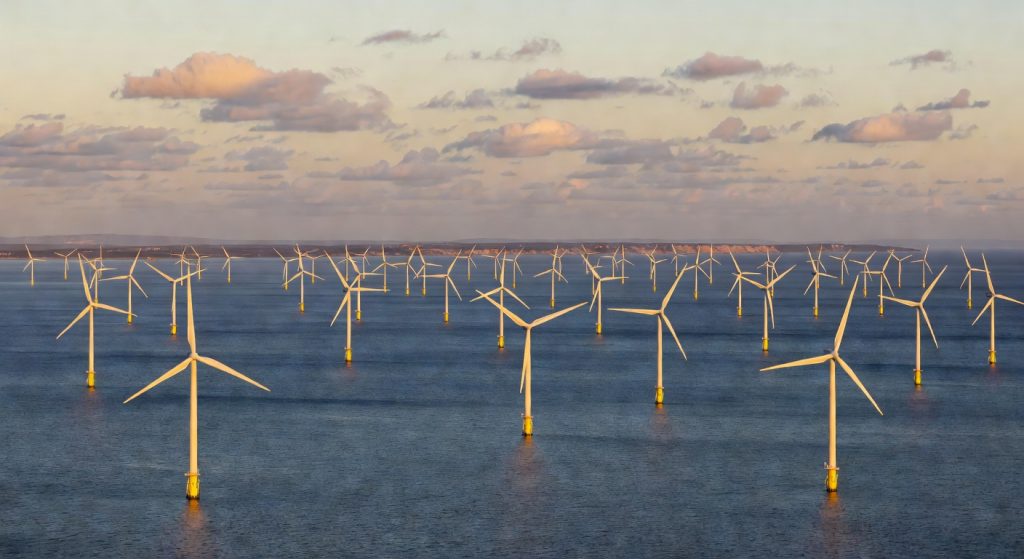
Offshore wind is also advancing. In Scotland, all monopile foundations for the Inch Cape offshore wind farm have been successfully installed — a significant construction milestone for a project that will eventually power hundreds of thousands of homes. Across Europe, solar farms in the UK, Spain, and Italy are moving from planning to construction, reflecting continued capital flows into utility-scale renewable energy project finance despite a higher interest rate environment.
Perhaps most striking is the momentum in green hydrogen. Air Liquide has taken a final investment decision on a 200-MW electrolyser project in Rotterdam, with TotalEnergies signed on as an offtaker. This is exactly the kind of industrial-scale, commercially anchored hydrogen project that analysts have long argued the sector needs — moving beyond pilot schemes into infrastructure that can genuinely support resource management and industrial decarbonisation at scale.
What These Trends Mean for the Energy Transition
Taken together, these developments point to a clean energy sector that is maturing in important ways:
- Policy is becoming more precise. Rather than broad targets, governments are using certification rules, strategic project designations, and financing guidance to shape where and how investment flows.
- Supply-chain resilience is now a strategic priority. Both India’s ALMM framework and Europe’s NZIA reflect a shared recognition that energy efficiency and security depend not just on deploying capacity, but on controlling the means of production.
- Capital is still moving — but more selectively. The Rotterdam electrolyser and the Scottish wind farm show that well-structured projects with credible offtakers can still attract financing. Weaker projects, however, face greater scrutiny.
- Water and land resource management will increasingly intersect with energy planning, particularly as large-scale solar and hydrogen projects compete for land and water in water-stressed regions.
The era of easy announcements is over. What the clean energy sector needs now — and what policymakers in both India and Europe appear to be demanding — is bankable projects, resilient supply chains, and infrastructure that actually gets built.
Key takeaway: The clean energy transition is shifting from a race to announce capacity to a race to deploy it responsibly. India’s manufacturing discipline and Europe’s industrial policy are, in different ways, signs of the same growing-up moment for the global renewable energy sector.