EU Locks In 90% Emissions Cut by 2040: What It Means for Business, Finance, and ESG Strategy
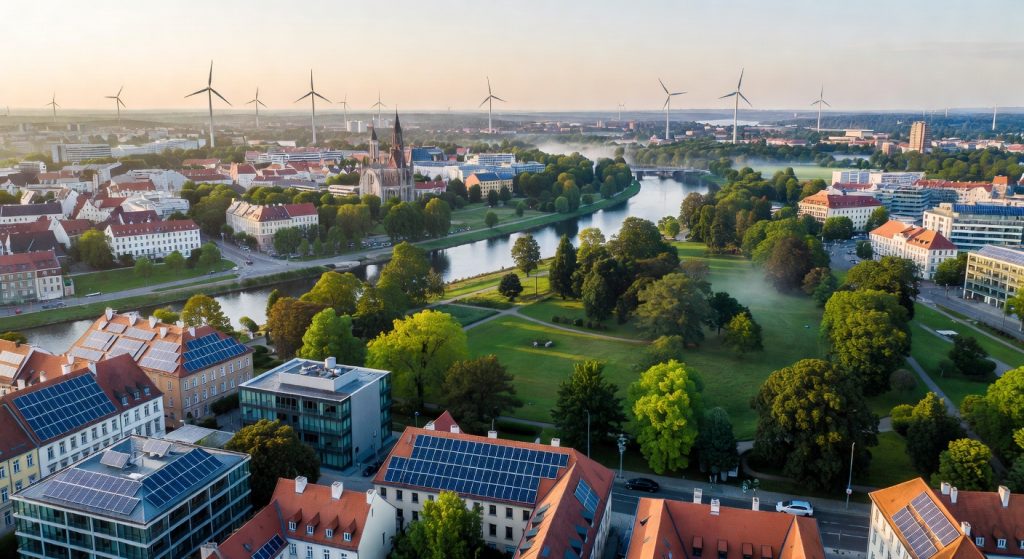
The European Union has taken one of its most consequential climate steps in years. EU member states have given final approval to a binding target of cutting greenhouse-gas emissions by 90% by 2040 compared to 1990 levels — a milestone that sets the trajectory between the bloc’s existing 2030 goal and its ambition of climate neutrality by 2050. For companies, investors, and public institutions operating in Europe, the message is unambiguous: decarbonization is no longer a distant aspiration. It is now a regulatory deadline.
A Policy Signal That Reshapes the Business Landscape
The 2040 target is more than a number on a political document. It is a structural signal that will cascade through regulation, capital allocation, and corporate responsibility frameworks across the continent. Businesses can expect tighter emissions reporting requirements, more ambitious benchmarks under the EU Taxonomy, and increased scrutiny of transition plans submitted under the Corporate Sustainability Reporting Directive (CSRD).
Industries with high carbon footprints — steel, cement, chemicals, aviation, and heavy transport — face the most immediate pressure to accelerate investment in clean technology and redesign supply chains around circular economy principles. But the target also creates opportunity: companies that move early on decarbonization stand to benefit from preferential access to green financing, public procurement advantages, and stronger positioning in an increasingly sustainability-conscious European market.
Critically, the 2040 target does not exist in isolation. It arrives as global ESG strategy is being tested by geopolitics, shifting trade dynamics, and the energy demands of artificial intelligence infrastructure. Some companies are reportedly reassessing the pace of their sustainability commitments amid regulatory divergence between Europe, the United States, and China. The EU’s decision sends a clear counter-signal: in Europe, the direction of travel is not reversing.
Sustainable Finance Steps Up — From Europe to the Indian Ocean
Long-term climate targets only translate into real-world change when capital follows. On that front, the sustainable finance market continues to expand in scope and geography. India’s Sagarmala Finance has launched a new blue-bond initiative to fund maritime infrastructure with explicit environmental and climate-resilience objectives — a sign that labeled debt instruments are moving well beyond European borders and into sectors like ports, coastal logistics, and ocean-linked supply chains.
Meanwhile, New York State has approved a $1 billion energy rebate plan aimed at easing household energy costs — a reminder that the energy transition carries real affordability implications for citizens, and that governments are under pressure to balance decarbonization ambition with social equity. Energy affordability is increasingly becoming a central variable in green business planning, particularly as electricity demand rises with electrification and AI data centres.
For European investors and asset managers, the 2040 target strengthens the investment case for clean infrastructure, energy efficiency, and climate-aligned portfolios. It also raises the bar for ESG due diligence: transition risk assessments will need to account for a steeper, faster decarbonization curve than many models currently assume.
Implications for Companies and Decision-Makers
The approval of the 2040 target has concrete near-term implications across sectors. Key areas to watch include:
- Regulatory compliance: Expect the European Commission to begin translating the 2040 goal into sectoral legislation, updated emissions trading rules, and revised climate benchmarks for financial products.
- Capital strategy: Companies with credible, science-based transition plans will find it easier to access green bonds, sustainability-linked loans, and EU-backed funding instruments.
- Supply chain accountability: The circular economy and scope 3 emissions will face heightened attention as the 90% target demands system-wide transformation, not just operational efficiency gains.
- Stakeholder expectations: Employees, consumers, and institutional investors are likely to intensify scrutiny of corporate sustainability commitments in light of a clearer policy horizon.
The geopolitical context adds complexity. With ESG frameworks under political pressure in parts of the world, European businesses operating globally must navigate a patchwork of expectations. But the EU’s 2040 target makes one thing clear: within Europe, sustainability and corporate responsibility are being hardwired into the rules of doing business.
Key takeaway: The EU’s approval of a 90% emissions-reduction target for 2040 is a defining moment for European climate policy — and a direct call to action for every company, financial institution, and public body operating on the continent. The window for gradual, voluntary action is narrowing. Strategic alignment with the net-zero trajectory is no longer optional; it is the price of long-term relevance in the European economy.