Clean Power and Electrification Lead the Energy Transition: What BloombergNEF’s 2026 Outlook Means for Europe
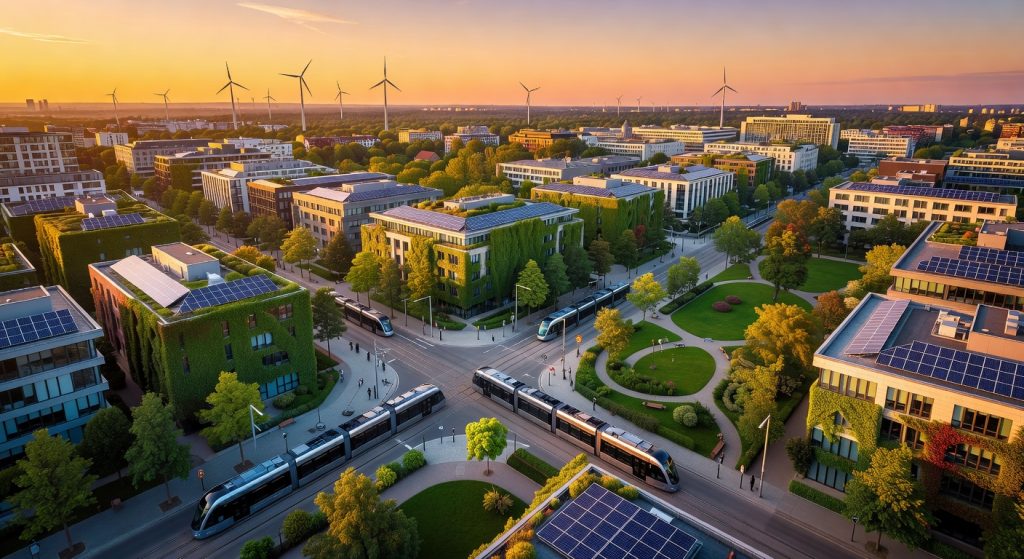
The energy transition is no longer a distant promise — it is happening now, and it is being driven by technologies that are already commercially viable and rapidly scaling. According to BloombergNEF’s New Energy Outlook 2026, the majority of emissions reductions over the next decade will come from two interconnected forces: clean power generation and electrification across transport, buildings, and industry. For Europe, which has staked its industrial future on the Green Deal and REPowerEU, this is both a validation and a call to accelerate.
Solar, Batteries, and EVs: The Fast Lane of Green Innovation
BloombergNEF identifies four technologies as the fastest-developing solutions in the current phase of the energy transition: solar photovoltaics, battery storage, heat pumps, and electric vehicles. These are not experimental concepts — they are mature, cost-competitive, and scaling at a pace that is actively displacing fossil fuels in electricity grids and transport networks worldwide.
Solar capacity additions broke global records again in 2024, with the European Union installing over 65 GW in a single year. Battery storage costs have fallen more than 90% over the past decade, making grid-scale storage increasingly viable for balancing intermittent renewables. Meanwhile, electric mobility is reshaping urban transport: EV sales in Europe surpassed 3 million units in 2024, and the continent remains a global leader in charging infrastructure density.
What makes this moment particularly significant is the convergence of these technologies within smart city ecosystems. Distributed energy systems — rooftop solar paired with home batteries, smart microgrids that balance local supply and demand, and EV fleets that can feed power back into the grid — are turning cities from passive energy consumers into active participants in the energy system. Cities like Amsterdam, Copenhagen, and Barcelona are already piloting integrated cleantech platforms that connect buildings, mobility, and energy in real time.
Harder-to-Abate Sectors: Where Hydrogen and Carbon Capture Come In
While electrification dominates the near-term decarbonisation story, BloombergNEF’s outlook is clear that a net-zero pathway requires a second wave of solutions for sectors where direct electrification is technically or economically challenging. Steel, cement, shipping, aviation, and heavy industry cannot simply plug into a clean grid — they need green hydrogen, sustainable fuels, and carbon capture technologies to reach deep decarbonisation.
Here, green innovation is advancing on multiple fronts. Researchers are developing flexible perovskite solar cells that could be integrated into building facades and industrial surfaces, expanding the reach of solar generation. Waste-to-hydrogen conversion technologies are turning municipal and industrial waste streams into clean fuel, addressing both waste management and energy challenges simultaneously. Meanwhile, next-generation carbon-capture membranes that use ambient humidity to separate CO₂ from air represent a potentially low-energy alternative to energy-intensive capture processes.
Floating offshore wind — a technology in which Europe holds a clear competitive advantage — is also emerging as a critical tool for reaching renewable energy targets in deep-water coastal regions, particularly relevant for countries like Norway, Portugal, and Scotland.
What This Means for European Citizens, Businesses, and Policymakers
The BloombergNEF outlook carries concrete implications across society:
- For citizens: Heat pumps, rooftop solar, and electric vehicles are not just environmental choices — they are increasingly the most cost-effective options for home energy and mobility. European energy consumers who electrify now are likely to be insulated from future fossil fuel price volatility.
- For businesses: Companies that integrate cleantech into their operations — whether through on-site renewables, electrified fleets, or circular-economy innovations like waste-to-fuel biorefineries — are building resilience and competitive advantage as carbon costs rise and supply chains face scrutiny.
- For policymakers: The data reinforces the case for maintaining and strengthening policy frameworks that support electrification, grid modernisation, and green innovation investment. Permitting reform, skills training for the clean energy workforce, and targeted support for harder-to-abate sectors remain critical gaps in the European policy landscape.
AI-driven climate prediction tools and smart grid management systems are also emerging as essential infrastructure, enabling cities and grid operators to optimise energy flows, anticipate demand peaks, and integrate ever-higher shares of variable renewables without compromising reliability.
Key Takeaway
The 2026 BloombergNEF Energy Outlook confirms what many in the cleantech and sustainability community have long argued: the energy transition is technologically ready. Solar, batteries, EVs, and heat pumps are delivering emissions cuts today, while hydrogen, carbon capture, and advanced biofuels are maturing for the harder challenges ahead. Europe’s task now is to match this technological momentum with the policy ambition, infrastructure investment, and social equity frameworks needed to make the transition fast, fair, and lasting.