Global Renewables Hit Record Pace: What 935 GW a Year Means for Europe and the World
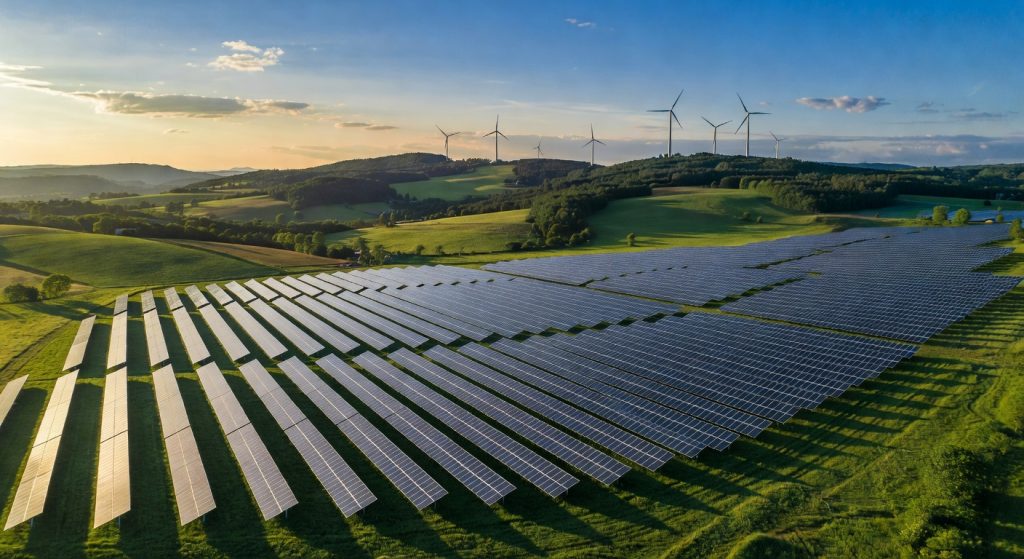
The energy transition is no longer a promise on a policy roadmap — it is a measurable, accelerating reality. According to the IEA Renewable Energy Progress Tracker, the world added 666 GW of new renewable capacity in 2024, and that figure is projected to climb to nearly 935 GW per year by 2030. Over the six-year period from 2024 to 2030, more than 5,520 GW of clean power capacity will be installed globally. To put that in perspective, it is roughly five times the entire current electricity generation capacity of the European Union.
These are not abstract statistics. They reflect decisions being made today by utilities, investors, governments, and households — decisions that are reshaping how we produce and consume energy, manage resources, and think about long-term infrastructure. For European citizens and decision-makers, understanding the scale and the bottlenecks of this buildout is essential.
Solar Leads the Charge — and the Numbers Are Staggering
Among all renewable technologies, solar photovoltaic (PV) is the undisputed engine of growth. In 2024, solar PV accounted for 81% of all new renewable capacity additions worldwide, and renewables as a whole now supply 32% of global electricity generation. In the United States, 2025 data compiled by the World Resources Institute confirm another record year: 55.9 GW of new solar, wind, and battery storage were added, with utility-scale solar alone contributing 27 GW.
The economics driving this are straightforward. Costs have collapsed. The U.S. Department of Energy reports dramatic declines in concentrating solar power costs since 2010, and the post-Inflation Reduction Act period has seen a significant expansion of solar manufacturing capacity, creating more resilient supply chains and lower long-term project costs. Europe is navigating a parallel path through the Net-Zero Industry Act and REPowerEU, aiming to onshore more of its clean-energy manufacturing to reduce dependence on imports — particularly from China, which currently dominates global solar panel production.
Wind energy, both onshore and offshore, continues to scale alongside solar. For Europe, offshore wind remains a strategic priority, with the North Sea increasingly positioned as a continental energy resource shared among member states. When combined with green hydrogen production — using surplus renewable electricity to electrolyse water — offshore wind could eventually help decarbonise hard-to-abate sectors like shipping, steel, and heavy industry.
The Real Bottleneck: Grids, Storage, and Interconnection
The central challenge is no longer whether renewables can be built fast enough — it is whether the systems that carry and balance that electricity can keep up. Grid flexibility, transmission capacity, and energy storage have become the defining bottlenecks of the transition.
In the U.S., the surge in solar and wind is creating intense pressure on transmission infrastructure and grid interconnection queues. Europe faces analogous challenges: cross-border interconnection capacity remains insufficient in several corridors, and permitting timelines for new grid infrastructure can stretch to a decade. The European Commission’s Action Plan for Grids, launched in 2023, acknowledges this gap, but implementation is uneven across member states.
Battery storage is emerging as the critical complement to variable solar and wind generation. Paired with smart energy efficiency measures and demand-response systems, storage can smooth out supply peaks and troughs — reducing curtailment, lowering consumer bills, and improving overall resource management across the power system. Pumped hydro, which uses water reservoirs as giant batteries, also remains a vital flexibility tool, particularly in Alpine regions of Europe.
What This Means for Europe’s Energy Future
The global acceleration in renewables has direct implications for European competitiveness, energy security, and climate commitments. A few key takeaways:
- Energy costs should continue to fall as solar and wind displace expensive fossil fuel generation — but only if grid investment keeps pace.
- Industrial policy matters: Europe must decide how much of the clean-energy supply chain — from solar panels to battery cells — it wants to produce domestically.
- Hydrogen remains a long-term bet: green hydrogen produced from renewable electricity and water electrolysis is promising but still expensive; policy support and infrastructure investment will be decisive.
- Citizens are stakeholders: rooftop solar, community energy projects, and prosumer models give households a direct role in the transition.
The trajectory is clear. The question for Europe — and for every government, company, and community — is not whether to join the renewable buildout, but how quickly and how equitably it can be done.
Key takeaway: With nearly 1 TW of new renewable capacity expected annually by 2030, the energy transition has reached industrial scale. Solar is leading, storage is essential, and grid infrastructure is the next frontier. Europe has both the ambition and the tools — the priority now is execution.