EU Locks In 90% Emissions Cut by 2040: What It Means for Business, Citizens, and the Green Economy
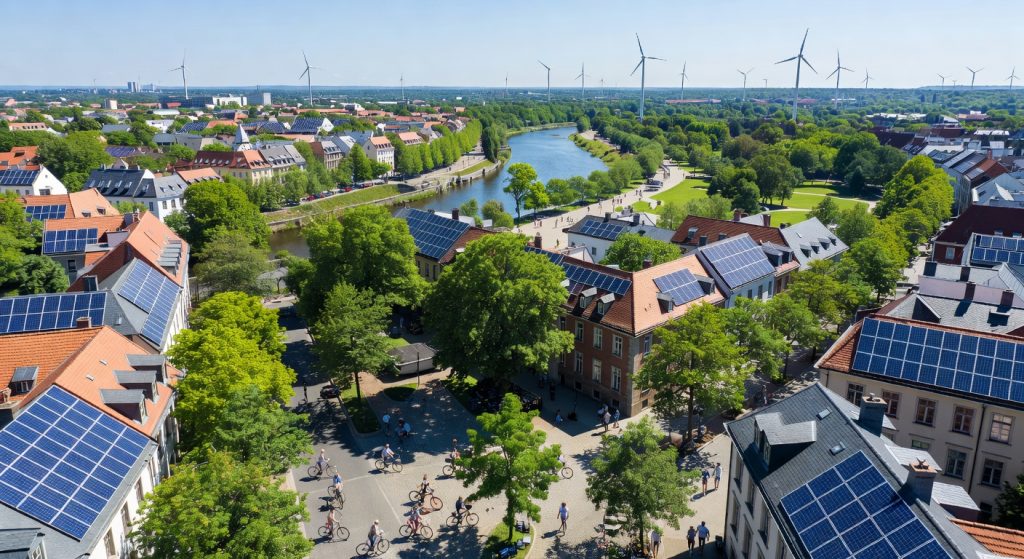
The European Union has taken one of its most consequential climate steps in years. EU member states have formally approved a binding target to reduce greenhouse gas emissions by 90% by 2040 compared to 1990 levels — a move that reshapes the regulatory landscape for businesses, investors, and citizens across the continent. Reported by Reuters, the decision cements Europe’s position as the world’s most ambitious climate policy bloc, even as political headwinds intensify both within and beyond its borders.
A Binding Target That Changes the Rules of the Game
The 2040 climate target is not a pledge or an aspiration — it is a legal commitment. For European industry, this means the path to net zero by 2050 now has a clearly defined intermediate milestone. Sectors from steel and cement to aviation and agriculture will face increasing pressure to decarbonize their operations and supply chains within a defined timeline.
For businesses operating in or trading with Europe, the implications are immediate and strategic. Sustainable finance flows — already shaped by the EU Taxonomy and the Corporate Sustainability Reporting Directive (CSRD) — will increasingly align capital toward activities compatible with a 90% reduction trajectory. Companies that fail to integrate credible decarbonization plans risk losing access to green financing, public procurement, and investor confidence.
For citizens, the target signals tighter policy direction on everyday life: energy efficiency standards for homes, the electrification of transport, and the transformation of how food and goods are produced and consumed. These are not distant abstractions — they are the policy architecture being built right now.
Corporate Sustainability Under the Microscope: Reporting Shifts and ESG Pressures
The EU’s political commitment arrives at a moment of notable turbulence in corporate sustainability communications. Recent analysis of corporate disclosure trends shows that US companies are increasingly dropping the term “ESG” from their sustainability report titles in favour of broader language — a strategic pivot driven partly by political backlash in North America. Yet reporting levels remain broadly stable, suggesting that the substance of ESG and corporate responsibility work continues even as the vocabulary evolves.
In Europe, the trajectory is different. Mandatory disclosure under CSRD means that large companies — and progressively smaller ones — cannot opt out of structured sustainability reporting. The 2040 target will only deepen this requirement, as firms will need to demonstrate alignment with a steeper decarbonisation curve. Green business strategy is shifting from voluntary ambition to regulatory compliance, and the two are becoming inseparable.
Google’s recent sustainability disclosures offer a useful illustration of where leading companies are heading: clean energy procurement, circular-economy design principles in data centres, extended product lifespans through software updates and repairability, and active water stewardship programmes. This integrated approach — pairing emissions goals with resource efficiency — is increasingly the benchmark that investors and regulators expect.
The Circular Economy: From Policy Priority to Business Imperative
The EU’s climate ambition does not exist in isolation. It is reinforced by a parallel agenda focused on the circular economy — reducing waste, improving recycling rates, promoting reuse, and reforming procurement practices. UN sustainability guidance continues to highlight these priorities, including the goal of halving food waste by 2030 under Sustainable Development Goal 12.
For European businesses, circular economy principles are becoming a core element of both compliance and competitiveness. Key areas of focus include:
- Sustainable procurement: sourcing materials and services that meet environmental and social standards across the value chain
- Product design for longevity: reducing embedded emissions by extending the useful life of goods
- Water stewardship: managing freshwater use as a material risk, particularly in water-stressed regions
- Waste reduction and recycling: aligning with EU targets on packaging, textiles, and electronics
These are no longer niche concerns for sustainability departments. They are operational and financial priorities that boards and CFOs are increasingly expected to own.
Implications: Europe Sets the Pace, the World Watches
The approval of the 2040 target reinforces Europe’s role as the global standard-setter in climate and sustainability policy. While the United States navigates a more volatile political environment around ESG and climate regulation, the EU is building a durable, legally grounded framework that will influence supply chains, investment decisions, and policy debates far beyond its borders.
For decision-makers — whether in government, business, or finance — the message is clear: the direction of travel is fixed. The question is no longer whether to decarbonise, but how fast and how credibly.
Key takeaway: The EU’s binding 90% emissions reduction target for 2040 is a structural shift, not a headline. Combined with mandatory sustainability reporting, circular economy regulation, and growing investor scrutiny, it creates a new baseline for what responsible, future-proof business looks like in Europe — and increasingly, worldwide.