EU Green Deal in 2025: Where Europe’s Climate Policy Stands — and What Comes Next
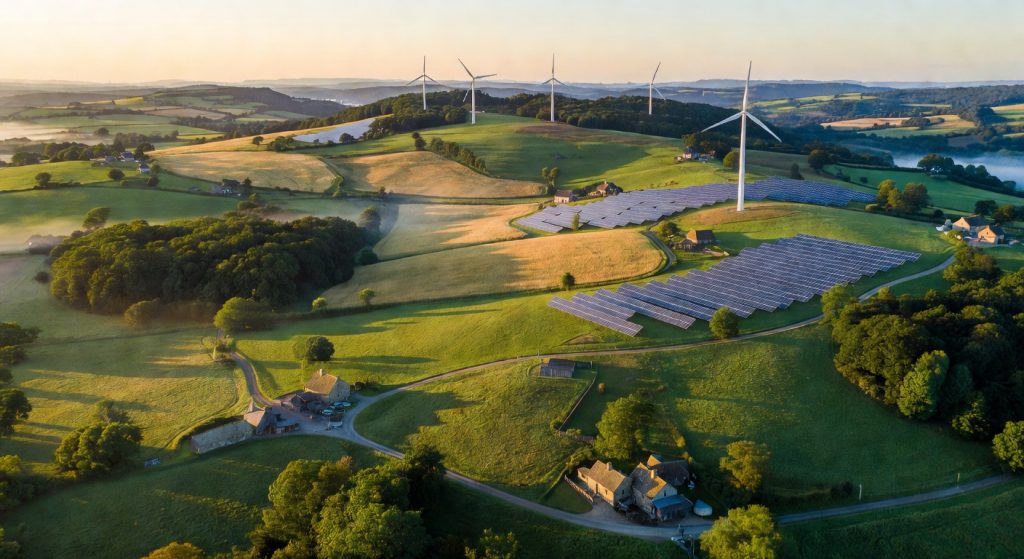
The EU Green Deal remains the most ambitious climate and industrial policy framework in the world — but ambition and implementation are two different things. As of early 2025, Europe’s flagship climate strategy is very much a work in progress: legally grounded, politically contested, and unevenly applied across member states. Understanding where it stands today is essential for anyone navigating the intersection of climate policy, business, and sustainability.
A Solid Legal Foundation, but Many Files Still Open
At the core of the Green Deal sits the EU Climate Law, which enshrines two binding targets: climate neutrality by 2050 and a reduction of greenhouse gas emissions by at least 55% by 2030 compared to 1990 levels. These are not aspirational goals — they carry legal weight and oblige member states and EU institutions to act accordingly.
Yet the legislative machinery behind these targets is still churning. According to EU policy tracking data, 168 Green Deal initiatives had been proposed as of January 2025. Of these, 98 have been adopted, while 37 remain under negotiation and 28 have been announced but not yet formally tabled. In practical terms, this means that a significant share of the regulatory landscape affecting energy companies, manufacturers, farmers, and financial institutions is still taking shape. For businesses and policymakers, staying ahead of these developments is not optional — it is a strategic necessity.
Carbon Markets, Trade Policy, and the CBAM Effect
Among the most consequential tools already in place is the Carbon Border Adjustment Mechanism (CBAM), one of the Green Deal’s landmark trade-climate instruments. CBAM places a carbon price on imports of certain goods — including steel, cement, aluminium, fertilisers, hydrogen, and electricity — from countries with weaker or no carbon pricing systems. Its logic is straightforward: prevent carbon leakage, the risk that European industries relocate production abroad to avoid stricter environmental regulation at home.
CBAM entered its transitional phase in October 2023 and is set to become fully operational by 2026. For global trading partners — from China to the United States to developing economies — it represents a new reality: access to the EU single market will increasingly come with a carbon cost attached. This is reshaping supply chains, investment decisions, and diplomatic conversations well beyond European borders.
Alongside CBAM, the EU Emissions Trading System (ETS) continues to evolve, with tighter caps and the gradual phase-out of free allowances pushing carbon markets toward higher price signals. These mechanisms together form the economic backbone of Europe’s decarbonisation strategy.
Just Transition, Green Investment, and the Social Dimension
Climate policy that ignores social fairness risks losing public support — and the Green Deal’s architects know it. The Just Transition Fund remains a critical financing channel for regions and workers most exposed to the fossil-fuel phase-out: coal-mining communities in Poland, lignite regions in Germany, or industrial areas in southern Europe where the energy transition threatens livelihoods before it creates new ones.
Beyond transition support, the Green Deal is driving a broader transformation of how capital flows. Sustainability reporting requirements — particularly under the Corporate Sustainability Reporting Directive (CSRD) — are pushing large companies and, progressively, smaller ones to disclose environmental and social data with unprecedented rigour. Anti-greenwashing rules are tightening. Taxonomy-aligned investment is becoming a standard expectation, not a niche preference.
The policy agenda also extends into nature restoration, land use, energy efficiency, and the built environment — areas where environmental regulation is expanding in scope and depth.
What This Means for Citizens, Businesses, and Decision-Makers
The EU Green Deal is not a single law or a one-time decision. It is a rolling policy architecture that will continue to generate new rules, obligations, and opportunities for years to come. Key implications include:
- For businesses: compliance timelines are accelerating. CBAM, CSRD, and ETS reforms demand proactive adaptation, not reactive adjustment.
- For investors: sustainability disclosure and taxonomy alignment are becoming baseline expectations in European capital markets.
- For citizens and workers: the just transition agenda matters — how equitably the costs and benefits of decarbonisation are distributed will define public trust in climate policy.
- For policymakers: with 65 initiatives still pending adoption or negotiation, the legislative agenda remains dense and politically sensitive.
Key takeaway: The EU Green Deal is legally anchored and structurally advancing, but its real-world impact depends on what gets adopted, how it is enforced, and whether the social contract around the transition holds. In 2025, the gap between ambition and implementation is the most important story in European climate policy — and it is far from resolved.