EU’s 90% Emissions Cut by 2040: What It Means for Business, Finance, and the Planet
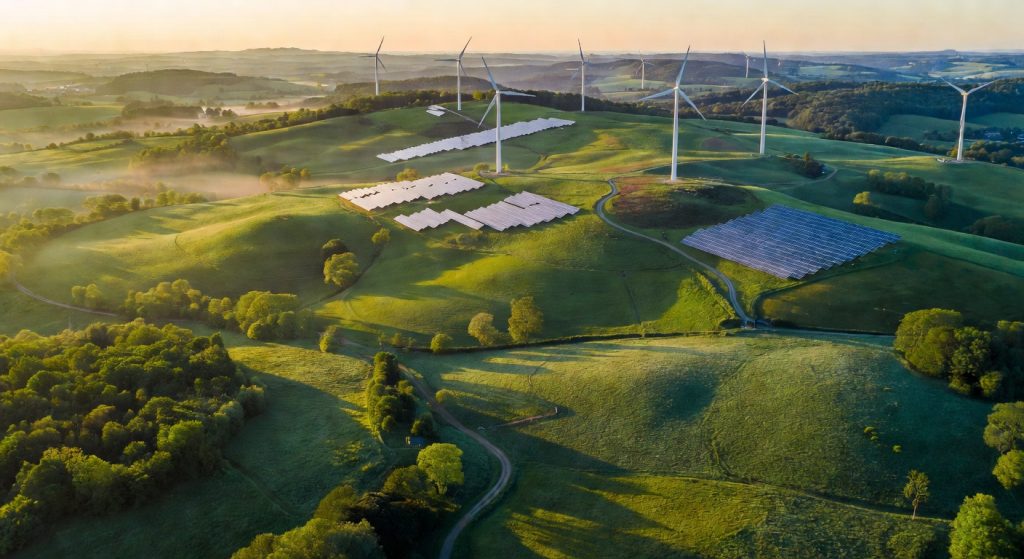
The European Union has taken one of its most consequential climate policy steps to date. EU member states have formally approved a binding target to cut greenhouse gas emissions by 90% by 2040 compared to 1990 levels — a milestone that will reshape regulation, investment flows, and corporate planning across the continent for decades to come. For businesses, investors, and citizens, the message is clear: the direction of travel is set, and the pace is accelerating.
A Policy Anchor for Corporate ESG Strategy
The 2040 climate target doesn’t exist in isolation. It sits between the EU’s current 2030 goal — a 55% net emissions reduction under the Fit for 55 package — and the overarching objective of climate neutrality by 2050. By locking in the intermediate step, the EU is giving businesses the long-term regulatory certainty they need to make credible, science-aligned commitments.
For corporate sustainability and ESG teams, this has immediate implications. Supply-chain emissions reporting, already tightening under the Corporate Sustainability Reporting Directive (CSRD) and the forthcoming Corporate Sustainability Due Diligence Directive (CSDDD), will become even more material. Companies that have been treating ESG as a compliance exercise rather than a strategic priority will find themselves increasingly exposed — to regulatory risk, investor scrutiny, and reputational pressure.
Sustainable finance frameworks will also tighten in response. The EU Taxonomy for Sustainable Activities is expected to evolve alongside the new target, raising the bar for what qualifies as a genuinely green investment. For asset managers and institutional investors, this means portfolio alignment with a 90% reduction trajectory will become the new benchmark for credible climate claims.
Nature-Based Solutions Under Pressure: Africa’s Forests Sound a Warning
The EU’s policy ambition arrives at a moment of sobering scientific news. New research has revealed a major climate reversal: African forests, once among the world’s most important carbon sinks, have shifted to net carbon emitters since 2010. Driven by deforestation, land degradation, and climate stress, this shift poses a serious risk to global carbon budgets — and to the nature-based climate strategies that many companies and governments have been banking on.
This finding carries direct relevance for ESG and green business strategy. A growing number of corporate net-zero plans rely on nature-based offsets — carbon credits linked to forest conservation or reforestation projects. If the reliability of these sinks is declining, the credibility of offset-dependent strategies is in question. The circular economy principle of working within planetary boundaries demands that businesses reduce emissions at source, not simply account for them elsewhere.
For European policymakers, the African forest data also underscores the importance of the EU’s Deforestation Regulation, which requires companies to ensure that key commodities sold in the EU have not contributed to forest loss. Enforcement and ambition on this front will need to keep pace with the scale of the ecological challenge.
The AI Data Center Dilemma: Digital Growth vs. Green Grids
A third pressure point is emerging from an unexpected direction: artificial intelligence. A new private equity-backed venture has announced plans to invest $5 billion in AI-focused data centers, bringing 500 megawatts of capacity online by 2027. This is not an isolated case — it reflects a global surge in digital infrastructure demand driven by AI workloads, with profound implications for energy systems and sustainability targets.
Data centers already account for roughly 1–2% of global electricity consumption, and that share is rising fast. In Europe, where the grid is progressively decarbonising, the question is not just how much power these facilities consume, but when, where, and from what source. Locating data centers near renewable energy hubs, signing credible Power Purchase Agreements (PPAs), and investing in grid flexibility are becoming core components of responsible digital infrastructure planning.
For ESG analysts and sustainable finance professionals, the energy intensity of AI is a material risk factor that is only beginning to be priced in. Corporate responsibility in the digital sector must now extend to the full energy footprint of computational services.
Implications: A More Demanding Sustainability Landscape
- Businesses must treat the 2040 target as a planning horizon, not a distant deadline — decarbonization timelines are compressing.
- Investors should reassess portfolios for alignment with a 90% reduction trajectory and scrutinize offset-heavy net-zero claims.
- Policymakers need to ensure that climate ambition is matched by enforcement, particularly on deforestation and digital infrastructure.
- Citizens can expect the energy transition to accelerate — with both opportunities and disruptions in jobs, housing, and consumption.
Key Takeaway
The EU’s 90% emissions target for 2040 is more than a political statement — it is a structural signal that will filter through every layer of the European economy. Combined with the fragility of natural carbon sinks and the surging energy demands of AI, it confirms that sustainability is no longer a peripheral concern for business and finance. It is the central strategic challenge of this decade. Companies and investors that move early, with genuine ambition and transparency, will be best positioned for the transition ahead.